
Bhagavad Gita Deep Dive: Chapter-by-Chapter Analysis of Lord Krishna’s Wisdom
The Bhagavad Gita stands as one of the most influential spiritual and philosophical texts in the world. As part of the Mahabharata, it is a conversation between Prince Arjuna and Lord Krishna, where Krishna imparts timeless wisdom and guidance to Arjuna on the eve of the Kurukshetra War. The dialogue in the Bhagavad Gita delves into profound topics such as dharma (duty/righteousness), karma (action), yoga (discipline), and moksha (liberation), offering solutions to complex life challenges and universal questions.
Read More About sacred texts
Lord Krishna’s teachings to Arjuna in the Bhagavad Gita transcend the specific context of the battlefield and are applicable to life in all circumstances. In this article, we will conduct a chapter-by-chapter analysis of the Bhagavad Gita, uncovering its deep philosophical meanings, spiritual lessons, and how these teachings continue to inspire millions today.
Introduction to the Bhagavad Gita

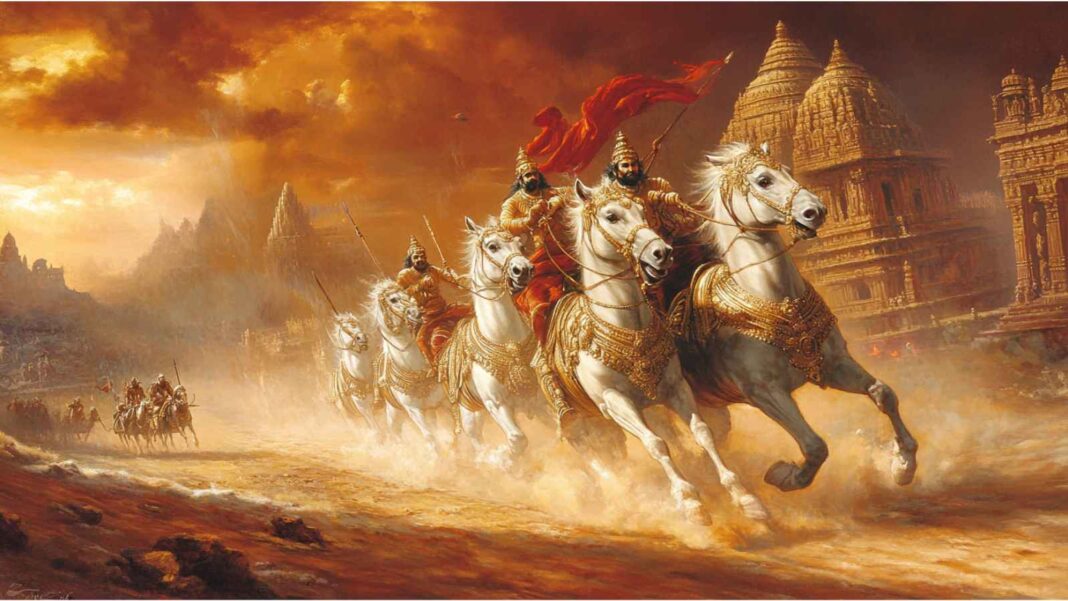
The Bhagavad Gita is one of the most cherished texts in Hindu philosophy, often referred to as the “Song of God.” It is a dialogue between Lord Krishna, who serves as Arjuna’s charioteer, and Arjuna, the warrior prince, set against the backdrop of the Kurukshetra War. The Gita addresses the moral and philosophical dilemmas faced by Arjuna as he prepares for battle, with the teachings of Lord Krishna offering insights into the nature of life, death, and duty.
While the Mahabharata tells the story of the conflict between the Pandavas and the Kauravas, the Bhagavad Gita focuses on the inner struggle of Arjuna and his quest for meaning in the face of war. The teachings imparted by Lord Krishna provide a spiritual framework for understanding karma, dharma, and the nature of the soul (Atman).
In this article, we will explore each chapter of the Bhagavad Gita, breaking down Lord Krishna’s wisdom into key lessons that are relevant both in Arjuna’s context and in the modern world.
Chapter-by-Chapter Analysis of the Bhagavad Gita
Chapter 1: Arjuna Vishada Yoga – The Yoga of Arjuna’s Dejection
The first chapter introduces the battlefield of Kurukshetra, where Arjuna is filled with doubt, confusion, and moral dilemma. As the battle is about to begin, Arjuna sees his family, teachers, and friends on both sides of the war. Overcome with sorrow and confusion, Arjuna is unable to act and faces a moral crisis about killing his relatives, even though they are on the opposite side.
In this chapter, Lord Krishna does not immediately provide answers. Instead, he allows Arjuna to express his emotional conflict fully, setting the stage for deeper philosophical discourse. The main lesson here is that spiritual struggles are a natural part of life, and confronting them is essential for growth.
Chapter 2: Sankhya Yoga – The Yoga of Knowledge
In the second chapter, Lord Krishna begins to impart his wisdom to Arjuna, starting with the concept of Sankhya Yoga or the Yoga of Knowledge. Krishna explains that the soul (Atman) is eternal and indestructible. What Arjuna sees as death is merely the transformation of the body, not the end of the soul.
Krishna teaches that one must act in accordance with their dharma, without attachment to the fruits of their actions. He introduces the concept of selfless action (Karma Yoga) and advises Arjuna to perform his duty as a warrior without attachment, focusing on the act itself rather than the outcome. This chapter is essential for understanding the nature of the self and the necessity of following one’s path without ego-driven desires.
Chapter 3: Karma Yoga – The Yoga of Action
The third chapter focuses on Karma Yoga, or the path of selfless action. Lord Krishna encourages Arjuna to perform his duties as a warrior without attachment to success or failure. Krishna explains that actions performed selflessly, for the benefit of others, lead to spiritual growth, while actions driven by ego and selfish desires result in bondage.
This chapter highlights the importance of detachment in all actions, teaching that the key to spiritual progress is to perform one’s responsibilities with a sense of duty and devotion, without being attached to the outcomes. Krishna emphasizes that all beings must act in the world, but must do so with the understanding that the results are beyond one’s control.
Chapter 4: Jnana Karma Sanyasa Yoga – The Yoga of Knowledge and Renunciation of Action
In the fourth chapter, Krishna explains the relationship between knowledge (Jnana) and action (Karma). He emphasizes that true knowledge does not lead to renunciation of action, but rather to the renunciation of attachment to the results of actions.
Krishna reveals that the wisdom of the divine has been passed down through the ages, from Brahma to the great sages, and now to Arjuna. By performing one’s duty with devotion, one can attain spiritual wisdom and inner peace. This chapter highlights the idea that knowledge and action must be balanced for spiritual progress.
Chapter 5: Karma Sanyasa Yoga – The Yoga of Renunciation
The fifth chapter discusses the concept of renunciation (Sanyasa) and its relationship with selfless action. Krishna explains that while renunciation of the physical world might seem desirable, true renunciation is not about abandoning duties but about abandoning attachment and desire.
Krishna teaches that a true renunciant is someone who performs their duties without attachment to outcomes and does not seek personal gain. Surrendering the ego and focusing on service leads to liberation. Krishna advises Arjuna to practice both selfless action and detachment, combining the lessons of Karma Yoga and Jnana Yoga.
Chapter 6: Dhyana Yoga – The Yoga of Meditation
In the sixth chapter, Krishna introduces Dhyana Yoga, the path of meditation. Krishna emphasizes the importance of a disciplined mind and suggests that meditation is essential for controlling the restless mind. To achieve spiritual peace and self-realization, Arjuna must focus his mind on the divine, disciplining his thoughts and actions.
Krishna advises Arjuna to approach meditation with regularity, patience, and devotion. In this chapter, Krishna also stresses that true yoga is not about physical postures but about mental control and inner peace.
Chapter 7: Jnana Vijnana Yoga – The Yoga of Knowledge and Wisdom
In the seventh chapter, Krishna expands on the teachings of Jnana Yoga and Vijnana Yoga (wisdom). He explains that all creation is an expression of Brahman, and that the ultimate reality is the source of everything. Krishna reveals his divine nature, stating that he is the essence of both the material and spiritual worlds.
Krishna encourages Arjuna to understand the oneness of all creation and recognize the divine presence in all beings. He also teaches that true wisdom leads to liberation from the cycle of birth and death.
Chapter 8: Aksara Brahma Yoga – The Yoga of the Imperishable Absolute
The eighth chapter focuses on the imperishable nature of Brahman. Krishna explains that those who understand the eternal nature of the self and align their actions with the divine will be liberated from the cycle of reincarnation.
This chapter highlights the importance of devotion to the divine and teaches that those who dedicate their lives to spiritual growth and understanding of the eternal self will achieve moksha—freedom from the material world.
Chapter 9: Raja Vidya Raja Guhya Yoga – The Yoga of Royal Knowledge and Royal Secret
The ninth chapter reveals the royal knowledge (Raja Vidya) and royal secret (Raja Guhya) of the Bhagavad Gita. Krishna explains that devotion to God is the highest path to spiritual realization. The chapter teaches that the ultimate knowledge is the realization of divinity in everything and devotion to the divine leads to liberation.
Krishna also emphasizes that those who practice selfless devotion and who are free from ego will experience the highest spiritual state and union with the divine.
Chapter 10: Vibhuti Yoga – The Yoga of Divine Glories
In the tenth chapter, Krishna reveals his divine manifestations (Vibhuti) in the world. He explains that the divine presence is found in all of creation and that everything in the universe is a reflection of Brahman. Krishna lists various forms of his divine glory in nature, wisdom, and beings, urging Arjuna to recognize the divine in all aspects of life.
This chapter highlights the omnipresence of Krishna and emphasizes that all spiritual paths ultimately lead to the same divine truth.
Chapter 11: Visvarupa Darsana Yoga – The Yoga of the Vision of the Universal Form
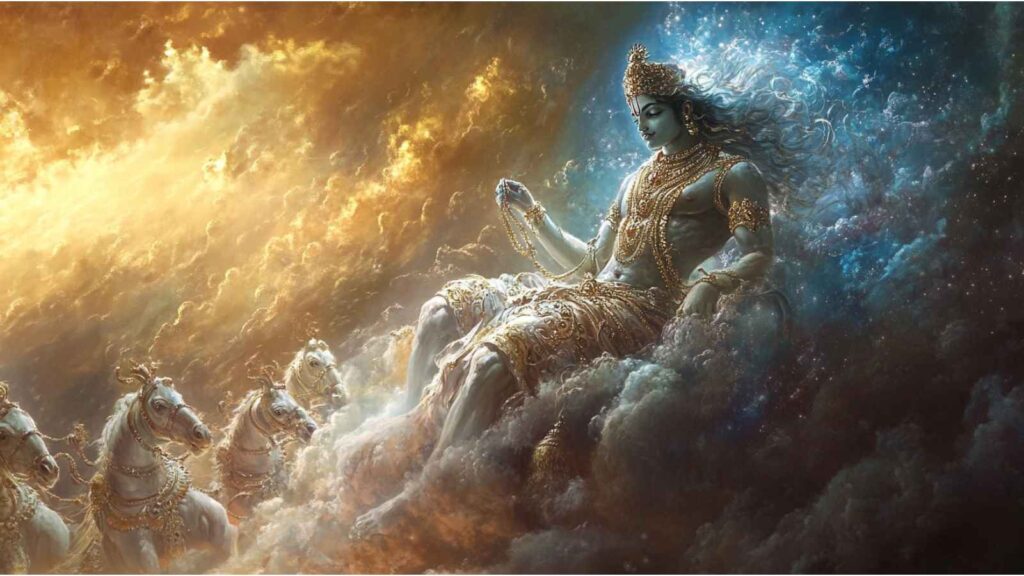
In the eleventh chapter, Krishna reveals his universal form (Visvarupa) to Arjuna. This form encompasses all of creation and demonstrates that Krishna is the source and end of all things. This chapter is a powerful vision of the divine, showing Arjuna the limitless nature of the supreme reality.
The vision of Krishna’s universal form helps Arjuna realize that the divine encompasses all opposites and transcends the limitations of time, space, and form.
Chapter 12: Bhakti Yoga – The Yoga of Devotion
The twelfth chapter is dedicated to Bhakti Yoga, the path of devotion. Krishna explains that the most direct path to liberation is through loving devotion to God. He emphasizes that faith, surrender, and selfless love for the divine lead to the realization of Brahman.
Krishna assures Arjuna that those who practice devotion with pure hearts will be guided on the path to moksha.
Conclusion: Lord Krishna’s Timeless Wisdom
The Bhagavad Gita offers profound insights into life, dharma, and the path to liberation. Through Lord Krishna’s teachings, Arjuna learns how to navigate the complexities of duty, action, and spiritual growth. The wisdom imparted in each chapter of the Gita continues to be relevant today, offering guidance for dealing with personal struggles, ethical dilemmas, and spiritual journeys.
Lord Krishna’s teachings on duty, action, meditation, and devotion provide a roadmap for personal transformation, guiding individuals toward the realization of the ultimate truth.