
Exploring the Spiritual Meaning of Hinduism’s Sacred Texts: Vedas, Upanishads, Bhagavad Gita, Puranas, and Epics
Imagine a world where every ritual, text, and philosophy is designed to guide humanity toward self-realization and unity with the divine. This is the essence of Hinduism, a spiritual tradition rooted in the eternal pursuit of truth and sacredness.
Read More About sacred texts
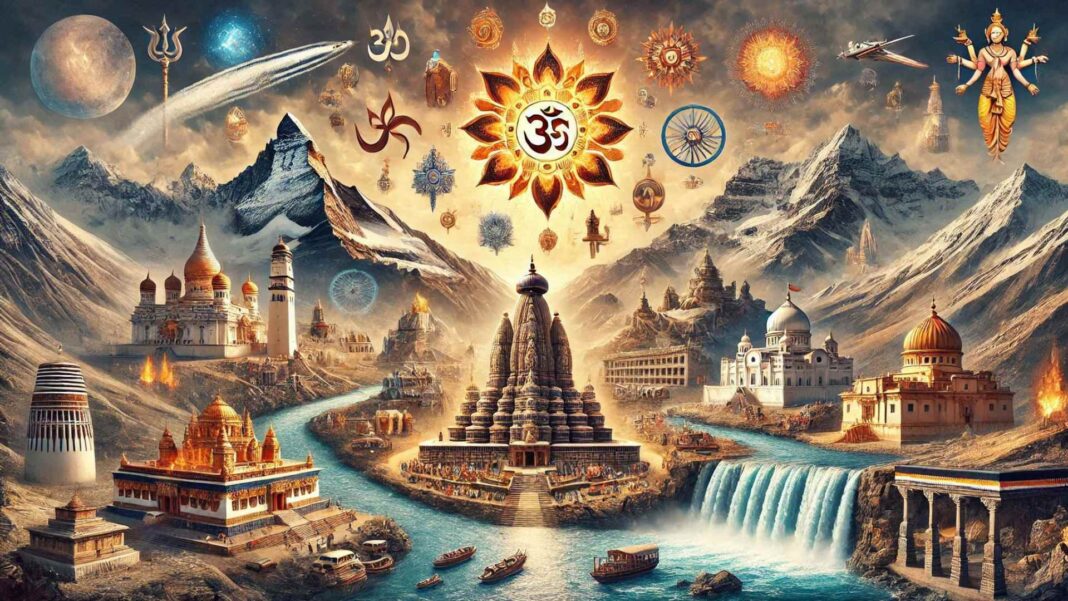
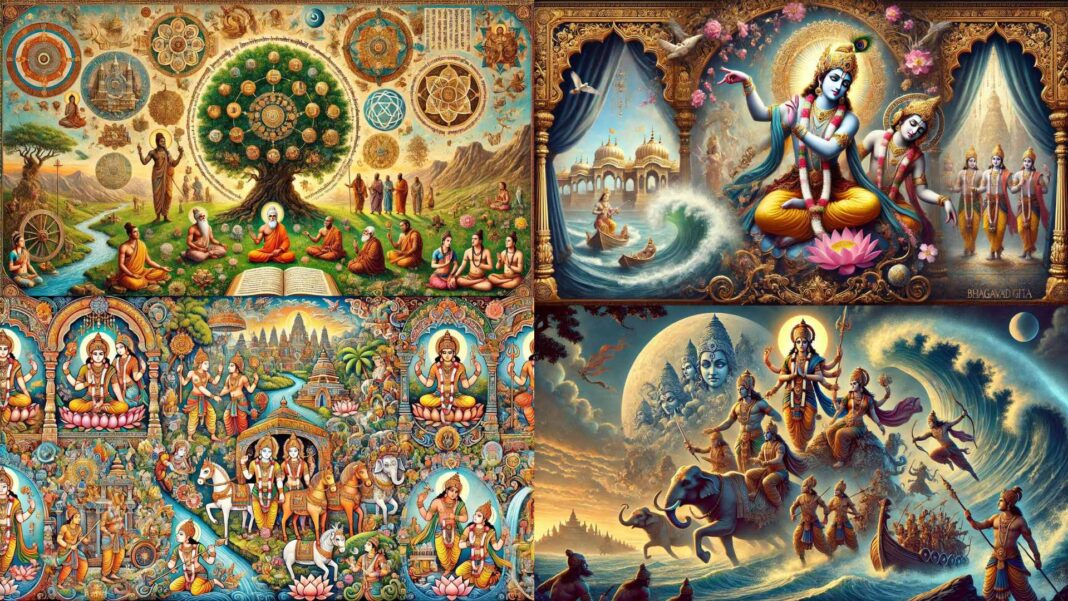
Hinduism’s concept of sacredness goes beyond the physical, connecting individuals to cosmic energies and universal truths. At its core are sacred texts—the Vedas, Upanishads, Bhagavad Gita, Puranas, and the epics, Ramayana and Mahabharata. These texts are not mere writings but manifestations of divine wisdom passed through generations.
In modern times, these sacred elements offer profound lessons on mindfulness, ethical living, and interconnectedness, proving their timeless relevance in navigating the complexities of life.
1. Historical Background
The Vedas: The Foundation of Knowledge

The Vedas, the oldest known scriptures, emerged around 1500 BCE in ancient India. Derived from the Sanskrit root “Vid” (to know), they consist of four collections:
- Rig Veda: Hymns dedicated to deities.
- Sama Veda: Melodic chants for rituals.
- Yajur Veda: Instructions for sacrifices.
- Atharva Veda: Practical wisdom and mystical spells.
These texts were initially transmitted orally and later written in Vedic Sanskrit, preserving the essence of ancient spirituality.
The Upanishads: The Essence of Philosophy

Around 800–500 BCE, the Upanishads arose, focusing on metaphysics and inner realization. They moved away from ritualism, exploring profound ideas like Brahman (universal consciousness) and Atman (individual soul).
Bhagavad Gita: The Eternal Guide

Embedded in the Mahabharata, the Gita dates back to 300 BCE–300 CE. This philosophical discourse between Krishna and Arjuna addresses the eternal struggle between duty and desire, offering timeless guidance.
The Puranas: Tales of Creation and Divinity

The Puranas, composed between 300–1500 CE, narrate mythological stories, cosmology, and the genealogies of gods and sages. Texts like Vishnu Purana and Shiva Purana remain central to devotional practices.
Ramayana and Mahabharata: Epics of Dharma
These epics, composed between 500 BCE and 400 CE, chronicle the lives of divine avatars (Rama and Krishna) and their struggles to uphold dharma (righteousness).
Regional Variations and Evolution
Different regions adapted these texts, such as Tulsidas’s Ramcharitmanas in North India and Kamba Ramayanam in Tamil Nadu, ensuring their universality and accessibility.
2. Spiritual Significance
Religious Importance
Each sacred text serves a unique purpose:
- Vedas: Establish ritualistic practices.
- Upanishads: Encourage introspection.
- Bhagavad Gita: Harmonizes action, knowledge, and devotion.
- Puranas: Inspire devotion through stories.
- Epics: Teach ethical values.
Symbolic Meaning
These texts embody timeless principles:
- Vedas: Universal wisdom.
- Upanishads: Inner awakening.
- Gita: Moral courage and selfless action.
Connection to Deities
- The Rig Veda praises gods like Agni (fire) and Varuna (water).
- The Puranas celebrate Vishnu, Shiva, and Devi in their myriad forms.
- The epics immortalize Rama and Krishna as paragons of virtue.
Energy and Spiritual Properties
Recitation of Vedic mantras generates vibrational energies believed to harmonize one’s environment. Chanting the Gayatri Mantra, for instance, is said to awaken divine consciousness.
Role in Hindu Philosophy
Hindu philosophical schools like Vedanta and Sankhya derive their doctrines from these sacred texts, emphasizing moksha (liberation) as life’s ultimate goal.
3. Practical Application
In Worship
- Vedic Rituals: Fire sacrifices and hymn recitations.
- Bhagavad Gita: Recited during prayer for inspiration.
- Epics: Central to temple festivals and drama.
Daily Practices
- Morning chants of the Gayatri Mantra (Rig Veda).
- Reading verses from the Gita or Ramayana as moral guidance.
- Meditation inspired by the Upanishads.
Rituals and Ceremonies
- Sama Veda melodies during weddings.
- Yajur Veda verses in yajnas (fire offerings).
- Tales from Puranas dramatized in religious plays.
Modern Adaptations
Texts are available as eBooks and apps, making them accessible to younger generations. Gita’s teachings are also incorporated into corporate training and stress management programs.
Home Worship
Families often maintain altars with sacred texts, using them in daily prayers and festivals.
4. Cultural Impact
Influence on Society
Hindu scriptures have shaped ethical norms, governance, and social values. The Ramayana’s ideals of kingship influence leadership models even today.
Art and Literature
The stories inspire classical dances like Bharatanatyam and Kathak, while sculptural depictions adorn temples across India.
Festival Connections
- Ramayana: Celebrated during Diwali and Dussehra.
- Bhagavad Gita: Central to Janmashtami.
Regional Customs
The epics and Puranas are localized into vernacular traditions, fostering a deeper connection with diverse communities.
Contemporary Relevance
In an era of global challenges, the Bhagavad Gita’s teachings on balance, resilience, and ethical action resonate universally.
5. Conservation/Preservation
Current Challenges
- Declining interest among younger generations.
- Fragmentation of oral traditions.
- Lack of access to ancient manuscripts.
Preservation Efforts
- Digitization projects like the Muktabodha Indological Research Institute.
- Cultural festivals celebrating the epics and Puranas.
Environmental Aspects
The Puranas emphasize the sanctity of nature, advocating ecological harmony. This aligns with current environmental movements.
Community Initiatives
- Storytelling sessions in temples and schools.
- Online platforms offering scripture translations and interpretations.
Future Outlook
Integrating these texts into modern educational curriculums ensures their relevance and preservation.
6. Expert Insights
Quotes from Scholars
- “The Bhagavad Gita is the most comprehensive spiritual guide for humanity.” – Swami Chinmayananda.
- “The Vedas are the eternal source of wisdom and light.” – Maharishi Mahesh Yogi.
Scientific Research
Studies on mantra chanting demonstrate benefits like reduced anxiety, improved focus, and enhanced well-being.
Modern Interpretations
Contemporary thinkers explore the relevance of the Gita in management and mindfulness, while the Upanishads inspire modern spiritual movements.
Expert Opinions
Spiritual leaders advocate for rediscovering the Vedas and epics to navigate personal and societal challenges.
7. Conclusion
Hinduism’s sacred texts—the Vedas, Upanishads, Bhagavad Gita, Puranas, and epics—are timeless guides, offering profound spiritual wisdom and practical lessons for life. They bridge ancient traditions with contemporary needs, inspiring individuals to lead meaningful lives.
What lessons have you drawn from these sacred texts? Share your experiences below!