
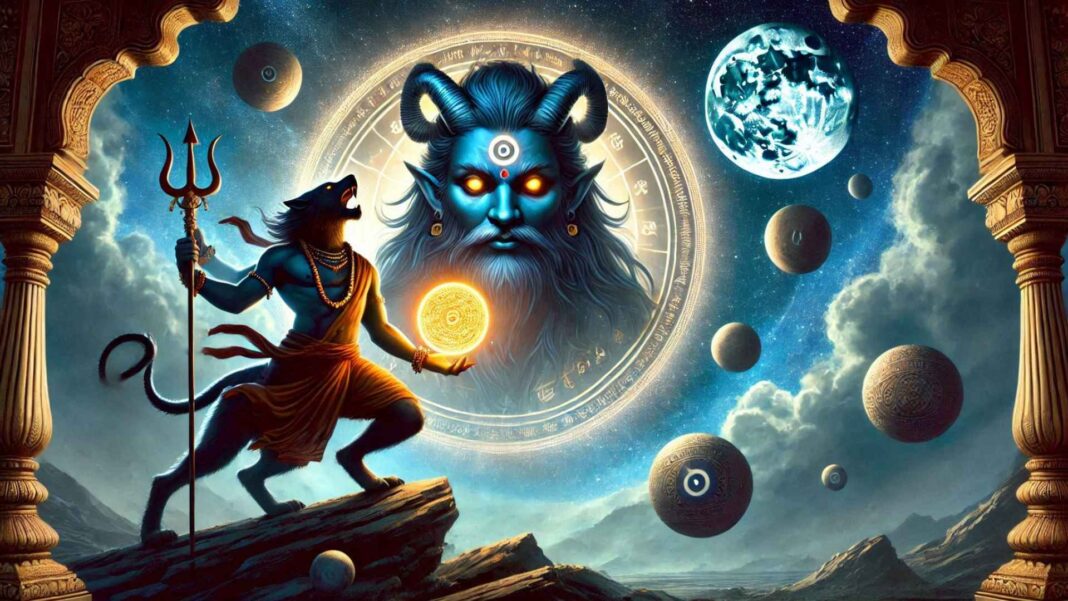

Rahu: The Mysterious Shadow Planet in Hinduism
Introduction
Brief Overview of Rahu in Hinduism
Rahu, one of the nine planetary deities (Navagrahas), holds a significant place in Hindu astrology and mythology. Unlike the traditional planets, Rahu is a shadow planet (Chhaya Graha), symbolizing the head of the demon that causes eclipses. Revered and feared in equal measure, Rahu represents illusion, obsession, and materialistic desires while also offering opportunities for growth and transformation when understood and worshipped correctly.
Read More About Deities And Gods
Significance of Rahu in Daily Hindu Life
In daily life, Rahu influences various aspects of human behavior, including ambition, desires, and challenges. Worshiping Rahu is believed to mitigate its malefic effects and bring clarity, balance, and spiritual insight. Astrologically, Rahu plays a crucial role in determining a person’s karmic path and transformative life events.
Cosmic and Spiritual Importance
Cosmically, Rahu represents the forces of illusion (Maya) and transformation. Its presence in the astrological chart highlights the areas where individuals are likely to face challenges, learn lessons, and grow spiritually. Rahu’s influence urges individuals to transcend material attachments and seek higher consciousness.
Names and Etymology

Meaning of Rahu
The name “Rahu” originates from Sanskrit, meaning “seizer” or “eclipse.” This reflects Rahu’s mythological role in causing solar and lunar eclipses by swallowing the celestial bodies.
Other Names and Their Significance
- Swarbhanu: Denoting his identity before becoming Rahu.
- Tamasakaraka: Representing his association with darkness and obscurity.
- Chhaya Graha: Emphasizing his existence as a shadow planet.
- Bhayanaka: Indicating his fearsome nature and karmic influence.
Each name encapsulates a unique aspect of Rahu’s character, from his mythological origins to his astrological significance.
Symbolism and Iconography

Physical Description and Its Meaning
Rahu is often depicted as a serpentine figure with a human head, symbolizing his role as the severed head of the demon Swarbhanu. He rides a chariot drawn by eight black horses, representing his swift and shadowy influence.
Symbolism
- Serpent Body: Reflects deception, hidden desires, and transformation.
- Severed Head: Represents an unquenchable thirst for knowledge and ambition.
- Darkness: Symbolizes illusion and obscurity.
The Flower Connection
Rahu is associated with blue and black flowers, reflecting his connection to shadow and mystery.
Colors and Symbols Associated
- Colors: Black (mystery), blue (depth and illusion).
- Symbols: The serpent, eclipses, and shadows.
Mythology and Stories

Birth Story
Rahu was originally a demon named Swarbhanu. During the churning of the ocean (Samudra Manthan), he disguised himself as a god to consume the nectar of immortality. However, Lord Vishnu severed his head when the deception was discovered. The head became Rahu, and the body became Ketu, creating the two shadow planets.
The Story of Rahu and Eclipses
Rahu’s anger at being severed fuels his desire for revenge. He chases the Sun and Moon to devour them, causing eclipses. However, since he lacks a body, the celestial bodies reappear, symbolizing the cyclical nature of cosmic events.
Connection with Other Deities
Rahu’s narratives intertwine with Vishnu (who severed him), Surya (Sun), and Chandra (Moon), highlighting his karmic relationship with these celestial entities.
Role in Ramayana and Mahabharata
- Ramayana: Indirect references to Rahu’s influence appear in astrological alignments during key events.
- Mahabharata: Rahu’s role is significant in determining the destinies of various characters, reflecting his astrological impact.
Famous Blessings and Boons
While Rahu is feared for his malefic influence, his blessings can grant innovation, worldly success, and spiritual growth when harnessed positively.
Spiritual Significance
A Visible Form of God
As a shadow planet, Rahu represents the invisible forces that shape human destiny, urging introspection and spiritual awakening.
Representation of Knowledge and Enlightenment
Rahu’s influence symbolizes the pursuit of knowledge and the challenges that lead to self-realization. His lessons often push individuals to confront their shadows and evolve spiritually.
Connection to Spiritual Awakening
Rahu’s transformative power encourages devotees to overcome illusions and seek truth, paving the way for spiritual liberation.
Role in Yoga and Meditation Practices
Meditating on Rahu helps individuals confront their inner fears and attachments, fostering clarity and spiritual balance.
The Mantra Connection
- Rahu Mantra:
“Om Rahave Namah” – A mantra to appease Rahu and mitigate his negative effects.
Worship and Rituals
Benefits of Worship
Worshiping Rahu alleviates astrological afflictions, reduces fear, and enhances mental clarity. Devotees seek his blessings for innovation, career growth, and spiritual strength.
Daily Worship Practices
- Offering blue or black flowers and lighting sesame oil lamps.
- Reciting Rahu mantras during Rahu Kalam (inauspicious time) to negate its effects.
Best Times for Worship
- Saturdays and Wednesdays are considered ideal for Rahu worship.
- Worship during eclipses or Rahu Kalam is particularly significant.
Significance of Day
- Saturdays: Dedicated to shadow planets and karmic lessons.
Important Festivals
- Eclipse Worship: Special prayers during solar and lunar eclipses.
- Navagraha Pooja: Dedicated to the nine planetary deities, including Rahu.
List of Famous Temples
- Thirunageswaram Rahu Temple, Tamil Nadu
- Navagraha Temples, Kumbakonam
- Sri Kalahasti Temple, Andhra Pradesh
Modern Relevance
Scientific Understanding
Rahu’s influence aligns with psychological concepts of the subconscious mind and unresolved desires, offering insights into personal growth and transformation.
Environmental Consciousness
Rahu’s connection to eclipses reflects cosmic balance, reminding humanity of the need for environmental harmony.
Health Benefits
Rahu worship aids in mental clarity, reducing anxiety and emotional turmoil, and fostering resilience.
Energy Connection
Rahu governs transformative energies, helping individuals break free from stagnation and embrace change.
Sustainable Living Practices
Rahu’s lessons on illusion and detachment inspire mindful consumption and sustainable choices.
Cultural Impact
Influence on Indian Art and Architecture
Rahu’s iconography is prominently featured in temples and sculptures, symbolizing his cosmic role.
Presence in Literature and Poetry
Rahu’s mythological stories inspire epics, poetry, and philosophical works, emphasizing the interplay of light and shadow.
Impact on Daily Customs
Rahu influences daily rituals, such as avoiding auspicious activities during Rahu Kalam and performing specific remedies.
Regional Variations in Worship
Rahu is venerated differently across India, with specific rituals and practices reflecting local traditions.
Practical Applications
Morning Prayers and Rituals
Starting the day with Rahu mantras brings clarity and protection from negative influences.
Benefits of Salutation
Honoring Rahu fosters introspection and helps overcome challenges with resilience and determination.
Dietary Recommendations
Offering foods like sesame seeds and coconut during Rahu worship aligns with his energies.
Astrological Significance
Rahu’s placement in the natal chart influences ambition, innovation, and karmic challenges. Remedies include chanting mantras, wearing gemstones, and performing rituals.
Gemstones and Metals Associated
- Gemstones: Hessonite (Gomed) to balance Rahu’s energy.
- Metals: Lead and iron, symbolizing grounding and stability.
Conclusion
Summary of Importance
Rahu, as the shadow planet, embodies illusion, transformation, and spiritual growth. His presence in Hindu mythology and astrology serves as a reminder of the challenges and lessons necessary for evolution.
Universal Message
Rahu teaches that life’s obstacles are opportunities for self-discovery and growth. By confronting illusions, individuals can transcend material attachments and embrace spiritual truth.
Call to Action
Seek Rahu’s blessings through worship, introspection, and spiritual discipline, transforming challenges into opportunities for growth and enlightenment.


