
The Spiritual Meaning of Sacred Elements in Hinduism: Rivers, Cities, Temples, and Natural Sanctuaries
Imagine a serene sunrise over the Ganges, where devotees dip into its sacred waters with reverence and hope. Hinduism’s sacred elements—rivers, cities, mountains, forests, and temples—are deeply intertwined with its spiritual practices, reflecting the belief in the divine’s omnipresence.
Read More About sacred texts
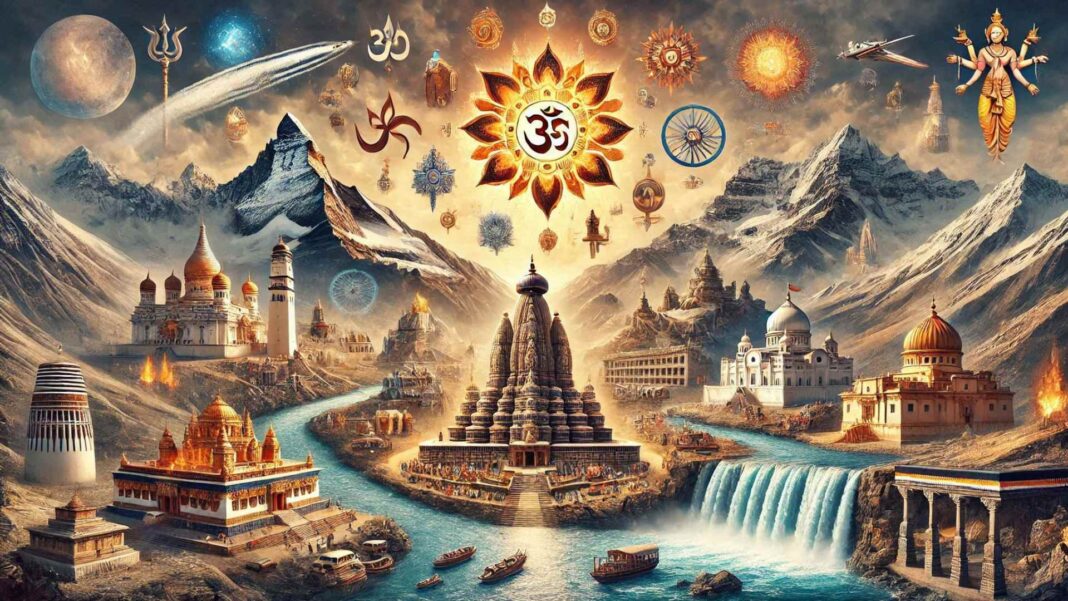
In Hinduism, sacredness extends beyond religious doctrine into nature and the built environment. Holy rivers like the Ganges are seen as pathways to liberation, while cities like Varanasi are spiritual epicenters. Mount Kailash represents cosmic balance, and sacred forests offer refuge for meditation. Temples and ashrams serve as sanctuaries for devotion and learning.
In modern times, these sacred elements are not only religious symbols but also cultural treasures and ecological sanctuaries. Understanding their spiritual meaning provides insight into Hinduism’s profound philosophy of unity with the cosmos.
1. Historical Background
Holy Rivers: Mythological Foundations

- Ganges: Descending from the heavens through Lord Shiva’s locks, the Ganges embodies purification and liberation. Ancient texts like the Rig Veda celebrate its sanctity.
- Yamuna: Associated with Lord Krishna, the Yamuna is revered in tales of his childhood and youth.
- Saraswati: Known as the “Lost River,” Saraswati is honored as the goddess of wisdom and the cradle of Vedic knowledge.
- Narmada: Said to have emerged from Shiva’s sweat, the Narmada is celebrated for its power to absolve sins.
- Godavari: Associated with the Ramayana, this river is venerated as the southern Ganga.
Sacred Cities
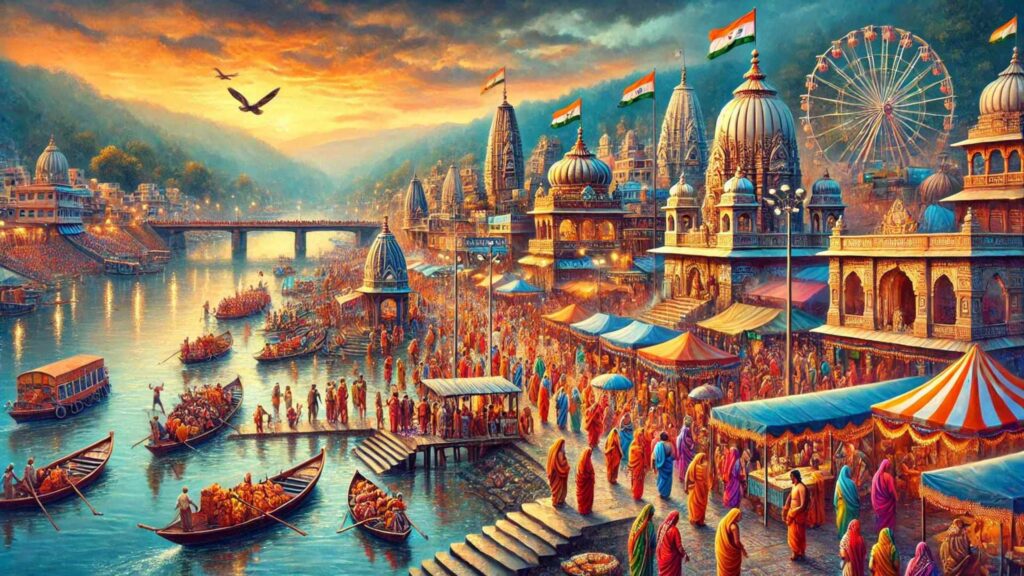
- Varanasi: Thought to be established by Lord Shiva, Varanasi has been a center of spiritual learning for over 3,000 years.
- Haridwar: Mentioned in the Mahabharata, it is a site where the Ganges enters the plains, marked by the grand Kumbh Mela.
- Rishikesh: Known as the “Gateway to the Himalayas,” Rishikesh is steeped in yoga and meditative traditions.
- Mathura and Ayodhya: These cities are tied to the lives of Lord Krishna and Lord Rama, central figures in Hindu mythology.
Mount Kailash and Sacred Forests

Mount Kailash is regarded as the abode of Lord Shiva, embodying cosmic equilibrium. Sacred forests and groves, often sites of goddess worship, have historically been ecological and spiritual sanctuaries.
Temples and Ashrams
From Vedic fire altars to intricate temple complexes like Konark and Khajuraho, Hindu places of worship have evolved to reflect the faith’s spiritual depth and artistic heritage.
2. Spiritual Significance
Religious Importance
- Rivers: Holy rivers symbolize purification, renewal, and the flow of life. Bathing in them is believed to absolve sins and aid in liberation (moksha).
- Cities: Sacred cities serve as spiritual gateways where rituals and pilgrimages intensify one’s connection with the divine.
- Mountains and Forests: Represent transcendence and harmony with nature.
- Temples and Ashrams: Serve as focal points for worship, meditation, and spiritual growth.
Symbolic Meaning
- Ganges: Represents purity, grace, and the eternal flow of existence.
- Mount Kailash: Symbolizes the union of the material and spiritual worlds.
- Forests: Reflect the sanctity of untouched nature and divine energy.
- Temples: Represent the microcosm of the universe, guiding devotees toward inner peace.
Connection to Deities
- Rivers like the Ganges and Yamuna are personified as goddesses.
- Mount Kailash is revered as Shiva’s meditative home.
- Temples house murtis (idols) of deities, making them sacred sites for communion.
Energy and Spiritual Properties
Sacred elements are believed to radiate spiritual energy, facilitating meditation, healing, and karmic cleansing. They act as conduits for divine grace.
Role in Hindu Philosophy
Hindu philosophy emphasizes the interconnectedness of all life. Sacred elements remind devotees of their unity with the cosmos and their dharma to protect nature.
3. Practical Application
In Worship
- Rivers: Ritual baths, immersion of ashes, and prayers performed on their banks.
- Mount Kailash: Circumambulation (parikrama) by pilgrims symbolizes spiritual ascent.
- Temples: Daily pujas, festivals, and special prayers create a spiritual environment.
- Forests: Serve as sites for meditation, fire rituals (yajnas), and goddess worship.
Daily Practices
- Collecting and using Ganga water for rituals.
- Chanting hymns dedicated to river deities or temple gods.
- Practicing yoga and meditation in spiritually charged locations like Rishikesh.
Rituals and Ceremonies
- Ganga Aarti: An evening ritual of offering light and prayers to the Ganges.
- Shivaratri: Celebrated in Shiva temples and near Mount Kailash.
- Kumbh Mela: A mass pilgrimage emphasizing collective devotion.
Modern Adaptations
- Virtual darshans (viewings) of temples and sacred rivers.
- Eco-conscious rituals to minimize pollution of rivers and forests.
Home Worship Incorporation
Sacred elements like Ganga water, temple replicas, and deity idols are incorporated into home altars for daily worship.
4. Cultural Impact
Influence on Society
- Rivers and forests sustain livelihoods and ecosystems.
- Sacred cities attract millions of pilgrims, fostering spiritual tourism and economic growth.
- Temples provide cultural and educational services.
Art and Literature
- Sacred elements inspire classical art forms like Bharatanatyam and Carnatic music.
- The Ganges is immortalized in poetry, including Kalidasa’s works.
- Temples like Khajuraho are UNESCO World Heritage Sites, showcasing devotional artistry.
Festival Connections
- Diwali in Ayodhya: Celebrates Rama’s return.
- Janmashtami in Mathura: Honors Krishna’s birth.
- Yoga Festivals in Rishikesh: Highlight the city’s global spiritual significance.
Regional Customs
Local practices, such as immersing idols in rivers, vary by region but maintain a shared reverence for sacred elements.
Contemporary Relevance
Sacred elements inspire ecological responsibility and offer solace in a modern world often disconnected from nature.
5. Conservation/Preservation
Current Challenges
- Pollution of sacred rivers like the Ganges.
- Urbanization encroaching on sacred groves and cities.
- Neglect of ancient temple architecture.
Preservation Efforts
- Namami Gange: A government initiative to clean and protect the Ganges.
- Reforestation projects for sacred groves.
- Temple restoration and maintenance by trusts and cultural organizations.
Environmental Aspects
Sacred groves and rivers emphasize Hinduism’s ecological ethos, urging sustainable practices and reverence for the environment.
Community Initiatives
- Grassroots clean-up drives for rivers.
- Promotion of eco-friendly rituals.
- Local conservation programs for temple sites and forests.
6. Expert Insights
Quotes from Religious Scholars
- “The Ganges is more than a river—it is a symbol of life, purity, and eternity.” – Swami Vivekananda.
- “Mount Kailash inspires the soul to transcend the mundane and embrace the divine.” – Sadhguru.
Scientific Research
- Studies reveal the self-purifying properties of Ganga water.
- Research on sacred groves highlights their biodiversity and climate resilience.
Modern Interpretations
Spiritual leaders emphasize the need to adapt traditional practices to contemporary environmental challenges.
Expert Opinions
Conservationists and religious scholars agree on the urgent need to protect these sacred elements for future generations.
7. Conclusion
Hinduism’s sacred elements—rivers, cities, mountains, forests, and temples—represent the divine presence in every aspect of life. They offer spiritual nourishment, cultural identity, and ecological balance. Their enduring relevance underscores the importance of integrating ancient wisdom into modern life.
Which sacred element speaks to your soul? Share your thoughts and join the discussion below!