
The Religious Importance of Sacred Elements in Hinduism
1. Sacredness in Hinduism
Hinduism, one of the world’s oldest religions, embraces a holistic vision of life, where every living and non-living entity has spiritual significance. The notion of sacredness is deeply embedded in Hindu philosophy, emphasizing the interconnectedness of all life forms with the divine. Sacred animals and birds, in particular, hold a profound place in Hindu traditions, often serving as symbols of specific virtues and as vehicles (vahanas) for various deities.
Read More About sacred texts
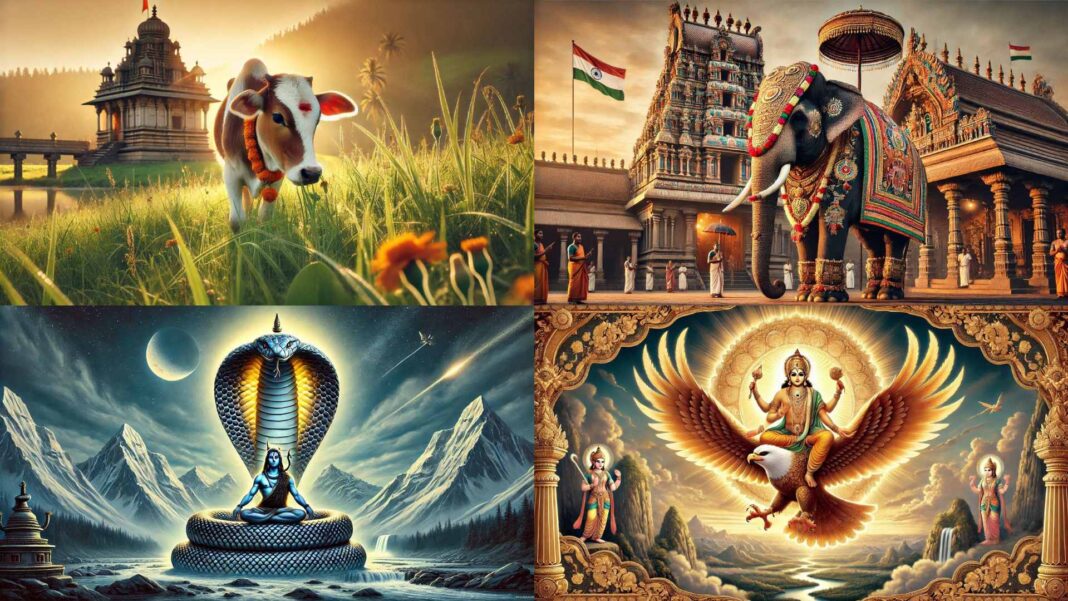
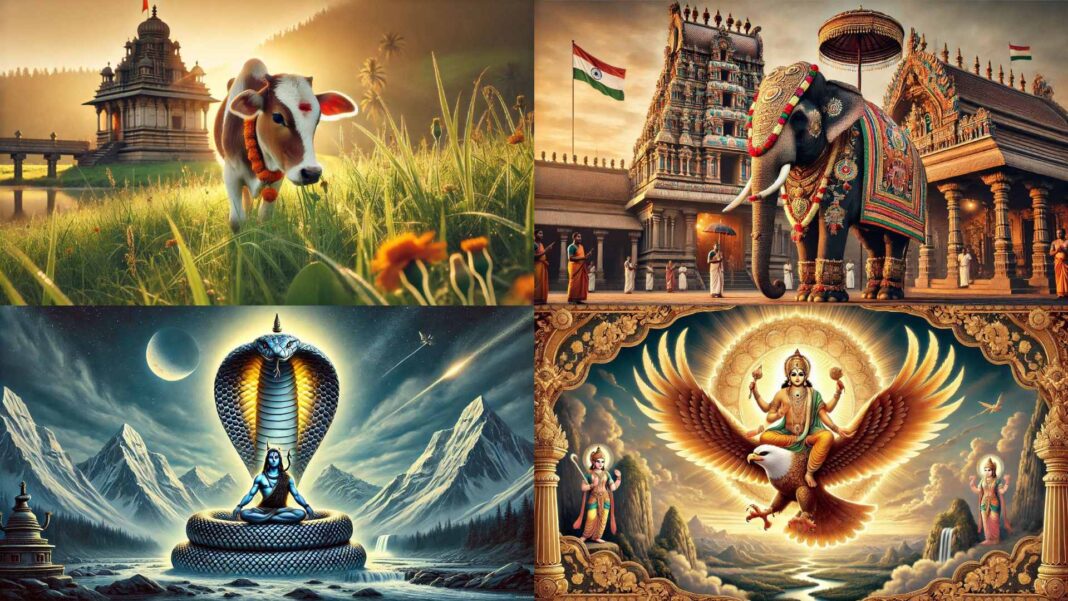
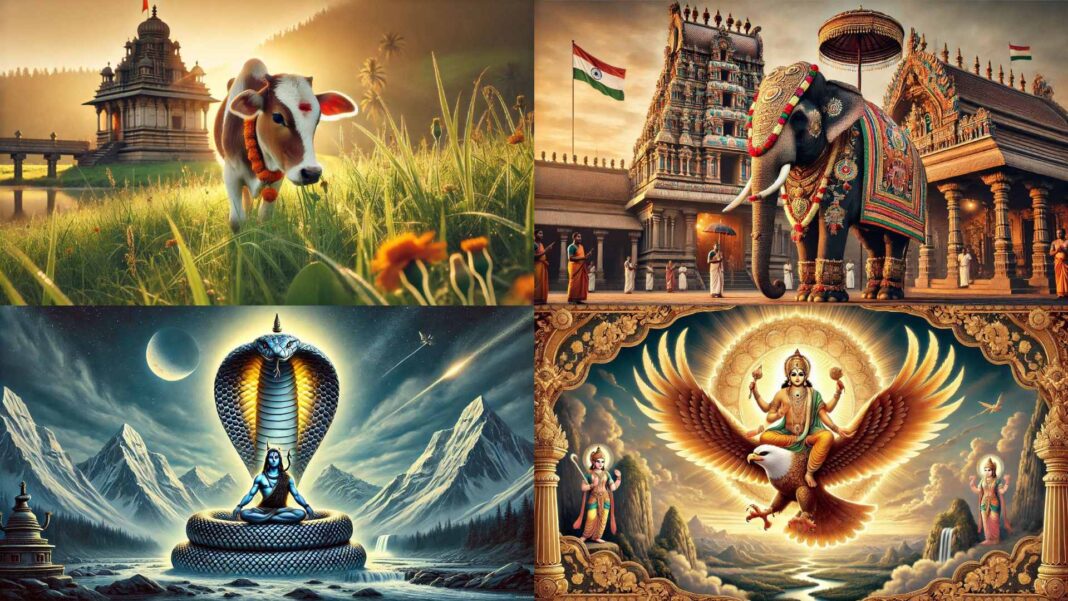
The cow, revered as a motherly figure, represents nourishment and life. The elephant, associated with Lord Ganesha, signifies wisdom and auspicious beginnings. The monkey, exemplified by Hanuman, symbolizes devotion and strength. The snake, a symbol of eternity, is closely linked to Lord Shiva. Garuda, the eagle, represents divine protection as Vishnu’s mount, while the peacock, Kartikeya’s vehicle, embodies valor and beauty.
These sacred elements are not only revered for their spiritual symbolism but also play crucial roles in rituals, festivals, and cultural practices, making them integral to Hinduism’s timeless traditions.
2. Historical Background
Cow: Divine Nurturer

- Origin in Vedas: The cow is glorified in Vedic texts as “Kamadhenu,” the wish-fulfilling divine cow, symbolizing wealth and abundance.
- Mythological Roots: Krishna’s playful interactions with cows in Vrindavan underscore their sacredness.
- Historical Evolution: Over centuries, the cow became central to Hindu agrarian and ritualistic practices.
Elephant: Symbol of Wisdom and Power

- Mythology: The elephant-headed deity Ganesha has roots in ancient tribal worship, later assimilated into Vedic traditions.
- Cultural Role: Elephants were revered as symbols of royalty and divinity in Mauryan and Gupta art.
Monkey: Embodiment of Devotion

- Hanuman’s Tales: Hanuman’s devotion to Lord Rama, chronicled in the Ramayana, made monkeys a symbol of loyalty and strength.
- Evolution: Hanuman’s worship grew during the Bhakti movement, emphasizing personal devotion.
Snake: Cosmic Protector

- Shiva and Shesha: Snakes have been significant since the Rig Veda, representing protection (as Vishnu’s bed) and transformation (as Shiva’s adornment).
- Temples: Snake worship is prevalent in South India, especially in Kerala’s Nagaraja temples.
Garuda: Protector of Dharma

- Legendary Origins: Born to Vinata, Garuda’s myth involves a legendary battle with the Nagas, showcasing his devotion to Vishnu.
- Depictions: Garuda is a frequent figure in Hindu temple sculptures, guarding against evil forces.
Peacock: Regal and Sacred
- Kartikeya’s Connection: The peacock became a sacred bird as Kartikeya’s vahana, symbolizing courage and transcendence.
- Historical Significance: Peacocks are celebrated in Indian art, literature, and temple carvings.
3. Spiritual Significance
Religious Importance
Each sacred element in Hinduism embodies unique virtues and cosmic principles:
- Cow: Represents nourishment, purity, and maternal care, often equated with the Earth itself.
- Elephant: Ganesha’s wisdom and ability to remove obstacles are symbolized through the elephant.
- Monkey: Hanuman exemplifies devotion, humility, and selfless service.
- Snake: Reflects Kundalini energy, cosmic cycles, and protection from negative forces.
- Garuda: Signifies divine intervention and victory over evil.
- Peacock: Represents beauty, valor, and spiritual awakening.
Symbolic Meaning and Connection to Deities
- Cow: Linked to Krishna, Kamadhenu, and the concept of Dharma.
- Elephant: Associated with Ganesha’s role as the remover of obstacles.
- Monkey: Hanuman’s unwavering devotion to Rama makes him a symbol of faith.
- Snake: A symbol of eternity and cosmic energy, featured in Shiva’s adornments and Vishnu’s throne.
- Garuda: Represents Vishnu’s swift deliverance from evil forces.
- Peacock: Reflects Kartikeya’s qualities of fearlessness and grace.
Energy and Spiritual Properties
- Cow Products: Milk, ghee, and dung have purifying properties, used in yajnas.
- Snake Energy: Represents the Kundalini force in yoga, a path to spiritual enlightenment.
- Peacock Feathers: Known for their ability to dispel negative energies.
4. Practical Application
Worship and Rituals
- Cow: Integral to Hindu yajnas; its milk and dung are essential for rituals.
- Elephant: Ganesha idols are worshiped during Ganesh Chaturthi and daily pujas.
- Monkey: Hanuman Chalisa recitations and Tuesday worships seek Hanuman’s blessings.
- Snake: Offerings during Nag Panchami highlight the snake’s sacredness.
- Garuda: Depicted at the entrance of Vishnu temples, symbolizing divine protection.
- Peacock: Feathers are used in homes for their spiritual and aesthetic value.
Modern Adaptations
Eco-friendly practices like clay Ganesha idols, digital Hanuman Chalisa apps, and sustainable sanctuaries for sacred animals reflect the evolving nature of Hindu rituals.
5. Cultural Impact
Art and Literature
- Cow: Prominently featured in Madhubani and Tanjore paintings.
- Elephant: Showcased in temple architecture and religious texts.
- Monkey: Inspires Ramlila performances and folklore.
- Snake: Celebrated in Indian tribal art and classical literature.
- Garuda: Appears in royal insignias and temple carvings.
- Peacock: National bird of India, symbolizing pride and cultural heritage.
Festivals and Regional Customs
- Cow: Worshiped during Govardhan Puja and Pongal.
- Elephant: Central to Kerala’s Thrissur Pooram festival.
- Monkey: Celebrated during Hanuman Jayanti.
- Snake: Honored on Nag Panchami.
- Garuda: Integral to Vishnu festivals.
- Peacock: Highlighted during Kartikeya festivals in Tamil Nadu.
6. Conservation and Preservation
Challenges
- Urbanization threatens the habitats of peacocks and snakes.
- Illegal cattle slaughter affects the sanctity of cows.
Initiatives
- Cow Protection: NGOs and gaushalas care for cows.
- Elephant Sanctuaries: Wildlife conservation efforts focus on protecting temple elephants.
- Peacock Conservation: Sanctuaries ensure the survival of India’s national bird.
7. Expert Insights
Quotes from Scholars
- “Sacred elements in Hinduism are living symbols of ecological harmony.” – Swami Sivananda.
- “The cow’s role in rituals connects spiritual and agricultural practices.”
Scientific Connections
- Cow dung and milk are proven to have antimicrobial properties.
- Snake venom is used in life-saving medicines.
Modern Interpretations
These sacred elements bridge tradition and modernity, offering ecological and spiritual lessons for today’s world.
8. Conclusion
The sacred animals and birds in Hinduism reflect a profound spiritual connection between humans, nature, and the divine. They teach timeless values such as devotion, humility, and ecological harmony, remaining relevant in today’s world.