
Traditional Jewelry in Hindu Sacred Attire: Divine Adornments and Cultural Legacy
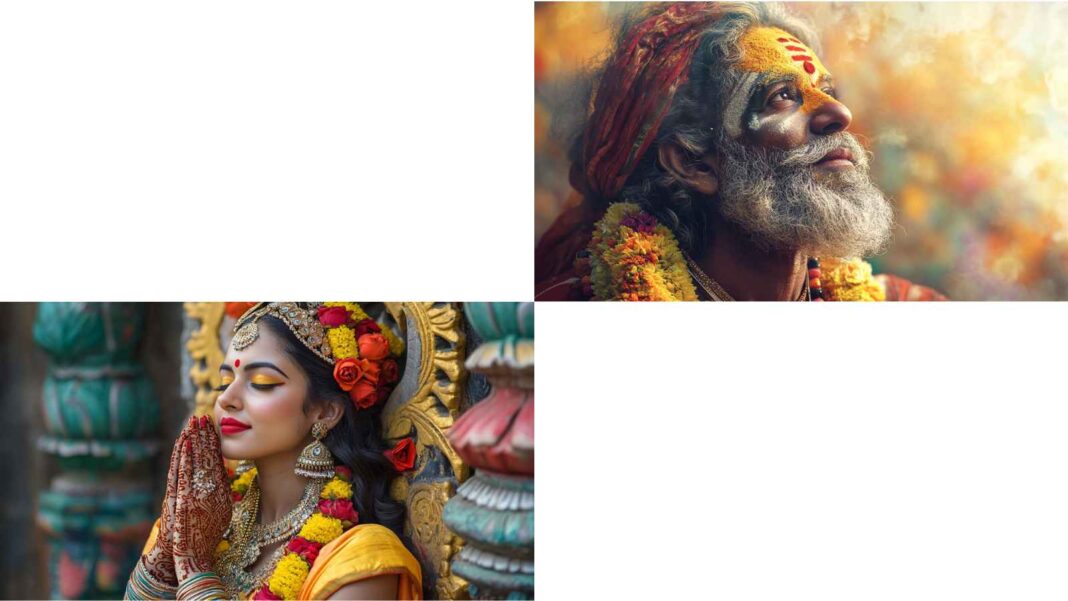
Hinduism’s rich cultural heritage is expressed not only through its philosophy, scriptures, and rituals but also via its art and personal adornments. Traditional jewelry, comprising intricate gold, silver, and gemstone ornaments, plays a pivotal role in conveying spiritual symbolism, social identity, and aesthetic excellence. These divine adornments have been cherished for millennia as marks of beauty, prosperity, and devotion. Rooted in the wisdom of the Vedas, Upanishads, Bhagavad Gita, and Agamas, traditional jewelry serves as a tangible reminder of one’s spiritual journey and cultural legacy.
Read More About Ritual & Practices
This comprehensive guide explores the multifaceted significance of traditional jewelry in Hinduism. We delve into its scriptural foundations and the symbolic meanings behind various ornaments such as necklaces, bangles, earrings, and nose rings. In addition, we profile two iconic temples—Kamakshi Amman Temple in Kanchipuram, Tamil Nadu and Jagannath Temple in Puri, Odisha—to illustrate how sacred jewelry is interwoven into temple rituals and devotional practices. For each temple, we detail the exact location, historical background, architectural highlights, and visitor experiences, highlighting the role of traditional jewelry in enhancing the sanctity and beauty of these sacred spaces.
Furthermore, we offer a creative framework for AI-generated visuals to capture the intricate details of traditional jewelry and temple settings. Let this guide serve as your portal to understanding how divine adornments transcend mere fashion to become expressions of deep spirituality, cultural continuity, and personal transformation.
Introduction: The Sacred Language of Adornment
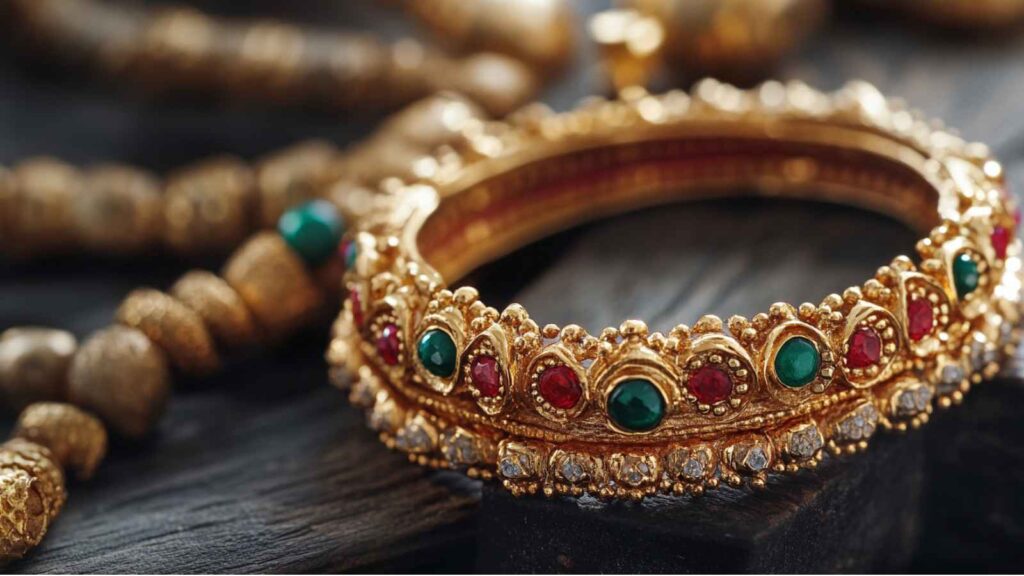
In Hindu tradition, jewelry is far more than decorative embellishment—it is a sacred language that communicates spiritual ideals and cultural narratives. Every piece of traditional jewelry is meticulously crafted to reflect divine beauty and cosmic order. For centuries, gold, silver, and precious gemstones have been used to create ornaments that honor deities, celebrate auspicious occasions, and signify social status. The act of adorning oneself with these ornaments is not simply about beautification; it is a ritualistic practice that invokes the blessings of the divine.
Spiritual and Cultural Significance
- Divine Connection: Traditional jewelry is believed to be a conduit for spiritual energy. Wearing sacred ornaments aligns the individual with cosmic vibrations, symbolizing the inner light (Atman) and the universal essence (Brahman).
- Ritual Purity and Prosperity: Ancient scriptures and ritual texts emphasize the importance of adorning oneself in a manner that reflects purity, prosperity, and auspiciousness. Jewelry is often prescribed for religious ceremonies, temple visits, and festivals.
- Cultural Identity: Each piece of jewelry is steeped in regional tradition. Whether it is the heavy gold necklaces of South India, the intricate kundan work of Rajasthan, or the delicate silver filigree of Orissa, these adornments tell stories of local customs and artistic mastery.
- Symbolic Expressions: Every ornament carries symbolism. For example, a nose ring (nath) represents femininity and marital status, while bangles (chudas) signify marital bliss and protection. These symbols, passed down through generations, serve as visible markers of cultural and spiritual identity.
Scriptural Foundations
The significance of jewelry in Hindu culture is well supported by ancient scriptures:
- Vedas & Upanishads: These texts emphasize purity, prosperity, and the divine spark within each individual. They often use rich imagery to describe the ideal appearance of a devotee, with jewelry symbolizing the radiant nature of the soul.
- Bhagavad Gita: In its teachings on duty (dharma) and self-realization, the Gita encourages an external expression that reflects inner virtues. Adorning oneself with traditional jewelry becomes an outward manifestation of one’s commitment to spiritual growth.
- Agamas: These ritualistic texts offer detailed guidelines on temple worship and the proper attire for priests and devotees. They prescribe specific ornaments for different ceremonies, ensuring that every act of worship is in harmony with cosmic law.
- Puranas: The mythological narratives in the Puranas are replete with descriptions of divine adornments worn by deities and heroes, inspiring the design and symbolism of traditional jewelry.
“Adorned in sacred gold and jeweled finery, the devotee not only reflects the splendor of the divine but also kindles the inner light that leads to spiritual awakening.”
— Inspired by ancient Vedic teachings
Traditional Jewelry: Types and Symbolism

Traditional jewelry in Hinduism is as diverse as the culture itself. Let’s explore some of the key types and their symbolic meanings:
Necklaces (Haar)
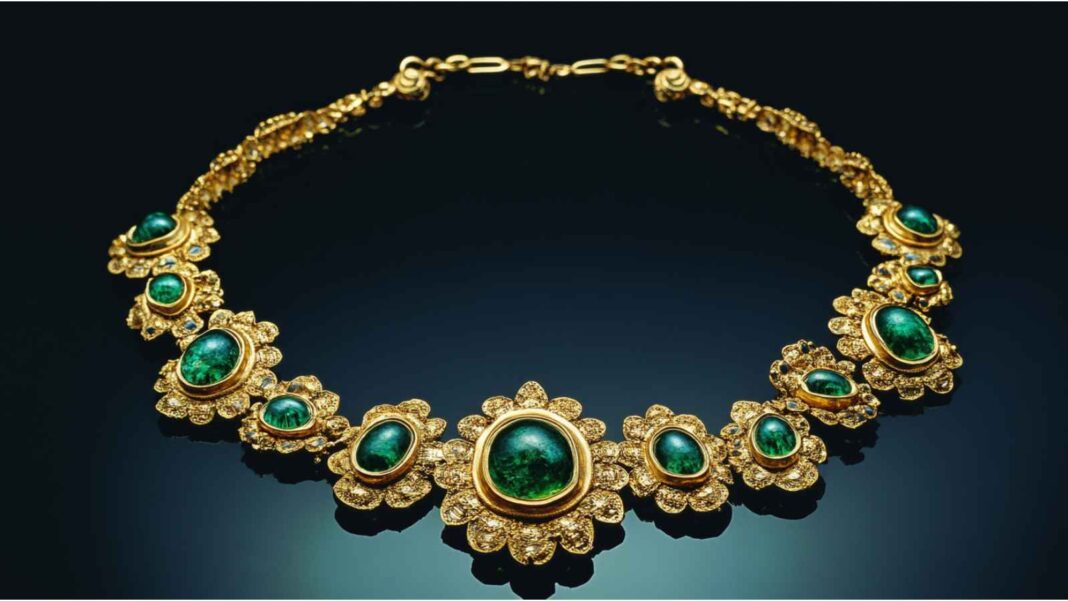
- Significance: Necklaces are often regarded as symbols of eternal beauty and divine protection. They are worn by both men and women, with intricate designs that may include pearls, diamonds, rubies, and emeralds.
- Cultural Variations: In South India, gold necklaces with elaborate pendants are a mark of marital status and prosperity. In Rajasthan, necklaces may feature precious stones and detailed enamel work, symbolizing regal elegance.
- Spiritual Connotation: Necklaces can represent the cycle of life and the unbroken chain of divine energy, reminding the wearer of their connection to the eternal.
Earrings (Karn Phool or Jhumkas)
- Significance: Earrings are an essential component of traditional attire, symbolizing beauty, grace, and the harmonious balance of the feminine spirit.
- Design Elements: From simple studs to ornate jhumkas (bell-shaped earrings), these adornments are crafted with meticulous detail, often featuring filigree work and intricate patterns.
- Spiritual Aspect: In many traditions, earrings are thought to enhance spiritual energy by focusing on the chakras (energy centers) around the head and ears, facilitating better connection with divine vibrations.
Bangles (Chooda)
- Significance: Bangles are symbolic of marital bliss, protection, and the feminine energy (Shakti). They are typically worn in multiples and are an integral part of a woman’s traditional attire.
- Design Elements: Bangles can be made from gold, glass, lac, or other materials, and are often decorated with intricate patterns or gemstones.
- Cultural Meaning: In many regions, the clinking of bangles is considered auspicious and is believed to ward off negative energies, serving as a constant reminder of the wearer’s commitment to their family and faith.
Nose Rings (Nath)
- Significance: The nose ring is a distinctive and revered ornament that holds deep cultural and spiritual meaning. It is traditionally worn by women, symbolizing beauty, marital status, and fertility.
- Design Elements: Nose rings vary in size and style—from small studs to elaborate hoops adorned with precious stones. They are often associated with the goddess Parvati and represent feminine grace and divine energy.
- Spiritual Connotation: The placement of a nose ring is believed to stimulate certain acupressure points, enhancing spiritual awareness and emotional well-being.
Armlets, Bracelets, and Ankle Bells (Payal)
- Significance: These ornaments, worn on the arms and ankles, are symbols of grace and fluidity. They are often used to complement other forms of jewelry and complete the traditional look.
- Cultural Impact: In many traditional settings, the sound of anklets (payal) is believed to enhance the rhythmic flow of one’s movements and connect the wearer to the cosmic rhythm.
- Spiritual Connotation: These adornments can be seen as external expressions of the inner dance of life, celebrating the harmony between the physical and spiritual realms.
Temple Profiles: Celebrating Traditional Jewelry in Sacred Spaces
Traditional jewelry is not only worn by individuals but is also reflected in the adornments of deities in temples. Here, we profile two renowned temples where the display and reverence of sacred ornaments are integral to the devotional experience.
Temple Profile 1: Kamakshi Amman Temple, Kanchipuram, Tamil Nadu
Name and Location
Kamakshi Amman Temple
Kanchipuram, Tamil Nadu, India
Historical Background
- Ancient Legacy:
Kamakshi Amman Temple is one of the most ancient and revered shrines dedicated to Goddess Kamakshi, an incarnation of Parvati. Kanchipuram, known as the “City of Thousand Temples,” has been a center of spiritual and cultural activity for centuries, with the temple’s origins tracing back to ancient times. Historical records and local legends attest to the temple’s significance in promoting art, literature, and religious devotion. - Cultural Influence:
The temple has played a pivotal role in shaping the traditional aesthetics of South Indian culture. The rituals, festivals, and daily worship practices are deeply enriched by the use of traditional jewelry, both by the devotees and in the divine adornments of the goddess.
Architectural Highlights
- Garbhagriha and Shikhara:
The temple’s sanctum (garbhagriha) houses the revered murti of Goddess Kamakshi, adorned with exquisite traditional jewelry that reflects divine opulence. The towering shikhara above symbolizes the celestial realm and is intricately carved with motifs inspired by ancient scriptures. - Ornate Carvings and Murals:
The temple’s walls and pillars are embellished with detailed carvings and murals that depict mythological scenes, including depictions of deities adorned with traditional jewelry. These artistic elements serve to enhance the spiritual atmosphere and reinforce cultural narratives. - Yantra Motifs:
Geometric patterns and yantra designs, which symbolize cosmic order, are integrated into the temple’s architecture, creating a harmonious balance between art and spirituality.
Visitor Experience
- Spiritual Immersion:
Visitors to Kamakshi Amman Temple are enveloped in an atmosphere of reverence and beauty. The sight of the goddess adorned with elaborate ornaments, including necklaces, bangles, and nose rings, evokes deep devotion and awe. - Cultural Engagement:
The temple is a hub of cultural activity, where traditional music, dance, and art converge. Festivals such as Navaratri are celebrated with grand processions and rituals that showcase the splendor of traditional jewelry. - Educational Insights:
Guided tours and interpretative displays provide historical context and explain the symbolism behind the temple’s artistic elements and the traditional jewelry worn by the deity. - Community and Ritual:
Devotees dressed in traditional attire, complete with sacred jewelry, enhance the collective spiritual experience during temple visits, fostering a sense of unity and shared heritage.
AI Image Creation Prompt:
“Illustrate Kamakshi Amman Temple at sunrise in Kanchipuram, highlighting the ornate decorations of the temple’s sanctum where the murti of Goddess Kamakshi is adorned with traditional jewelry. Capture devotees in traditional sarees and gold ornaments, with the temple’s intricate carvings in the background.”
Image Credit: AI Generated Image via ArtisticVisionAI
Temple Profile 2: Jagannath Temple, Puri, Odisha
Name and Location
Jagannath Temple
Puri, Odisha, India
Historical Background
- Mythical Origins:
Jagannath Temple is one of the oldest and most significant pilgrimage centers in Hinduism, dedicated to Lord Jagannath, a form of Vishnu. Its history, which spans over a millennium, is rich with legends and cultural traditions that have shaped the spiritual life of Odisha. - Cultural Significance:
The temple is famed for its annual Rath Yatra (Chariot Festival), a vibrant celebration where traditional attire and sacred ornaments play a central role. The use of traditional jewelry—both in the divine idols and among devotees—reflects the region’s artistic legacy and spiritual devotion. - Religious Legacy:
The temple’s rituals and festivals are guided by ancient texts and are marked by a strict adherence to traditional customs, including the ceremonial use of jewelry to honor the deities.
Architectural Highlights
- Sacred Layout:
The Jagannath Temple features a well-planned garbhagriha that houses the murtis of Lord Jagannath, Balabhadra, and Subhadra. The temple’s architecture incorporates elements of sacred geometry, with ornate carvings and yantra motifs that complement the divine ornaments. - Ornate Decorations:
Elaborate murals, carvings, and sculptural details adorn the temple, reflecting stories from mythology and showcasing the artistry of traditional jewelry design. The intricate detailing on the temple walls serves as a visual narrative of divine lore. - Ritual Spaces:
The temple complex includes spacious mandapas and circumambulatory paths that are integral to the ritual practices. These areas are often decorated with traditional motifs, echoing the rich heritage of Hindu artistry.
Visitor Experience
- Festive Atmosphere:
During major festivals such as Rath Yatra, the temple comes alive with a display of vibrant colors and traditional adornments. The sight of devotees wearing tilaka, bindi, and traditional jewelry adds to the festive ambiance and underscores the temple’s cultural richness. - Spiritual Serenity:
The continuous chanting of sacred hymns and the rhythmic sound of temple bells create a serene environment that invites introspection and devotion. - Educational Engagement:
Informative tours offer detailed insights into the temple’s historical evolution, architectural marvels, and the significance of the traditional ornaments worn by the deities. - Community and Celebration:
The temple serves as a center for communal worship, where visitors experience a deep sense of unity and cultural pride through collective rituals and traditional celebrations.
AI Image Creation Prompt:
“Generate an image of Jagannath Temple at dusk in Puri, showcasing its ornate carvings and murals. Capture a festive scene where devotees in traditional attire adorned with intricate jewelry participate in the Rath Yatra, with the temple’s majestic structure illuminated in the soft glow of evening light.”
Image Credit: AI Generated Image via VisionaryCreationsAI
Integrating Traditional Jewelry into Daily Devotion
The influence of traditional jewelry in Hindu culture extends beyond temple visits; it plays a significant role in daily life and personal spiritual practice.
Personal Practices
- Home Altars:
Incorporate traditional jewelry as decorative elements on your home altar. Replicas of temple ornaments or photographs of deities adorned with sacred jewelry can serve as constant reminders of the divine. - Daily Rituals:
Wearing traditional jewelry during daily prayers or meditation sessions helps reinforce a sense of discipline and devotion. These adornments are not only aesthetically pleasing but also imbue the wearer with positive energy and spiritual focus. - Mindful Adornment:
Reflect on the symbolism behind each piece of jewelry. Whether it is the auspicious glow of gold or the intricate designs inspired by ancient motifs, let these symbols guide you towards inner peace and self-realization.
Community and Cultural Engagement
- Festivals and Celebrations:
Participate in cultural events and religious festivals where traditional jewelry is an essential part of the attire. These gatherings foster a sense of community and help preserve ancient customs. - Workshops and Exhibitions:
Attend or organize workshops that explore the art and history of traditional jewelry. Such events can provide deeper insights into the craftsmanship and cultural significance behind these sacred ornaments. - Virtual Tours and Digital Archives:
Leverage technology to explore virtual tours of temples renowned for their artistic heritage and traditional adornments. Digital archives of ancient jewelry designs can inspire modern interpretations and keep the legacy alive for future generations.