Traditional Garments, Sacred Adornments, and Personal Attire in Hinduism: Sarees, Dhotis, Turbans, Tilaka, Bindi, and Traditional Jewelry
Hinduism, one of the world’s oldest spiritual traditions, is celebrated not only for its profound philosophy, intricate rituals, and timeless scriptures but also for its vibrant cultural expressions. Among these, traditional garments and personal adornments stand out as living testaments to the rich heritage and sacred identity of the faith. From the elegantly draped sarees, meticulously pleated dhotis, and regal turbans to the symbolic marks of tilaka and bindi, and the exquisite craftsmanship of traditional jewelry, each piece of attire is more than mere fabric or ornamentation—it is a manifestation of spiritual values, cultural pride, and ritual purity.
Read More About sacred texts
This comprehensive guide delves deep into the significance of these sacred adornments in Hinduism. Drawing on foundational scriptures such as the Vedas, Upanishads, Bhagavad Gita, Agamas, and Puranas, we explore how traditional attire plays an integral role in both personal devotion and temple worship. We will also profile two iconic temples—Kamakshi Amman Temple in Kanchipuram, Tamil Nadu and Jagannath Temple in Puri, Odisha—to illustrate how these sacred traditions are woven into the fabric of temple culture. For each temple, we provide detailed insights into their location, historical background, architectural highlights, and visitor experience.
Additionally, we offer a creative framework for using AI to generate captivating visuals that showcase the intricate beauty of traditional garments and sacred adornments. Let this guide serve as your portal into a world where art, spirituality, and cultural heritage converge, inspiring both personal devotion and collective identity.
Introduction: The Divine Language of Attire in Hinduism
Traditional attire in Hinduism is far more than a matter of fashion; it is a sacred expression of identity and devotion. Garments such as sarees, dhotis, and turbans are steeped in history and symbolism, reflecting the timeless values of purity, discipline, and spiritual aspiration. Complementing these are personal adornments like tilaka and bindi, which serve as outward manifestations of the inner divine spark (Atman) and the eternal universal essence (Brahman). Traditional jewelry, crafted in exquisite gold, silver, and gemstones, further accentuates this narrative by symbolizing prosperity, protection, and sacred beauty.
Ancient scriptures such as the Vedas, Upanishads, Bhagavad Gita, Agamas, and Puranas provide the philosophical and ritualistic underpinnings for these adornments. They guide the proper application of tilaka and bindi, the respectful wearing of traditional garments during temple visits, and the ceremonial use of jewelry during festivals and rituals. In essence, every piece of attire is imbued with spiritual significance—a bridge between the outer world and the inner journey of self-realization.
“Adorned in sacred fabrics and divine jewels, the devotee reflects the inner radiance of the soul, manifesting the eternal light of the divine in every gesture and step.”
— Inspired by Vedic wisdom
Traditional Garments: Sarees, Dhotis, and Turbans
Sarees: Draped Elegance and Divine Feminine Grace
Sarees have been the quintessential attire for women across India for thousands of years. Their flowing, graceful form and intricate designs make them a symbol of both elegance and tradition.
Historical and Cultural Context
- Ancient Origins:
The saree is one of the oldest surviving garments in the world. Archaeological finds from the Indus Valley Civilization reveal that draped clothing has been a part of Indian culture since ancient times. Over centuries, regional styles evolved, resulting in a rich diversity—from the Banarasi silk sarees of Uttar Pradesh to the Kanchipuram silks of Tamil Nadu. - Spiritual Symbolism:
In religious contexts, sarees are often considered a mark of purity and devotion. They are worn during temple visits, weddings, and festivals, symbolizing modesty, grace, and the timeless beauty of the feminine spirit. - Cultural Expression:
Each saree tells a story through its fabric, color, and design. Traditional motifs may include floral patterns, mythological scenes, and sacred symbols derived from ancient scriptures and temple art.
Ritual and Daily Usage
- Temple Worship:
Devotees often wear sarees as a sign of respect when visiting temples. The saree’s drape is seen as a metaphor for the unfolding of the divine, and its vibrant colors evoke the energy of life. - Festivals and Celebrations:
During festivals such as Diwali, Navaratri, and Pongal, sarees become a focal point of cultural display, embodying regional artistry and ancestral traditions.
Dhotis: The Timeless Attire for Men
Dhotis are traditional garments worn by men across India and are emblematic of modesty, simplicity, and cultural continuity.
Historical and Cultural Context
- Ancient Heritage:
The dhoti is a simple yet elegant garment that has been worn since ancient times. Its origins lie in the early periods of Indian civilization, and it remains a symbol of humility and honor. - Ritual Purity:
In many Hindu rituals, the dhoti is considered the proper attire for men. It signifies a life of discipline and simplicity—an essential quality for spiritual practice. - Regional Variations:
While the basic design remains similar, regional draping styles add distinct characteristics. South Indian dhotis, for example, are often draped in a more elaborate fashion compared to those worn in North India.
Ritual and Cultural Significance
- Religious Ceremonies:
Dhotis are commonly worn during temple worship, religious ceremonies, and community festivals. They enhance the spiritual atmosphere and demonstrate adherence to traditional norms. - Symbol of Identity:
Beyond ritual, the dhoti is a marker of cultural identity, connecting the wearer to a long lineage of tradition and heritage.
Turbans: Regal Headwear and Cultural Emblems
Turbans have long been associated with honor, dignity, and the martial traditions of India. They are worn by men (and occasionally by women) as a mark of cultural pride and spiritual commitment.
Historical and Cultural Context
- Symbol of Nobility:
Historically, turbans were worn by kings, warriors, and scholars. They signified authority, valor, and a connection to one’s ancestral roots. - Regional Variations:
Turbans vary in style and color across India. For instance, Rajasthani turbans are known for their vibrant hues and intricate tying methods, while South Indian turbans tend to be more subdued and elegant.
Ritual and Social Significance
- Cultural Heritage:
Turbans reinforce social identity and are an integral part of traditional attire during festivals, weddings, and religious ceremonies. - Spiritual Practices:
In temple rituals, wearing a turban signifies respect and devotion. It acts as an external expression of the inner discipline required for spiritual growth.
Sacred Personal Adornments: Tilaka, Bindi, and Traditional Jewelry
Tilaka and Bindi: Marks of Divine Presence
In addition to clothing, personal adornments such as tilaka and bindi play a crucial role in Hindu identity. These symbols are applied on the forehead and serve as visual markers of spiritual awareness and devotion.
Tilaka
- Spiritual Significance:
The tilaka is traditionally applied on the forehead, symbolizing the third eye—the center of intuition and spiritual insight. Its design, color, and shape may vary depending on the devotee’s sect and the deity they worship. - Ritual Use:
The tilaka is considered a mark of blessing and purity. It is often applied during religious ceremonies, temple visits, and auspicious events.
Bindi
- Symbolism of the Bindi:
Typically worn by women, the bindi represents the divine spark within and is associated with the feminine principle (Shakti). It is a symbol of marital status, beauty, and spiritual awakening. - Cultural Evolution:
While the bindi has become a popular fashion accessory globally, its traditional meanings continue to be revered in the context of Hindu spirituality.
Traditional Jewelry: Embodying Divine Opulence
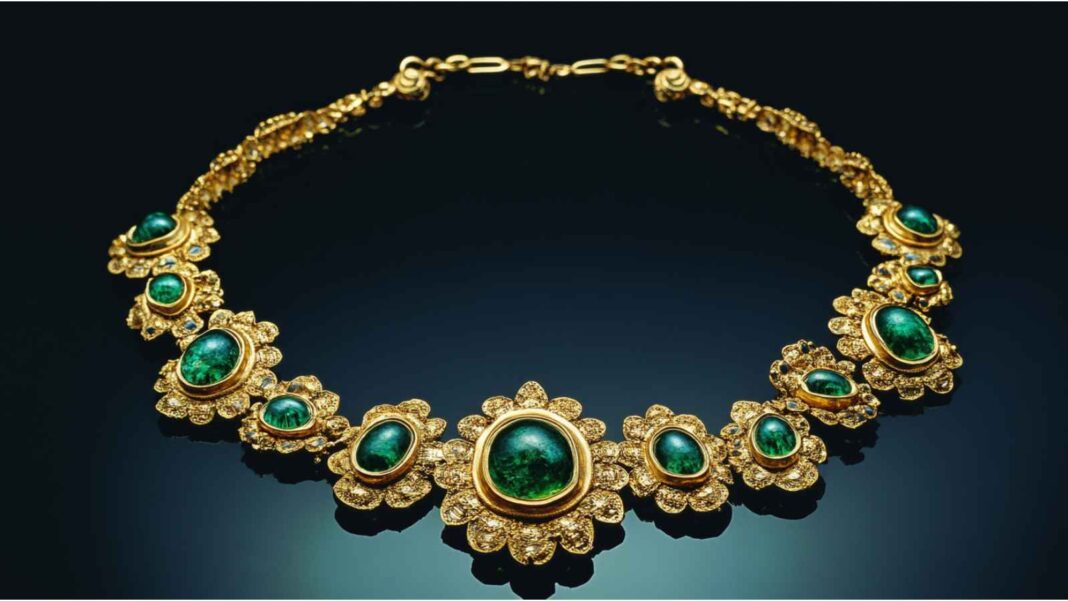
Traditional jewelry in Hindu culture is a celebration of artistry and devotion. Gold, silver, and precious gemstones are crafted into intricate ornaments that adorn the body during rituals and celebrations.
Key Types of Traditional Jewelry
- Necklaces (Haar):
Symbolizing eternal beauty and divine protection, these ornaments are often passed down through generations as family heirlooms. - Earrings (Karn Phool or Jhumkas):
Designed to accentuate the beauty of the face, earrings are crafted with exquisite detail and are associated with grace and elegance. - Bangles (Chooda):
A symbol of marital bliss and femininity, bangles are worn in multiples and are believed to protect the wearer from negative energies. - Nose Rings (Nath):
Often linked to the goddess Parvati, nose rings signify beauty, marital status, and spiritual prowess. - Armlets and Bracelets:
These adornments add to the overall ensemble and reflect the rich tradition of Indian craftsmanship.
Temple Profiles: The Intersection of Sacred Attire and Divine Spaces
Traditional garments and personal adornments take on special significance in temple settings. They not only enhance the devotional experience but also reflect the cultural and historical heritage of the temple itself. Below are two temple profiles that illustrate how sacred attire is interwoven with temple worship.
Temple Profile 1: Kamakshi Amman Temple, Kanchipuram, Tamil Nadu
Name and Location
Kamakshi Amman Temple
Kanchipuram, Tamil Nadu, India
Historical Background
- Ancient Legacy:
Kamakshi Amman Temple is one of the oldest and most revered shrines dedicated to Goddess Kamakshi, an incarnation of Parvati. Located in Kanchipuram—often hailed as the “City of Thousand Temples”—the temple has been a center of spiritual and cultural life since ancient times. Historical records and local legends trace its origins back to the Pallava and Chola dynasties. - Spiritual Importance:
The temple’s rituals and festivals have played a crucial role in shaping South Indian cultural traditions. Devotees wear traditional garments and sacred adornments—such as tilaka, bindi, and traditional jewelry—during temple visits, reinforcing their connection to the divine.
Architectural Highlights
- Garbhagriha and Shikhara:
The sanctum houses the murti of Goddess Kamakshi, adorned with elaborate jewelry and decorative tilakas. The towering shikhara above symbolizes the spiritual ascent towards the divine. - Ornate Carvings and Murals:
Intricate carvings and temple murals depict mythological narratives and scriptural themes, reflecting the deep cultural and spiritual heritage of the region. - Sacred Geometry:
Yantra motifs and other geometric designs are integrated into the temple’s architecture, emphasizing the cosmic order and divine harmony.
Visitor Experience
- Spiritual Immersion:
Visitors are enveloped in an aura of devotion and artistry as they witness age-old rituals, traditional attire, and the vibrant colors of temple celebrations. - Cultural Engagement:
Guided tours and cultural programs provide insights into the temple’s rich history, artistic expressions, and the significance of traditional adornments. - Community Connection:
Festivals such as Navaratri transform the temple into a vibrant hub of cultural and spiritual activity, where the collective display of sacred attire deepens the sense of unity and devotion.
AI Image Creation Prompt:
“Illustrate Kamakshi Amman Temple at sunrise in Kanchipuram, showcasing the intricate carvings on its shikhara and garbhagriha. Capture devotees in traditional sarees, dhotis, and turbans, adorned with tilaka, bindi, and exquisite jewelry, as they engage in prayer.”
Image Credit: AI Generated Image via ArtisticVisionAI
Temple Profile 2: Jagannath Temple, Puri, Odisha
Name and Location
Jagannath Temple
Puri, Odisha, India
Historical Background
- Mythical Origins:
With a history spanning over a millennium, Jagannath Temple is one of the most important pilgrimage sites in Hinduism. Dedicated to Lord Jagannath (a form of Vishnu), the temple is steeped in legend and tradition, with its rituals and festivals deeply rooted in ancient scripture and local lore. - Cultural and Ritual Significance:
The temple is renowned for its vibrant Rath Yatra (Chariot Festival) and other rituals where devotees express their devotion by wearing traditional garments and sacred adornments. These practices echo the temple’s long-standing cultural legacy and the timeless teachings of the Vedas and Puranas.
Architectural Highlights
- Sacred Layout:
The temple features a meticulously planned garbhagriha that houses the deities, crowned by an imposing shikhara that reflects the divine cosmos. Its architecture seamlessly integrates ornate carvings, yantra motifs, and mural art. - Decorative Elements:
Elaborate murals, intricate stone carvings, and rich ornamental details accentuate the temple, narrating stories from mythology and celebrating the art of traditional jewelry and attire. - Ritual Spaces:
Spacious mandapas and circumambulatory paths allow devotees to perform rituals while remaining immersed in an atmosphere of sacred beauty and cultural pride.
Visitor Experience
- Festive Atmosphere:
During the Rath Yatra and other festivals, the temple becomes a spectacle of devotion, where the traditional attire of devotees—including sarees, dhotis, turbans, tilaka, bindi, and jewelry—adds to the festive vibrancy. - Spiritual Serenity:
The continuous chanting of sacred hymns and the rhythmic ringing of temple bells create a serene environment that invites introspection and meditation. - Educational Engagement:
Informative tours and interactive exhibits offer detailed insights into the temple’s history, its architectural marvels, and the cultural significance of its ritual attire. - Community and Celebration:
The temple’s lively celebrations foster a deep sense of community and shared devotion, reinforcing the enduring legacy of traditional adornments.
AI Image Creation Prompt:
“Generate an image of Jagannath Temple at dusk in Puri, showcasing its ornate murals and intricate carvings. Capture a festive scene where devotees, adorned with traditional sarees, dhotis, turbans, tilaka, bindi, and jewelry, participate in the vibrant Rath Yatra.”
Image Credit: AI Generated Image via VisionaryCreationsAI
Integrating Sacred Attire into Daily Devotion and Cultural Expression
The traditions of wearing traditional garments and personal adornments are not confined to temple visits—they play a significant role in daily life and community celebrations. Embracing these practices helps preserve a rich cultural heritage and deepens one’s spiritual practice.
Personal Practices
- Home Altars:
Create a dedicated space in your home that reflects the sacred aesthetic of temple worship. Adorn your altar with replicas or images of traditional jewelry and garments, along with photos or icons of deities. - Daily Rituals:
Incorporate the application of tilaka, bindi, and the wearing of traditional attire into your daily devotional practices. This not only enhances personal purity and focus but also serves as a constant reminder of your spiritual identity. - Mindful Dressing:
Use your attire as an expression of inner values. When you dress in traditional garments for special occasions or everyday worship, you embody the virtues of discipline, modesty, and devotion.
Community and Cultural Engagement
- Festivals and Celebrations:
Participate in local festivals and religious ceremonies where traditional attire is celebrated. These communal events reinforce social bonds and keep ancient customs alive. - Workshops and Exhibitions:
Attend or organize cultural workshops that explore the history, design, and symbolism of traditional garments and jewelry. Such events can provide deeper insights and foster an appreciation for ancestral artistry. - Virtual and Digital Experiences:
Leverage technology to offer virtual tours of temples renowned for their sacred attire. Digital archives and online exhibitions can help preserve and promote these traditions to a global audience.