The Four Vedas: A Comprehensive Introduction to Hinduism’s Oldest Texts
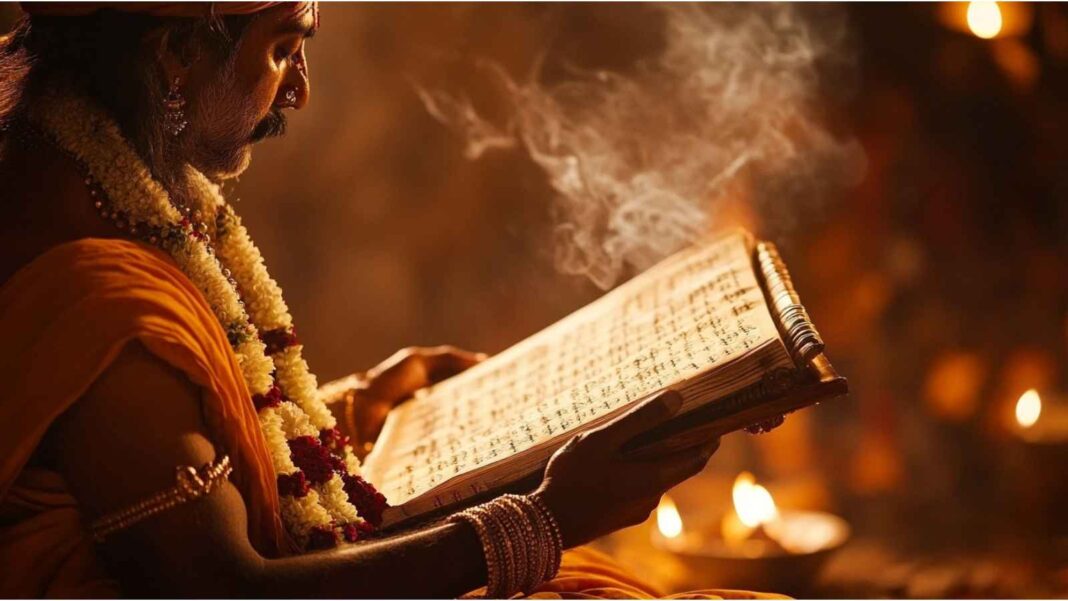
The Four Vedas are the bedrock of Hinduism, comprising some of the oldest and most revered texts in the world. As foundational scriptures of Hindu faith, the Vedas offer profound insights into the spiritual, philosophical, and ritualistic aspects of life. They serve as the guiding light for millions of Hindus around the world, shaping their understanding of the universe, the divine, and the self. These texts are not merely religious scriptures but also contain hymns, prayers, rituals, and wisdom that have influenced not only the religious practices of Hindus but also the cultural and intellectual fabric of India.
Read More About sacred texts
In this article, we will delve into the Four Vedas, providing a comprehensive introduction to their content, historical context, significance, and the role they continue to play in the lives of Hindus today. We will also explore the key elements of each Veda and their relevance to the modern world.
What Are the Four Vedas?

The Four Vedas—Rigveda, Samaveda, Yajurveda, and Atharvaveda—form the core of Hindu sacred literature. These texts are not only ancient but also timeless, containing teachings and philosophies that resonate across centuries. Each Veda is associated with a specific purpose, and together they guide followers on their spiritual journey, focusing on hymns, rituals, philosophies, and life’s deepest questions.
1. Rigveda: The Veda of Hymns
The Rigveda is the oldest and most important of the four Vedas. It consists of 1,028 hymns (suktas) dedicated to various deities, including Agni (fire), Indra (the king of gods), and Varuna (the god of cosmic order). The hymns are composed in a poetic form, and they praise the gods while offering prayers for blessings, protection, and prosperity.
The Rigveda provides valuable insight into the early Vedic society, their understanding of the universe, and their connection to the divine. It is a key source of knowledge on Hindu rituals, cosmology, and the nature of existence.
2. Samaveda: The Veda of Melodies
The Samaveda is known as the Veda of melodies and chants. Unlike the Rigveda, which is primarily a collection of hymns, the Samaveda focuses on the musical aspect of the Vedic tradition. It is a collection of chants (saman) that are meant to be sung during religious rituals. These chants are believed to invoke divine blessings, and the melodies themselves are seen as sacred, capable of influencing the spiritual and material world.
The Samaveda is closely related to the Rigveda, as many of its hymns are derived from the Rigveda but are set to music. The Samaveda is particularly significant in the context of Vedic sacrificial rituals (yajnas), where precise pronunciation and the right tone are essential for invoking the gods’ presence.
3. Yajurveda: The Veda of Sacrificial Rituals
The Yajurveda is primarily concerned with the performance of rituals and sacrifices. It consists of mantras and instructions for performing rituals (yajnas), which are central to Vedic worship. These mantras guide priests in their sacred duties, such as the offering of oblations to the fire and the chanting of prayers to various gods.
The Yajurveda is divided into two parts: the Shukla Yajurveda (white Yajurveda), which contains more straightforward instructions, and the Krishna Yajurveda (black Yajurveda), which includes more complex and detailed explanations. The Yajurveda plays an essential role in the Vedic sacrificial tradition, emphasizing the importance of proper conduct, purity, and devotion in spiritual practices.
4. Atharvaveda: The Veda of Knowledge and Magic
The Atharvaveda is the youngest of the Four Vedas, and it stands apart in many ways. While the other Vedas primarily focus on hymns and rituals, the Atharvaveda incorporates a wide range of topics, including medicine, magic, and philosophy. It contains hymns, spells, and incantations aimed at healing, protection from evil, and achieving prosperity.
The Atharvaveda offers a more practical approach to spirituality, addressing the concerns of daily life, such as physical health, mental well-being, and material success. It also contains discussions on the nature of the soul, the afterlife, and the cosmic order. The Atharvaveda thus holds a unique position within the Vedic tradition, combining spiritual teachings with practical knowledge and mystical practices.
Historical Context of the Vedas

The Vedas were composed over a vast period, beginning around 1500 BCE and continuing until 500 BCE, although their oral transmission likely dates back even further. They are believed to have been passed down by the ancient sages (rishis) of the Vedic period, who were inspired to compose these hymns and chants as revelations from the divine.
The Vedic period is marked by the nomadic life of the Indo-Aryans, who settled in the northwestern regions of India. Over time, the Vedic texts became central to the religious, cultural, and intellectual life of ancient India. The Vedas were not just scriptures but a way of life, influencing everything from social structures to rituals and philosophical thought.
The Vedic tradition is also intimately tied to the development of Hinduism as we know it today. Many of the practices and beliefs described in the Vedas, such as the worship of gods through fire rituals and the pursuit of spiritual knowledge, remain vital to Hinduism. The Vedic influence can also be seen in the later Hindu epics, the Upanishads, and the Bhagavad Gita.
The Role of the Vedas in Modern Hinduism
While the Vedas were composed centuries ago, their teachings continue to shape modern Hinduism. The Vedas are considered to be divine revelations, and their wisdom remains relevant to contemporary spiritual seekers. The core concepts found in the Vedas, such as the nature of the soul (Atman), the concept of Brahman (the ultimate reality), and the path to liberation (moksha), continue to be explored in Hindu philosophy and meditation practices.
In addition, many Hindu rituals today are based on the instructions found in the Vedas. The chanting of Vedic mantras during pujas (worship), yajnas (sacrificial offerings), and other ceremonies remains an essential part of Hindu religious life. Furthermore, the teachings of the Vedas continue to inspire scholars, spiritual leaders, and practitioners who seek a deeper understanding of the divine and the cosmos.
Architectural Highlights of Vedic Temples
Many temples in India are devoted to deities described in the Vedas, and these sacred spaces often feature architectural designs inspired by Vedic principles. The temples’ structures, mandalas, and rituals are all informed by the spiritual and philosophical teachings found in the Vedic texts. While Vedic texts do not provide specific architectural guidelines for temples, the influence of Vedic cosmology is evident in the sacred space of Hindu temples.
Temples dedicated to specific Vedic deities often contain intricate carvings and sculptures that reflect the spiritual significance of the divine forms. For example, the temple of Jagannath in Puri, Odisha, features a unique and ancient style of architecture that is tied to Vedic traditions of worship, and the temple layout is designed to reflect the sacred cosmos.
Conclusion
The Four Vedas are an essential part of Hinduism’s spiritual, philosophical, and ritualistic traditions. These sacred texts provide an enduring foundation for understanding the nature of the divine, the cosmos, and the self. Through the Rigveda, Samaveda, Yajurveda, and Atharvaveda, we gain access to the teachings of the ancient sages who sought to uncover the deepest truths of existence. As we continue to study and engage with these texts, the wisdom contained within the Vedas remains a guiding light for Hindus around the world.