
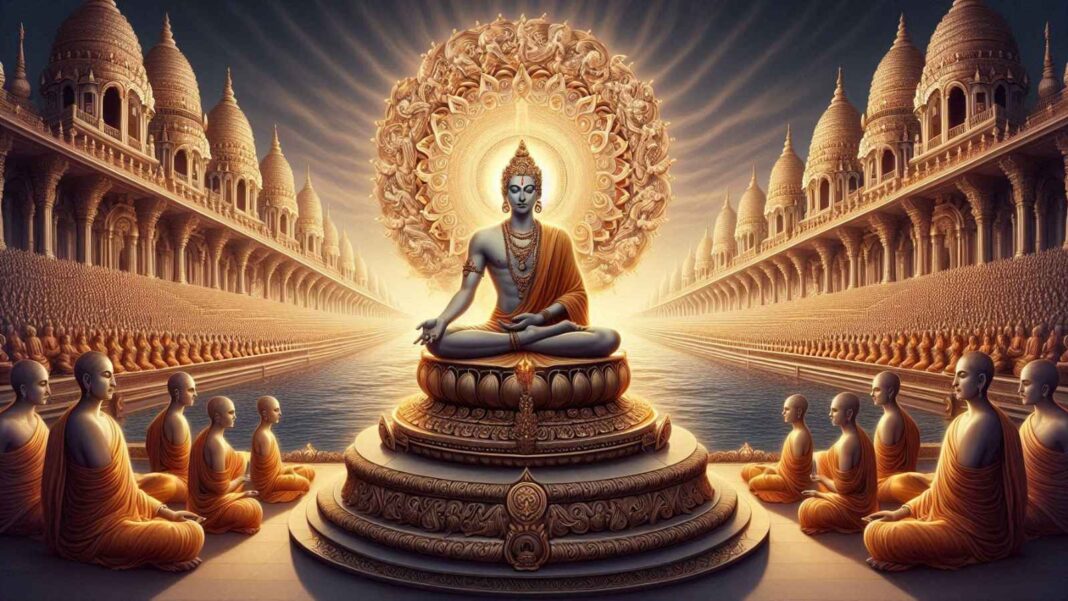

Sannyasa (सन्यास), literally “putting down” or “setting aside,” is the life-stage of renunciation in Hinduism, dedicated entirely to the pursuit of moksha (liberation) Wikipedia. Traditionally the culmination of the Chaturāśrama system—Brahmacharya (student), Grihastha (householder), Vanaprastha (forest dweller), Sannyasa (renunciate)—it requires the aspirant to “perform his own funeral” by symbolically abandoning all social and family ties, claims to property, and personal identity Encyclopedia Britannica. While classical texts envision literal forest dwelling, most Sannyasis historically remained within communities, subsisting on alms and guiding society as spiritual advisors and exemplars of detachment.
Read More About sacred texts
Scriptural Foundations
Upanishadic Perspectives
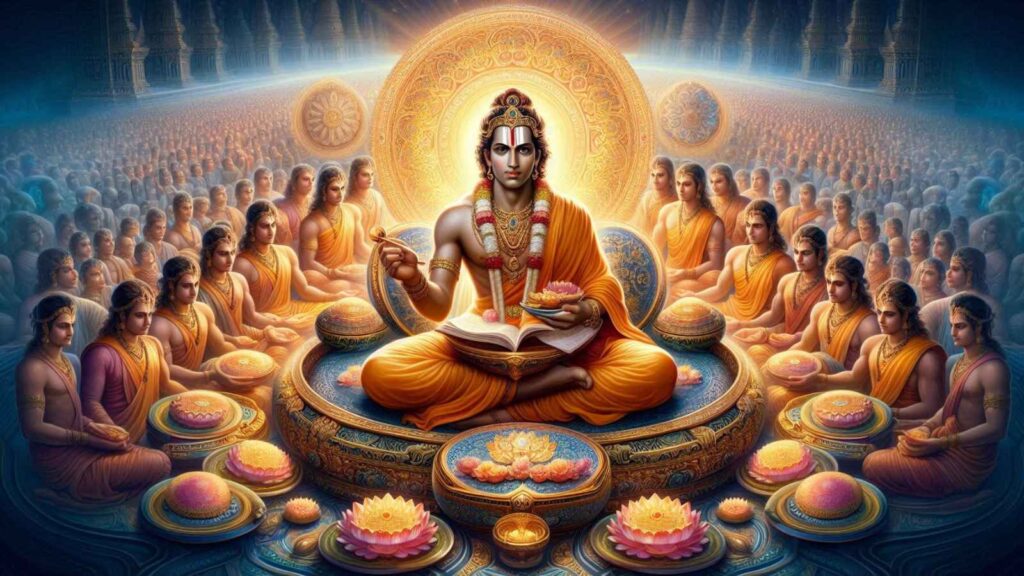
The Jabala Upanishad, among the twenty Sannyasa Upanishads attached to the Shukla Yajurveda, uniquely proclaims that renunciation is a personal choice, not strictly bound by age or prior stage, and that one who truly renounces lives ethically—abstaining from injury in thought, word, or deed—regardless of physical location Wikipedia. It enumerates the Paramahamsa archetype—renouncers who discard all external signs, relationships, and comforts to know the Atman within Wikipedia.
Dharmaśāstra Prescriptions
The Manusmriti (6.21–6.86) codifies Sannyasa as requiring “complete detachment from worldly objects,” entitling the renouncer to live on fruits and roots, meditate on Brahman, and teach Dharma to all castes without discrimination Hindu American Foundation. Wisdomlib’s compilation from the Saurapurāṇa adds that Sannyasis must “observe non-injury in thought, word and deed,” bathe thrice daily, anoint with sacred ash, recite the praṇava (Om), and subsist on forest produce—embodying equanimity amid pleasure and pain Wisdom Library.
Epic Context and Bhagavad Gita
In the Bhagavad Gita, Chapter 5—Karma-Sanyasa Yoga—Krishna clarifies that true renunciation lies in inner non-attachment to the fruits of action rather than mere cessation of duties. By performing one’s worldly responsibilities with equanimity, a person attains the yoga of renunciation, transcending both action and inaction Wikipedia.
Rights of the Sannyasi

Freedom from Household and Social Obligations
Upon taking Sannyasa, the renouncer legitimately relinquishes all claims to ancestral property, familial roles, and societal status, thus securing freedom to dedicate life wholly to spiritual pursuits without reproach Hindu Website.
Entitlement to Alms (Bhiksha)
Traditional injunctions grant Sannyasis the right to subsist on alms, with householders obliged to offer food without discrimination, viewing the beggar’s bowl as sacred .
Authority to Teach Dharma
Scriptures recognize Sannyasis as bearers of spiritual knowledge: they may expound Vedas and Upanishads, lead satsangs (spiritual assemblies), and counsel seekers of all castes, reflecting their privileged position in propagating Dharma .
Social Respect and Advisory Role
Communities accord Sannyasis high esteem as elder-advisors, consulting them on ethical dilemmas, legal matters, and life rituals—a social right rooted in ancient tradition Sanatan Kultura.
Duties of the Sannyasi
Non-Violence and Austerity
Per Dharmashāstra mandates and Saurapurāṇa guidance, a Sannyasi must practice ahimsa (non-injury) in thought, word, and deed, and maintain a sattvic regimen—simple diet of fruits and roots, minimal possessions, and celibacy—to purify body and mind Wisdom Library.
Daily Rituals and Study
Renunciates are bound to perform daily baths, anoint with ash (vibhuti), chant Om, and meditate on the Ātman, alongside rigorous study of Vedanta texts to deepen self-knowledge Wisdom Library.
Mendicancy and Bhiksha Tradition
Living by bhiksha, Sannyasis must undertake alms-rounds with humility, eating only what is freely offered, thereby practicing detachment and fostering community virtue Hindu Website.
Preaching and Service
A core duty is preaching Krishna-consciousness or supreme truth: as Srila Prabhupada taught, “The Sannyasi’s duty is to enlighten people in Krishna consciousness,” dedicating life to seva (service) and spiritual instruction .
Modern Interpretations and Applications
Monastic Orders and Spiritual Lineages
Contemporary Sannyasa traditions—from Ramakrishna Mission to Hindu Monastery (Saiva Samayam)—maintain initiation rites, monastic codes, and community projects, adapting ancient tenets to modern societal needs Sanatan Kultura.
Voluntary Simplicity and Minimalism
Global minimalism and eco-village movements echo Sannyasa’s ethos of restraint in consumption (Tain tyakten bhunjitha), promoting sustainability and inner freedom as pathways to collective well-being Hindu American Foundation.
Ethical Leadership and Mentorship
Retired professionals embracing late-life renunciation mentor youth, lead non-profits, and counsel on ethical governance—reflecting Sannyasa’s ideal of ultimate responsibility beyond personal gain .
Sannyasa Principles in Yoga and Mindfulness
Advanced yoga teacher trainings and mindfulness retreats integrate Sannyasa principles—daily discipline, study, and service—to cultivate balanced lives even within lay settings .
Practical Guidance for Seekers
- Discernment of Call (Viveka): Reflect deeply on detachment readiness—seek guidance from a guru or mentor.
- Phased Renunciation: Gradually reduce material ties—simplify wardrobe, limit social media—to acclimate to austerity.
- Community Engagement: Volunteer in temples, shelters, or environmental projects to practice seva.
- Inner Practices: Establish fixed times for meditation, scriptural study, and chanting to stabilize mind.
- Accountability Circle: Form or join sanghas (spiritual groups) for mutual support and regular reflection.


