
Brihadaranyaka Upanishad: The Great Forest Text and Its Teachings on Atman
The Brihadaranyaka Upanishad is one of the most significant texts in Hinduism, revered for its philosophical depth and profound insights into the nature of the self. As one of the oldest Upanishads, it is a cornerstone of Vedic literature, containing teachings that have shaped the understanding of spirituality, self-realization, and the cosmos in Hindu philosophy. The Upanishad is part of the Yajurveda and is known for its elaborate discourse on the Atman (the self), Brahman (the ultimate reality), and their interconnectedness.
Read More About sacred texts
This text is often referred to as the “Great Forest Text” because of its teachings, which were likely delivered in the forest by ancient sages seeking knowledge away from the distractions of society. The Brihadaranyaka Upanishad provides essential insights into the nature of existence, the soul, and the path to liberation (moksha).
In this article, we will explore the Brihadaranyaka Upanishad in detail, highlighting its core teachings on Atman, Brahman, and the profound philosophical ideas that continue to influence Hindu thought today.
What Is the Brihadaranyaka Upanishad?
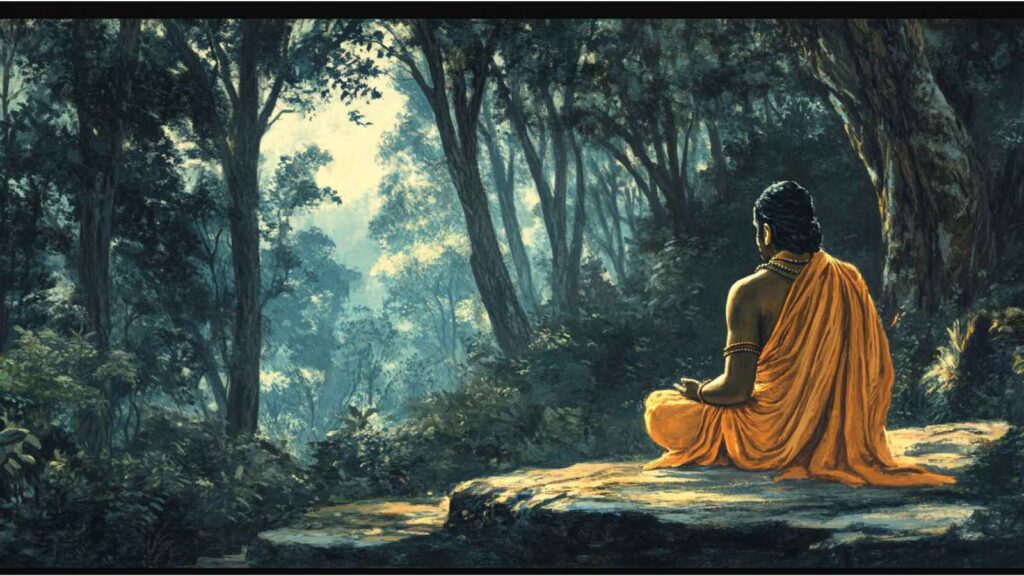
The Brihadaranyaka Upanishad is one of the oldest and most important of the Upanishads, and it is often regarded as the most comprehensive of all the Upanishadic texts. Its name translates to “the great forest book,” referring to the environment in which its teachings were likely passed down. The Upanishad forms part of the Yajurveda and consists of six chapters, each offering a distinct set of teachings on spiritual matters.
The Brihadaranyaka Upanishad is dialogical in nature, meaning that it consists of dialogues between different spiritual teachers and their disciples. These dialogues primarily address philosophical and metaphysical concepts like the nature of reality, the self, and the ultimate reality, Brahman. Throughout its chapters, the Upanishad explores topics such as Brahman as the source of the universe, the nature of Atman, and the liberation of the soul from the cycle of birth and rebirth (samsara).
The Core Teachings of the Brihadaranyaka Upanishad
1. The Nature of Atman and Brahman
One of the key teachings of the Brihadaranyaka Upanishad is the identification of Atman (the individual soul) with Brahman (the supreme reality). The text presents Brahman as the ultimate reality, the unchanging, eternal source of all creation. Atman, on the other hand, is the individual self, the essence of each living being. The Upanishad teaches that Atman is eternal, indivisible, and infinite, just like Brahman.
The text reveals the famous Upanishadic mantra “Tat Tvam Asi” (“That Thou Art”), which encapsulates the realization that the individual self (Atman) is not separate from Brahman. This philosophical insight forms the foundation of Advaita Vedanta, the school of non-dualism, which posits that there is no real distinction between the self and the ultimate reality. In other words, the Atman is Brahman, and this realization leads to liberation (moksha).
2. The Concept of Self-Realization
Self-realization is a core theme in the Brihadaranyaka Upanishad. According to the Upanishad, the individual self (Atman) is often trapped in the illusion of the material world and is unaware of its true divine nature. The Upanishad emphasizes the importance of knowledge (Jnana) and meditation in attaining self-realization.
Through meditation and introspection, an individual can transcend the illusion of Maya (illusion) and come to realize their true nature as the Atman. This realization of oneness with Brahman is the essence of moksha—the liberation from the cycle of birth, death, and rebirth.
3. Brahman as the Ultimate Reality
The Brihadaranyaka Upanishad describes Brahman as the source and essence of everything in the universe. Brahman is often referred to as Nirguna (without attributes) and Saguna (with attributes), indicating that Brahman transcends both form and formlessness. It is the underlying reality that sustains all life and creation.
The Upanishad explains that Brahman is both immanent (present in everything) and transcendent (beyond all limitations). The world we perceive with our senses is seen as an illusion (Maya), and true knowledge comes from realizing the ultimate reality, which is Brahman.
4. The Importance of Meditation and Knowledge
The Brihadaranyaka Upanishad teaches that meditation is an essential practice for gaining knowledge and achieving self-realization. Meditation allows the practitioner to move beyond the physical body and the material world to experience the oneness of Atman and Brahman. Through this inner experience, the individual can transcend the limitations of the ego and realize their divine nature.
The Upanishad emphasizes the importance of knowledge (Jnana) over ritualistic practice. While rituals are significant in Hinduism, the Brihadaranyaka Upanishad teaches that the highest form of knowledge is the realization of the self’s oneness with the ultimate reality, Brahman. This knowledge cannot be acquired through external rituals but only through deep spiritual practice and inner reflection.
5. The Role of the Teacher in the Path to Realization
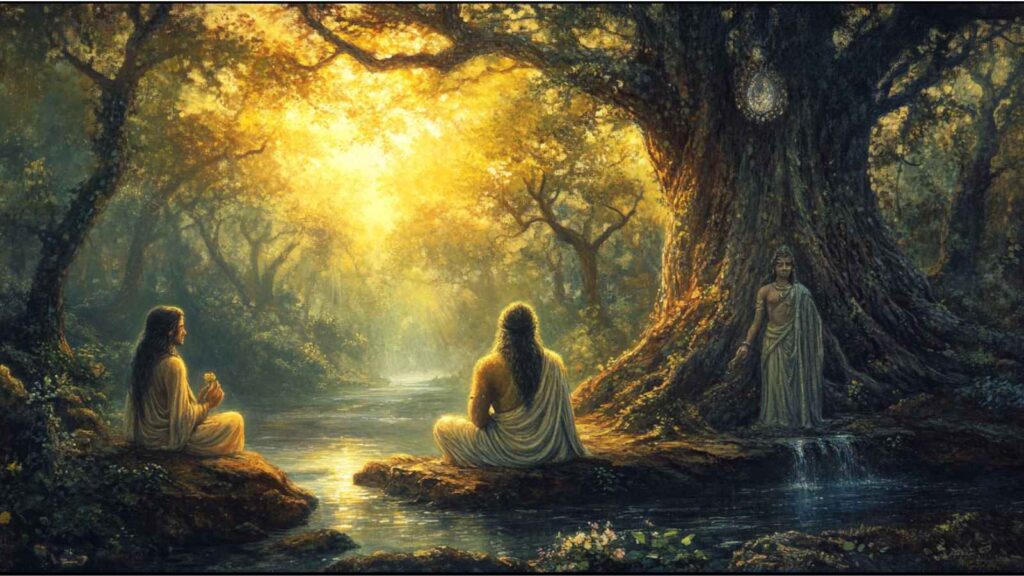
Throughout the Brihadaranyaka Upanishad, we see the role of the teacher (guru) in guiding the disciple (shishya) toward enlightenment. The Upanishad presents a dialogue between the sage Yajnavalkya and his disciples, with Yajnavalkya imparting spiritual wisdom. The teacher helps the student understand the nature of reality and provides the tools necessary for self-realization.
The Upanishad emphasizes the importance of a qualified and enlightened teacher who has direct knowledge of Brahman. The teacher’s role is to guide the student in discovering the truth for themselves, leading them toward spiritual liberation.
Key Teachings and Philosophical Insights from the Brihadaranyaka Upanishad
The Brihadaranyaka Upanishad provides several important teachings and philosophical insights that continue to influence Hindu thought. Here are some of its most notable ideas:
1. The Upanishadic Mantras and Their Philosophical Implications
The Brihadaranyaka Upanishad contains many mantras that carry deep philosophical meanings. One of the most significant is the “Ahm Brahmasmi” (“I am Brahman”), which echoes the realization that the self (Atman) is not distinct from Brahman. This mantra encapsulates the ultimate goal of the Upanishadic teachings: realizing the unity of all existence.
2. The Cycle of Life and Death (Samsara) and the Path to Liberation (Moksha)
The Brihadaranyaka Upanishad explores the idea of samsara, the cycle of birth, death, and rebirth, and the importance of moksha, liberation from this cycle. It teaches that the way to achieve moksha is through the realization of one’s true nature (Atman) and the understanding that the individual soul is not separate from Brahman. Through knowledge, meditation, and spiritual practice, an individual can transcend samsara and attain liberation.
3. The Role of Intuition and Direct Experience
The Upanishad also emphasizes the importance of intuition and direct experience in spiritual practice. Intellectual understanding alone is insufficient for achieving self-realization. True knowledge arises when one directly experiences the unity of Atman and Brahman through inner meditation and spiritual discipline.
The Relevance of the Brihadaranyaka Upanishad Today
The Brihadaranyaka Upanishad remains highly relevant in the modern world for several reasons:
- Timeless Spiritual Teachings: Its teachings on self-realization, meditation, and the nature of reality continue to guide spiritual seekers worldwide. The Upanishad provides a roadmap for inner transformation, encouraging individuals to look within themselves for the answers to life’s most profound questions.
- Philosophical Depth: The Upanishad’s philosophical teachings on the nature of existence, the self, and the cosmos resonate deeply with those seeking a deeper understanding of life. The concept of non-duality and the oneness of Atman and Brahman are central ideas that continue to influence modern spiritual movements, including Advaita Vedanta.
- Relevance in Yoga and Meditation: The Brihadaranyaka Upanishad’s emphasis on meditation and the inner experience of the divine is fundamental to many modern practices of yoga and meditation. By meditating on the teachings of this Upanishad, individuals can experience a deeper connection with their true selves and the universe.
Conclusion: The Eternal Wisdom of the Brihadaranyaka Upanishad
The Brihadaranyaka Upanishad is a profound text that continues to inspire seekers of truth and spiritual wisdom. Its teachings on Atman, Brahman, and the path to liberation offer timeless insights into the nature of the self and the universe. Through meditation, knowledge, and spiritual practice, the Upanishad guides individuals toward self-realization and liberation from the cycle of birth and rebirth.
As one of the oldest and most influential of the Upanishadic texts, the Brihadaranyaka Upanishad remains a cornerstone of Hindu philosophical thought, offering wisdom that resonates across generations and cultures.