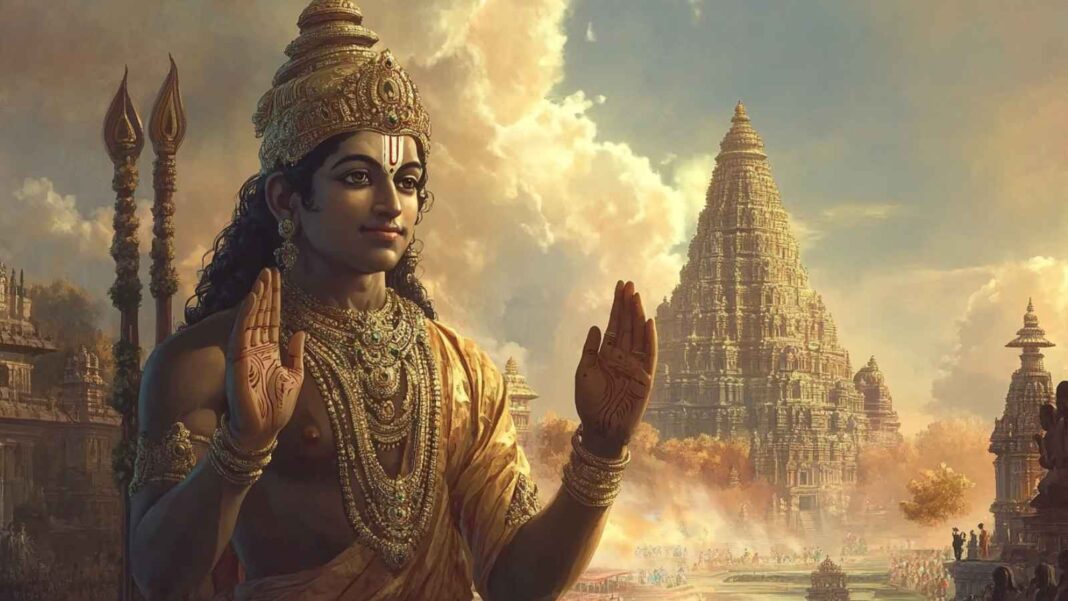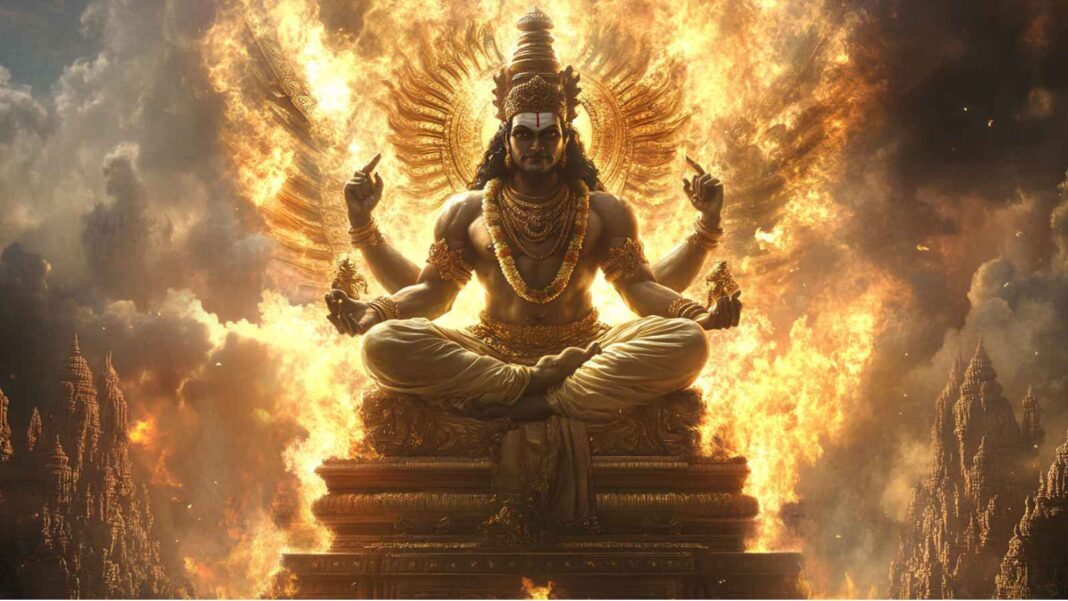

In the grand tapestry of Hindu mythology, few deities are as enigmatic and multi-dimensional as Yama. Often perceived as the God of Death, Yama transcends a singular role focused solely on mortality. He embodies cosmic justice, serving as the ultimate enforcer of dharma—the eternal law, moral duty, and righteous order that underpins the universe. For centuries, Yama has been revered and sometimes misunderstood, straddling the dual realms of justice and mercy. His presence in sacred texts, art, and ritual practices illustrates a deeper philosophical narrative: that even in death, moral righteousness prevails, balancing the cosmic scales.
Read More About sacred texts
In this comprehensive exploration, we unravel Yama’s multifaceted persona—his origins in ancient scriptures, his symbolic representations, and his enduring influence on both spiritual thought and contemporary society. By understanding Yama, we gain insight into the Hindu worldview of life, death, and the intricate mechanisms of cosmic justice, offering valuable lessons on duty, accountability, and the universal pursuit of truth.
Yama in Hindu Mythology: A Historical Perspective

Origins in the Vedas and Upanishads
Yama’s origins can be traced back to the earliest Vedic literature, where he emerges not merely as a harbinger of death, but as an essential guardian of cosmic law. In the Rig Veda, Yama is often depicted as a wise and revered figure who commands respect and fear in equal measure. His role evolved through the Upanishads, where he began to symbolize the intricate balance between life and death, and the inexorable journey of the soul towards liberation (moksha).
- Cosmic Order in the Vedas:
The ancient hymns of the Rig Veda refer to Yama as a dignified custodian of life’s cycle. He is charged with ensuring that each soul receives its due reward or consequence based on its adherence to dharma. - Philosophical Interpretations in the Upanishads:
In the Upanishads, Yama’s significance shifts subtly from being a mere executor of death to becoming a guide who illuminates the path of spiritual evolution. His judgments are portrayed as impartial, reflecting the inherent logic and order of the universe.
Yama as the Divine Judge
Yama’s role extends beyond mere mortality; he acts as the supreme arbiter of karma—the sum total of an individual’s actions. According to Hindu thought, every deed, whether virtuous or sinful, contributes to the cosmic balance, and Yama is there to ensure that this balance is meticulously maintained.
- The Keeper of Karma:
Yama is entrusted with the task of weighing the actions of each soul. This divine judgment determines the quality of one’s next incarnation. His role as the cosmic accountant ensures that the universe remains in a state of equilibrium, where justice is meted out without prejudice. - Agent of Cosmic Justice:
Beyond the transactions of karma, Yama is seen as an incarnation of dharma itself—a living embodiment of cosmic justice. He enforces ethical conduct, compelling individuals to reflect on their actions and their consequences in both this life and the next.
The Concept of Dharma in Hindu Thought

Defining Dharma: Law, Duty, and Cosmic Order
In Hinduism, dharma is a multilayered concept that encapsulates moral order, duty, and righteousness. It is a universal principle governing every aspect of existence—from the natural order of the cosmos to the individual’s personal conduct.
- Universal Law:
Dharma is the inherent order of the universe, a set of immutable principles that sustain life and cosmic balance. It dictates the conduct of all beings, ensuring that each action, whether by the gods or humans, is aligned with universal truth. - Individual Duty:
On a personal level, dharma refers to one’s ethical and moral responsibilities. It provides a guide for living a virtuous life, encouraging individuals to act in ways that promote harmony and justice. - Cosmic Justice and Order:
Yama, as the embodiment of dharma, plays an instrumental role in enforcing this universal law. His judgments serve as a reminder that every action has a consequence, thereby reinforcing the ultimate truth that the cosmos is built upon a foundation of justice.
Yama’s Connection to Dharma
Yama is not an isolated deity confined to the realm of death; he is integrally connected to the concept of dharma. His responsibilities include:
- Enforcement of Moral Accountability:
Every soul that departs from the mortal realm is subject to Yama’s scrutiny. In his court, the principles of karma and dharma converge, ensuring that justice is served based on one’s earthly deeds. - Symbol of Equilibrium:
Yama’s role underscores the belief that the universe is a balanced interplay of creation, preservation, and dissolution. His function as the judge of souls is essential for maintaining this equilibrium, as it reminds the living of their moral obligations. - Lessons in Impermanence and Renewal:
By managing the transition between life and death, Yama communicates the transient nature of physical existence and the eternal nature of the soul. This perspective inspires adherence to dharma—not as a means to escape punishment, but as a path to spiritual evolution and inner peace.
Iconography and Symbolism of Yama
Visual Representations in Art and Temple Architecture
Yama is a striking figure in Hindu iconography, often depicted with attributes that signify his dual role as both a harbinger of death and a guardian of justice.
- Appearance and Attributes:
Yama is traditionally shown as a fearsome yet dignified deity with dark or blue skin—a representation of the infinite cosmos. He wields a noose (pasha), symbolizing his power to bind souls to the consequences of their actions. His steadfast gaze embodies the impartiality of cosmic judgment. - The Buffalo Mount:
Unlike other deities who ride mythical creatures, Yama is commonly depicted riding a water buffalo. This imagery is rich with symbolism; the buffalo is often associated with strength, steadfastness, and a connection to the earthly realm, all of which complement Yama’s role in the cycle of life and death.
The Court of Yama
Ancient texts and temple reliefs often illustrate Yama’s court as a place of solemn judgment. Here, the dead are met with a visual narrative of accountability—where every soul is measured, and justice is rendered without bias.
- The Scales of Karma:
In many depictions, Yama is shown holding scales that metaphorically weigh the actions of souls. This imagery underscores the universal truth that every deed, regardless of its magnitude, has its moment of reckoning. - Judicial Authority:
Yama’s court is not a place of terror but a symbol of fairness and restoration. It is here that the cycle of rebirth is regulated, reinforcing the moral order of the universe.
Yama’s Role in Hindu Cosmic Justice
Balancing the Scales of Karma
At the heart of Hindu cosmic justice lies the intricate relationship between karma and dharma. Yama’s judgment is pivotal in this process, ensuring that every soul is accorded its due based on past actions.
- Karmic Accountability:
Every life is a mosaic of actions, and Yama’s role is to evaluate each fragment of this mosaic. His decisions determine the nature of a soul’s next incarnation, making him a key figure in the enforcement of moral order. - Restorative Justice in the Cosmos:
Yama’s judgments are not punitive for the sake of punishment alone. Instead, they aim to restore balance, allowing souls to learn from their past actions and evolve spiritually. This perspective reinforces the belief that the universe is fundamentally just, where every karmic debt is ultimately repaid.
Yama as a Guide for the Soul
Beyond delivering justice, Yama also plays a crucial role in guiding souls toward their next phase of existence.
- The Journey Beyond Life:
For many devotees, the process of death is not an end but a transition—a gateway to new beginnings. Yama’s duty is to ensure that this journey is in accordance with the soul’s accumulated karma, providing an opportunity for redemption and spiritual growth. - Spiritual Liberation:
By offering souls their due judgment, Yama indirectly facilitates the journey toward liberation (moksha). In this respect, his role is not merely that of an executor but also that of a compassionate guide who helps troubled souls navigate the complexities of existence.
Yama in Sacred Texts and Philosophical Discourses
Yama in the Puranas and Epics
The Puranas, along with various epic narratives, offer vivid portrayals of Yama that underscore his significance in Hindu thought.
- The Mahabharata and the Ramayana:
While these epics primarily focus on heroic tales and moral dilemmas, Yama’s occasional appearances in these texts serve as reminders of the overarching rule of cosmic justice. His role, though often subtle, is a constant reminder that divine law is inescapable. - Yama Purana:
Dedicated solely to the lore of Yama, the Yama Purana provides elaborate descriptions of his duties, his court, and the intricacies of the karmic cycle. This text acts as a guide for understanding the spiritual significance of death and the afterlife in Hindu philosophy.
Philosophical Insights from Yama’s Teachings
The teachings associated with Yama extend far beyond the literal interpretation of death; they delve into the very essence of moral accountability and spiritual transformation.
- The Metaphor of Death as Renewal:
Yama’s role challenges the common perception of death as an ultimate end. Instead, he represents the necessary conclusion of one cycle of existence and the beginning of another. His judgments remind us that every end carries the seeds of renewal. - Ethical Implications for the Living:
The presence of Yama in philosophical discourses encourages living beings to reflect on their actions. The awareness that each deed contributes to one’s karmic ledger instills a sense of responsibility and nurtures a commitment to living in accordance with dharma.
Incorporating Yama’s Wisdom in Daily Life
The profound insights offered by Yama transcend the realm of religious rituals and find relevance in everyday life. His teachings inspire individuals to:
- Adopt a Mindful Attitude:
By reflecting on the inevitability of consequences, one is encouraged to live mindfully—considering the ethical dimensions of every choice. - Strive for Balance:
Just as Yama maintains cosmic balance, individuals are motivated to balance their professional, personal, and spiritual lives. This holistic approach to living is a cornerstone of Hindu ethical thought. - Foster a Culture of Accountability:
In both personal relationships and broader social interactions, the principles embodied by Yama promote transparency, fairness, and the pursuit of justice.
Symbolism in Rituals and Temples
Ritual Practices Honoring Yama
Yama’s legacy is preserved not only through texts and art but also via ritual practices observed by devout communities. Temples dedicated to Yama often serve as centers for discussing cosmic justice and the transient nature of life.
- Day of Remembrance:
Certain Hindu festivals and observances include rituals where devotees honor Yama as a reminder of life’s impermanence. Through prayers and meditative practices, communities reinforce the idea that every end is a prelude to renewal. - Offerings and Symbolic Acts:
Ritual offerings, such as prayers, incense, and water, are made to Yama to seek his blessings for a righteous life. Such acts are symbolic of surrendering to the cosmic order and recognizing the authority of divine justice.
Temples and Iconography
In temple art, Yama is portrayed with a blend of awe and reverence:
- Sculptures and Reliefs:
Temples in various parts of India feature detailed sculptures of Yama, often integrated into the broader narrative of cosmic order. His depictions, complete with his iconic noose and scales, serve as permanent reminders of the principles of karma and accountability. - Integration with Other Deities:
In many temple complexes, Yama’s image is found in harmony with other deities, symbolizing that death and justice are integral aspects of the divine cosmos. This interrelationship reinforces that every cosmic phenomenon, whether creation or dissolution, is governed by immutable laws.
Modern Implications: Yama’s Relevance Today
Yama’s Role in Contemporary Thought
Despite being an ancient deity, Yama’s teachings are remarkably relevant in today’s world. His embodiment of cosmic justice speaks to modern issues surrounding ethics, mortality, and accountability.
- Ethical Leadership and Governance:
Leaders and policymakers often draw upon the metaphor of cosmic justice when discussing systems of accountability. Yama’s unwavering judgment reminds us that every decision has far-reaching consequences, fostering a culture where ethical leadership is paramount. - Social Justice Movements:
As modern societies grapple with issues of inequality and injustice, Yama’s role as the ultimate enforcer of dharma offers a timeless perspective. His wisdom can be interpreted as a call to action for social reform—urging communities to pursue fairness and holistic well-being.
The Science of Life and Death
In today’s scientific milieu, discussions on life, death, and consciousness are increasingly interdisciplinary. Yama’s philosophical insights provide an alternative view that complements scientific inquiry:
- Interplay of Science and Spirituality:
While modern science explains death in biological terms, Yama’s narrative reminds us of the metaphysical aspects—the continuity of the soul and the moral dimensions of existence. This holistic perspective encourages a dialogue between science, philosophy, and spirituality. - Meditation and Mindfulness:
Practices derived from ancient Hindu traditions, including meditative techniques, draw inspiration from the understanding that life is a series of transitions. Yama’s teachings prompt a reflective approach to mortality—an approach that fosters resilience and inner peace.