

Hinduism, one of the world’s oldest religions, offers profound insights into the relationship between humans and animals. Central to its teachings is the principle of ahimsa, or non-violence, which extends beyond human interactions to encompass all living beings. This article delves into Hindu perspectives on animal rights, highlighting the ethical responsibilities humans bear towards animals and the environment.
Read More About sacred texts
The Principle of Ahimsa: Non-Violence Towards All Beings
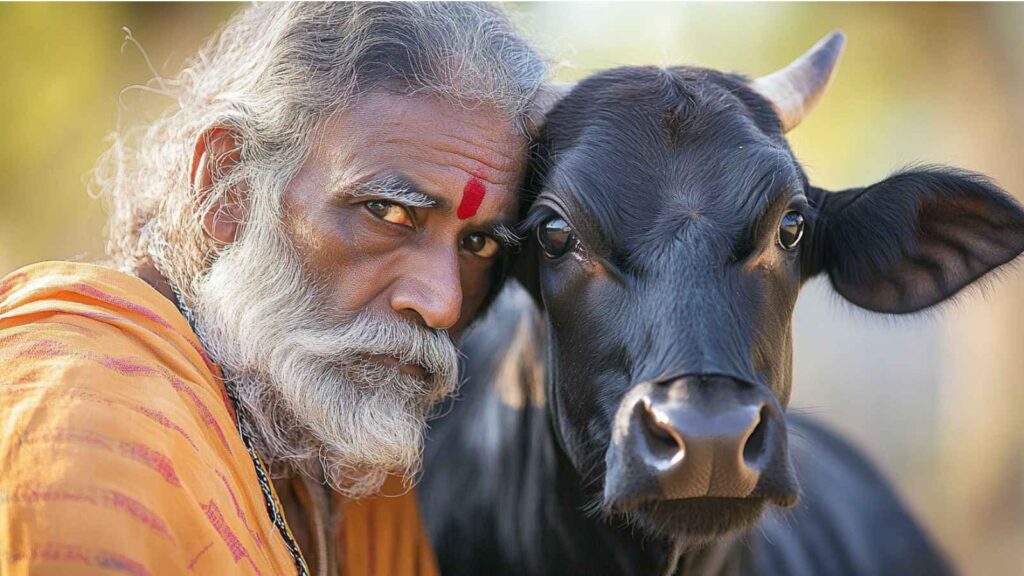
Understanding Ahimsa
Derived from Sanskrit, ahimsa means “non-injury” or “non-harming.” It is a foundational concept in Hindu ethics, advocating for the avoidance of harm to any living creature. This principle is not limited to physical harm but also encompasses thoughts and words.
Ahimsa in Sacred Texts
Hindu scriptures emphasize ahimsa as a paramount virtue:
- Yajur Veda 12.32.90: “You must not use your God-given body for killing God’s creatures, whether they are human, animal or whatever.”
- Manusmriti 6.60: “By not killing any living being, one becomes fit for salvation.”
These texts underscore the importance of compassion and non-violence towards all forms of life.
The Concept of Atman: Recognizing the Divine in All
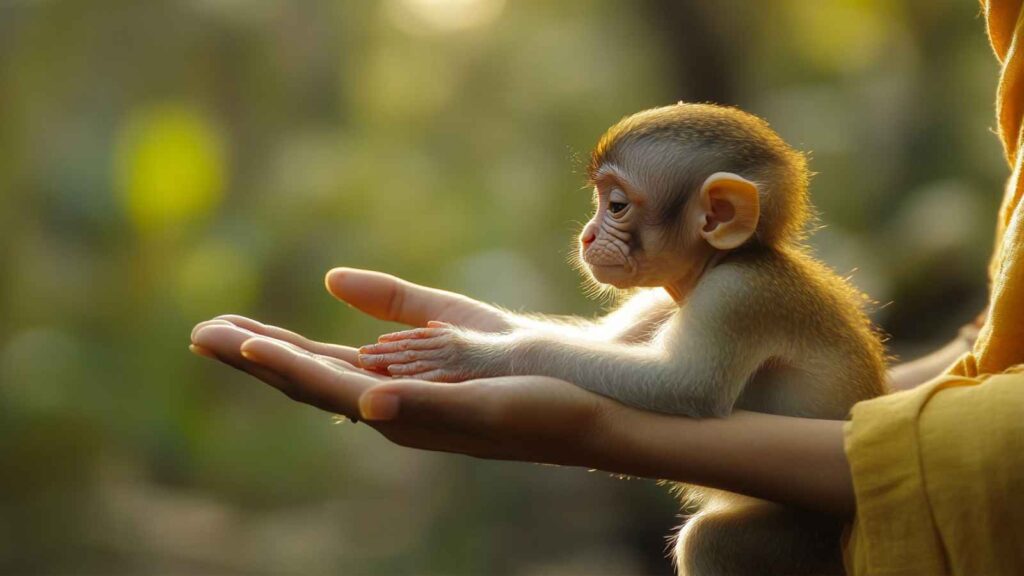
Atman and the Unity of Life
In Hindu philosophy, Atman refers to the inner self or soul, which is considered eternal and divine. This belief fosters a sense of unity among all living beings, as each possesses the same divine essence.
Implications for Animal Rights
Recognizing the divine in animals leads to ethical considerations:
- Atharva Veda 17.1.4: “One should be considered dear, even by the animal kingdom.”
This perspective encourages respect and kindness towards animals, viewing them as integral parts of the cosmic order.
Reincarnation and the Cycle of Life
Samsara: The Cycle of Birth and Rebirth
Hinduism teaches that all beings are part of samsara, the cycle of birth, death, and rebirth. Actions (karma) in one life influence the circumstances of future lives.
Ethical Implications
Understanding samsara promotes empathy towards animals:
- Mistreating animals can lead to negative karma, affecting one’s future existence.
- Compassionate actions contribute to spiritual progress and liberation (moksha).
Animals in Hindu Mythology and Worship
Sacred Animals and Their Significance
Many animals hold sacred status in Hinduism:
- Cow: Revered as a symbol of abundance and motherhood.
- Elephant: Associated with Lord Ganesha, representing wisdom and strength.
- Monkey: Linked to Lord Hanuman, symbolizing devotion and courage.
- Snake: Connected to Lord Shiva, embodying transformation and renewal.
These associations highlight the deep respect for animals within Hindu culture.
Worship and Rituals
Animals are often included in religious rituals:
- Feeding animals during festivals as acts of charity.
- Observing fasts and prayers for the well-being of animals.
Such practices reinforce the bond between humans and animals.
Human Responsibilities Towards Animals
Ethical Treatment and Compassion
Hinduism advocates for compassionate living:
- Dana (charity): Encourages sharing resources with all beings.
- Seva (selfless service): Promotes actions benefiting others, including animals.
These principles guide ethical interactions with animals, emphasizing care and protection.
Vegetarianism and Dietary Choices
Many Hindus adopt vegetarianism as an expression of ahimsa:
- Avoiding meat consumption to prevent harm to animals.
- Choosing plant-based diets to align with spiritual values.
This dietary practice reflects a commitment to non-violence and respect for life.
Contemporary Challenges and Hindu Responses
Animal Welfare in Modern Times
Despite traditional teachings, modern practices sometimes conflict with Hindu principles:
- Industrial farming and animal testing raise ethical concerns.
- Environmental degradation impacts animal habitats and well-being.
Hindu Advocacy and Activism
Many Hindu organizations and individuals work towards animal welfare:
- Promoting cruelty-free products and ethical consumption.
- Supporting animal shelters and conservation efforts.
These initiatives aim to align contemporary lifestyles with ancient values.
Conclusion
Hinduism offers a comprehensive framework for understanding and practicing animal rights. Through principles like ahimsa, recognition of the divine in all beings, and ethical living, Hindus are encouraged to treat animals with compassion and respect. Embracing these teachings can lead to a more harmonious coexistence between humans and the animal kingdom.