


Namakaran Samskara: Welcoming a New Soul with Sacred Rituals, Ancient Scriptures & Temple Blessings
Namakaran, the naming ceremony, is one of the fundamental samskaras (sacred life-cycle rituals) in Hinduism. It symbolizes the formal introduction of a newborn to the world, marking the beginning of its individual journey while connecting it to the cosmic order and divine lineage. Rooted in ancient scriptures and steeped in time-honored traditions, Namakaran is not merely a ritual but a celebration of life, identity, and the eternal bond between generations. Through the recitation of sacred mantras and the blessing of elders, the child is bestowed with a name that reflects familial heritage, cultural values, and spiritual aspirations.
Read More About Hindu Temples
In this comprehensive guide, we explore the significance of the Namakaran samskara through the lens of ancient scriptures, detailed ritual practices, and the role of temple visits in reinforcing the spiritual blessings for a newborn. We also delve into the architectural and historical splendor of three iconic temples—Sree Venkateswara Temple in Tirumala, Jagannath Temple in Puri, and Meenakshi Amman Temple in Madurai—that families often visit to seek divine protection and auspicious blessings after the Namakaran ceremony. Additionally, we provide a full framework for creating engaging AI-generated visuals to capture the essence of this sacred ritual, alongside SEO best practices to ensure your content ranks highly in search results.
Foundational Scriptures & Spiritual Guidance
The Vedas and Upanishads
The Vedas—comprising the Rigveda, Yajurveda, Samaveda, and Atharvaveda—are the oldest and most authoritative texts of Hinduism. They articulate the cosmic order (ṛta) and the sacred energy that permeates the universe. Although the Vedas do not explicitly describe the Namakaran ritual, their hymns inspire the reverence for life and the intrinsic connection between the individual soul (Atman) and the universal essence (Brahman).
The Upanishads, on the other hand, delve into the philosophical dimensions of existence. They emphasize self-realization and the pursuit of inner truth, underscoring that every human being is an eternal spark of the divine. In the context of Namakaran, these texts remind us that the newborn carries within it a fragment of the universal spirit, destined for spiritual evolution and self-discovery.
Grihya Sutras & Dharmashastras
The Grihya Sutras provide detailed guidelines for domestic rituals, including Namakaran. These texts outline the specific mantras, procedures, and symbolic acts that should be performed during the naming ceremony. By following these prescriptions, families ensure that the newborn is initiated into the social and spiritual fabric with purity and divine favor.
Complementing the Grihya Sutras, the Dharmashastras (such as Manusmriti) emphasize the ethical and moral duties of the family. They reinforce the idea that the name given to a child should be chosen with care and respect, reflecting virtues that will guide the child throughout life.
Regional Devotional Texts & Tamil Literary Tradition
In addition to pan-Indian scriptures, regional texts and Tamil literary works, such as the Sangam literature and the Thirukkural, celebrate the sanctity of birth and the importance of naming as an expression of familial and cultural identity. These works extol the virtues of duty, compassion, and the nurturing of life, creating a rich tapestry of beliefs that support the Namakaran samskara.
“A name is the first gift of life—it is a sacred echo of the divine, a promise of heritage and a beacon of future glory.”
– Traditional Sanskrit Proverb
The Ritual of Namakaran: A Sacred Naming Ceremony

Namakaran is typically performed on the 11th or 12th day after a child’s birth, though regional customs may vary. The ceremony marks the formal naming of the child, an act imbued with deep symbolic meaning. It signifies the child’s transition from the womb into the realm of society and its integration into the family’s legacy.
Key Elements of the Namakaran Ritual
- Invocation and Mantra Recitation:
The ceremony begins with the invocation of divine forces and the recitation of specific mantras from the Vedas and Grihya Sutras. Elders and priests chant hymns that invoke blessings, guiding the newborn toward a life of righteousness, wisdom, and spiritual growth. - The Naming Process:
After the initial prayers, the parents announce the chosen name of the child. This name is believed to reflect the qualities and destiny the child is expected to embody. It is often selected after careful consultation of family traditions, astrological considerations, and the auspicious sounds of Sanskrit. - Symbolic Acts:
Various symbolic gestures, such as sprinkling holy water and offering a small amount of rice or honey, are performed to purify the newborn and imbue it with divine energy. These acts signify the removal of impurities and the initiation of the child into a world governed by dharma and cosmic order. - Family and Community Involvement:
Namakaran is a communal event. Family members, relatives, and close friends participate actively, offering their blessings and sharing in the joyous occasion. This collective participation reinforces the idea that the child is not only a gift to the parents but also a cherished addition to the larger community.
The Symbolism Behind Namakaran
- Identity and Destiny:
The name given during the ceremony is considered a fundamental aspect of the child’s identity. It is believed to influence the child’s future, instilling values that align with the family’s spiritual and cultural heritage. - Purification and Renewal:
The rituals performed during Namakaran purify the newborn’s soul and prepare it for its journey in the world. This act of purification signifies the removal of any residual energies from the prenatal stage, making way for a fresh start. - Integration into the Cosmic Order:
By bestowing a sacred name, the family acknowledges the child’s connection to the divine and to the universal order. It is a ritual that bridges the material and spiritual realms, ensuring that the child embarks on life with divine guidance.
Iconic Temples Associated with Namakaran Blessings
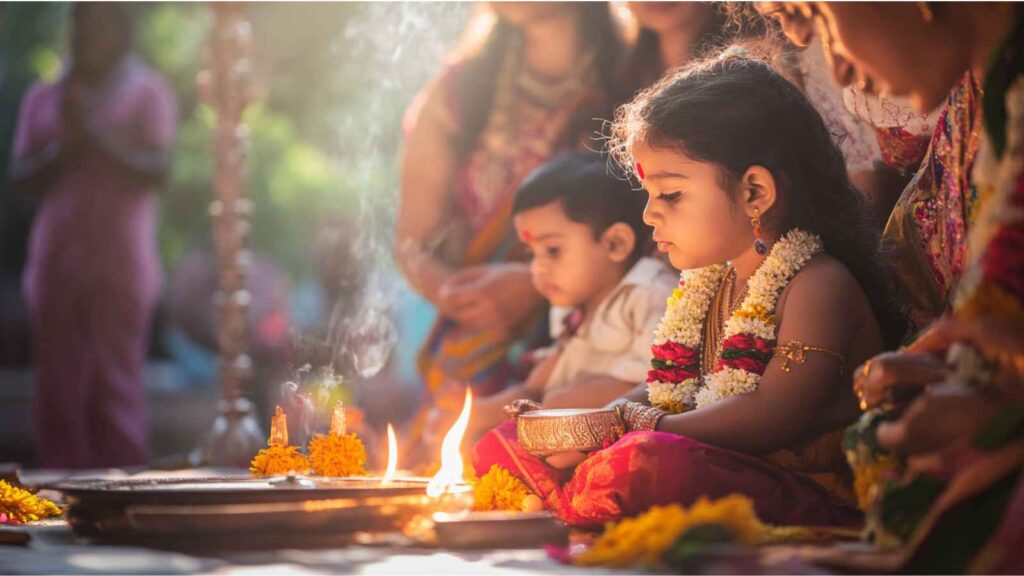
Though Namakaran is primarily a home-based ritual, many families also visit temples to seek additional blessings for the newborn. Temples serve as sacred spaces that amplify the spiritual significance of the naming ceremony. Below, we profile three iconic temples that are popular destinations for families celebrating Namakaran.
1. Sree Venkateswara Temple, Tirumala, Andhra Pradesh
Location:
Sree Venkateswara Temple
Address: Tirumala, Tirupati district, Andhra Pradesh, India
Historical Background:
Sree Venkateswara Temple, one of the richest and most visited pilgrimage sites in the world, has ancient origins and a storied history. Dedicated to Lord Venkateswara, a manifestation of Vishnu, the temple has been a beacon of divine blessings for centuries. Families often bring their newborns to the temple following the Namakaran ceremony, seeking blessings for prosperity, protection, and spiritual guidance.
Architectural Highlights:
- Dravidian Architectural Mastery:
The temple features towering gopurams (gateway towers), intricately carved pillars, and expansive mandapams (halls) that showcase the grandeur of Dravidian architecture. - Intricate Sculptural Work:
Detailed carvings and ornate sculptures depict mythological scenes, deities, and celestial beings, making the temple a living museum of ancient art and culture. - Modern Enhancements:
Despite its ancient origins, the temple seamlessly integrates modern facilities to accommodate millions of devotees, ensuring a comfortable and spiritually enriching experience.
Visitor Experience:
Visitors to Sree Venkateswara Temple are often awed by the temple’s sheer scale and the palpable spiritual energy that permeates its halls. The rhythmic chanting of mantras, the aroma of sandalwood, and the meticulously maintained temple grounds create an immersive atmosphere. For families celebrating Namakaran, a visit to Tirumala is a transformative experience that reinforces the sacred bond between the newborn and the divine.
2. Jagannath Temple, Puri, Odisha
Location:
Jagannath Temple
Address: Jagannath Temple Complex, Puri, Odisha, India
Historical Background:
The Jagannath Temple in Puri is one of the Char Dham pilgrimage sites and a revered center of Vaishnavism. With a history that dates back to ancient times, the temple has been a focal point of religious devotion and cultural heritage. It is believed that the blessings of Lord Jagannath can ensure a life filled with prosperity, protection, and spiritual evolution—a sentiment that resonates deeply with the purpose of Namakaran.
Architectural Highlights:
- Kalinga Architecture:
The temple is an exemplar of Kalinga style, featuring soaring spires, intricately carved stone panels, and an elaborate shikhara (tower) that dominates the skyline. - Artistic Embellishments:
Vivid murals and detailed sculptures depict the rich mythology of Lord Jagannath, enhancing the temple’s cultural and spiritual allure. - Sacred Ambiance:
The layout and design of the temple are intended to create an atmosphere of divine mystery and celestial beauty, making it an ideal place for receiving sacred blessings.
Visitor Experience:
A visit to Jagannath Temple is an immersive experience that offers a blend of history, art, and devotion. Pilgrims are greeted by the resonant sound of temple bells, the fragrance of incense, and the colorful processions that bring the temple complex to life. For families after Namakaran, the temple serves as a sacred haven where they can secure blessings for the newborn and connect with the ancient traditions of divine protection.
3. Meenakshi Amman Temple, Madurai, Tamil Nadu
Location:
Meenakshi Amman Temple
Address: Madurai, Tamil Nadu, India
Historical Background:
Meenakshi Amman Temple is a celebrated monument of South Indian culture and devotion. Dedicated to Goddess Meenakshi (a form of Parvati) and Lord Sundareswarar (Shiva), the temple has been a spiritual and cultural center in Madurai for centuries. Although primarily associated with Shaivism and Shaktism, families also visit Meenakshi Temple to invoke blessings for their newborns, ensuring that the child embarks on life with divine grace and a deep sense of cultural identity.
Architectural Highlights:
- Dravidian Grandeur:
The temple is renowned for its towering gopurams adorned with thousands of colorful sculptures and intricate carvings that narrate mythological tales. - Ornate Halls and Corridors:
Elaborate mandapams and corridors showcase exquisite stone work and traditional motifs, reflecting the artistic brilliance of ancient Tamil architects. - Cultural Significance:
The temple is not only a religious center but also a vibrant cultural hub that hosts festivals, dance performances, and music concerts throughout the year, celebrating the rich heritage of Tamil Nadu.
Visitor Experience:
Visitors to Meenakshi Amman Temple are often mesmerized by the temple’s dynamic blend of spirituality and artistry. The vibrant atmosphere—filled with devotional music, traditional rituals, and the hum of continuous prayer—creates an immersive experience that is both soul-stirring and culturally enriching. Families who visit the temple after Namakaran find that the divine energy of the site helps anchor their newborn’s journey in a legacy of tradition and spiritual wisdom.


