


Temple Murals: The Vibrant Canvas of Divine Narratives in Hindu Sacred Architecture
Hindu temples are not only monuments of spiritual devotion and architectural brilliance, but they also serve as dynamic canvases that tell stories of mythology, philosophy, and ritual. Among the most striking visual elements of these sacred spaces are the temple murals—vivid, intricate paintings that adorn temple walls and ceilings, narrating epic tales, divine exploits, and cosmic truths. These murals are steeped in ancient tradition and are inspired by foundational scriptures such as the Vedas, Upanishads, Bhagavad Gita, and Agamas, offering both spiritual guidance and a feast for the eyes.
Read More About sacred texts
In this comprehensive guide, we delve into the world of temple murals in Hinduism. We explore their historical evolution, symbolic meanings, and the role they play in both ritual and daily spiritual practice. Additionally, we highlight detailed profiles of two iconic temples where murals play a pivotal role in the overall sacred experience—Kamakshi Amman Temple in Kanchipuram, Tamil Nadu, and Jagannath Temple in Puri, Odisha. For each temple, we provide:
- Name of the temple with exact location
- Historical background of the temple
- Architectural highlights
- Visitor experience
We also include a creative framework for AI-generated visuals to help you visualize these vibrant murals. This guide is designed to be an invaluable resource for anyone interested in the sacred art of temple murals, their cultural significance, and how they continue to inspire devotion and artistic expression today.
Introduction: The Sacred Artistry of Temple Murals
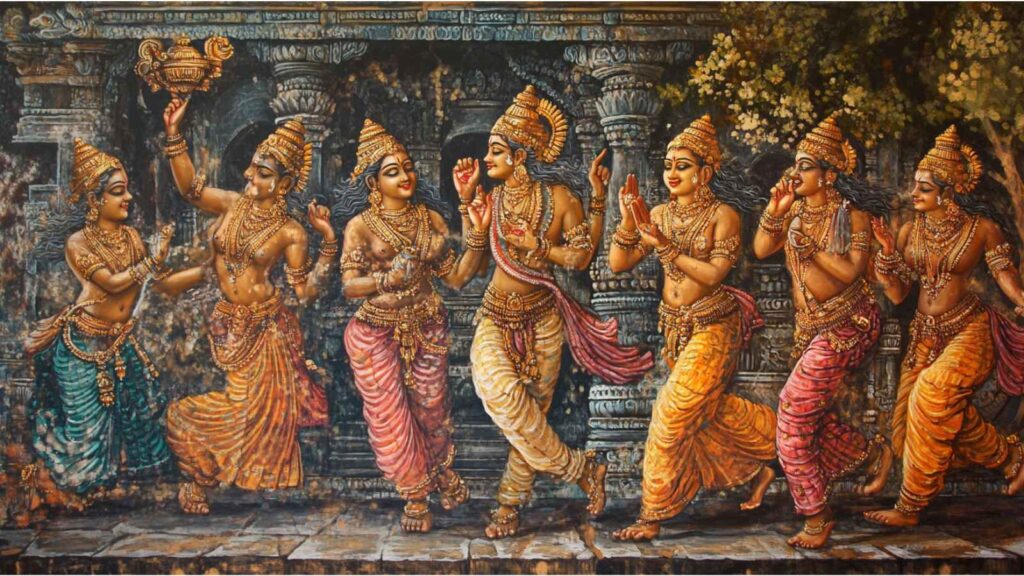
Temple murals in Hinduism are much more than decorative art—they are visual scriptures that chronicle the divine narratives and spiritual philosophies of a timeless faith. These murals serve as a bridge between the earthly realm and the divine, inviting devotees to immerse themselves in the sacred stories and cosmic laws depicted in every brushstroke.
The Role of Murals in Sacred Architecture
- Narrative Power: Murals often illustrate episodes from the Ramayana, Mahabharata, and various Puranas, offering a visual interpretation of spiritual texts and moral lessons.
- Ritual and Meditation: The vibrant colors and dynamic compositions of temple murals are designed to elevate the spirit and inspire deep meditation, helping devotees focus during prayer and ritual.
- Cultural Preservation: Beyond their spiritual significance, murals serve as repositories of cultural history, preserving ancient art forms, traditional techniques, and regional styles.
- Symbolic Representation: Every mural is laden with symbolism. The depiction of gods, goddesses, and mythological scenes carries layers of meaning that echo the philosophical teachings of the Upanishads and Bhagavad Gita.
Foundational Scriptures and Their Influence
The creation and interpretation of temple murals are deeply influenced by ancient Hindu scriptures:
- Vedas: These texts, with their hymns and mantras, emphasize the importance of sound, color, and form in manifesting the divine.
- Upanishads: The philosophical depth of the Upanishads inspires mural artists to explore themes of transcendence and the unity of Atman (soul) with Brahman (the universal spirit).
- Bhagavad Gita: The dialogue between Lord Krishna and Arjuna highlights the importance of righteous action and spiritual duty, themes often visualized in temple murals.
- Agamas: These ritual texts provide detailed guidelines for temple construction and the consecration of sacred spaces, including the incorporation of murals as an integral element of divine expression.
“In the vibrant strokes of temple murals, one finds the eternal dance of the divine—a cosmic narrative where every hue and contour is a prayer, a story, and a glimpse of the infinite.”
— Inspired by Vedic and Tantric wisdom
The Art and Symbolism of Temple Murals
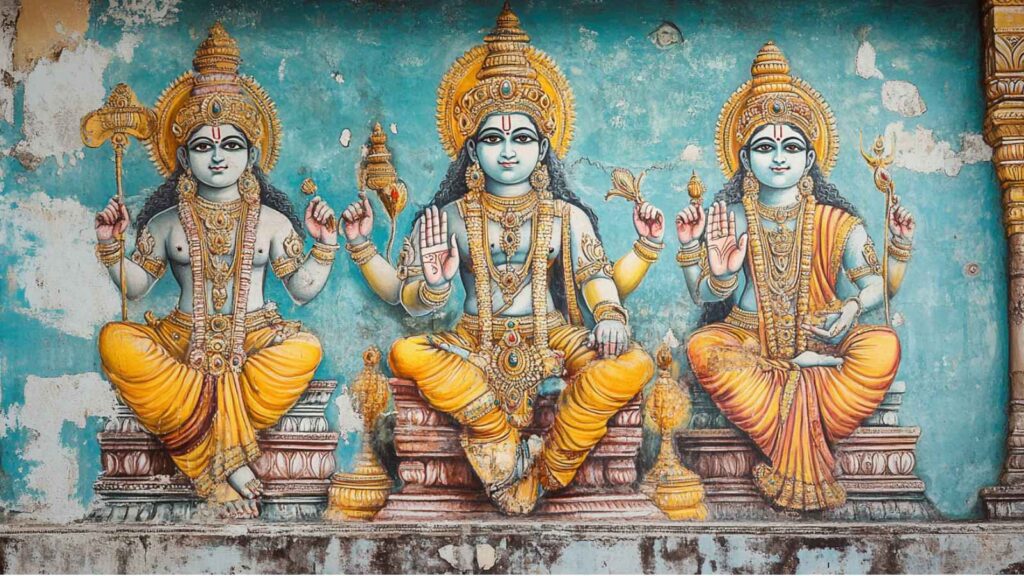
Temple murals are a sublime blend of art, theology, and cultural heritage. They are executed using techniques passed down through generations, employing natural pigments and traditional methods that have evolved over centuries.
Key Elements and Themes
Mythological Narratives
- Epic Tales: Murals commonly depict scenes from the Ramayana, Mahabharata, and various Puranas, illustrating the triumphs of good over evil, divine love, and heroic quests.
- Deity Iconography: Images of deities like Vishnu, Shiva, Krishna, and Devi are rendered with profound reverence, often surrounded by celestial beings, animals, and symbolic flora.
- Cosmic Symbols: Geometric patterns, mandalas, and other sacred symbols are interwoven with the narrative scenes, reinforcing the cosmic order and the interconnectedness of all creation.
Philosophical Themes
- Unity and Duality: Many murals reflect the philosophical idea that the individual soul (Atman) is inseparable from the universal spirit (Brahman), a concept central to the Upanishads.
- Moral and Ethical Lessons: Through allegorical imagery, murals impart lessons on duty (dharma), righteousness, and the consequences of actions (karma), echoing the teachings of the Bhagavad Gita.
- Spiritual Liberation: Scenes that depict the process of self-realization and the journey toward moksha (liberation) serve as inspirational guides for devotees seeking inner truth.
Artistic Techniques
- Natural Pigments: Traditional murals are created using natural dyes extracted from minerals, plants, and other organic sources, lending an earthy, vibrant quality to the artwork.
- Fresco and Secco: Techniques like fresco (painting on wet plaster) and secco (painting on dry plaster) have been used to ensure that the murals endure through centuries while retaining their vividness.
- Regional Styles: Different regions in India boast unique mural styles. For instance, the colorful, intricate murals of Rajasthan differ from the more subdued, symbolic designs found in South Indian temples.
Temple Profiles: Murals as Living Testimonies of Devotion
To appreciate the depth and beauty of temple murals, let’s explore two iconic temples where these sacred paintings play a central role in the worship experience.
1. Kamakshi Amman Temple, Kanchipuram, Tamil Nadu
Name and Location
The Kamakshi Amman Temple is located in Kanchipuram, Tamil Nadu, India. Kanchipuram is renowned for its rich heritage of temple architecture and is often referred to as the “City of a Thousand Temples.”
Historical Background
- Ancient Roots: The Kamakshi Amman Temple is one of the oldest and most revered shrines dedicated to Goddess Kamakshi, a manifestation of Parvati. Historical records and local legends trace its origins to ancient times, with significant contributions from the Pallava and Chola dynasties.
- Cultural Significance: Over the centuries, the temple has been a center for spiritual learning, ritualistic worship, and artistic innovation. The murals within the temple narrate stories of divine love, cosmic creation, and the eternal struggle between good and evil.
- Sacred Traditions: The temple follows classical Agamic rituals for its consecration and daily worship, which include the veneration of murals as sacred embodiments of divine narratives.
Architectural Highlights
- Murals as Art and Scripture: The temple walls are adorned with exquisite murals that depict episodes from the Puranas and mythological tales associated with Goddess Kamakshi. These murals are not only visually stunning but also serve as a medium for imparting moral and spiritual lessons.
- Garbhagriha and Mandapas: The sanctum (garbhagriha) houses the main deity, while the mandapas (assembly halls) display murals that harmonize the architectural structure with divine symbolism.
- Intricate Carvings: Beyond murals, the temple is known for its detailed stone carvings and sculptural panels that complement the painted narratives, creating an immersive environment of devotion and artistry.
- Integration of Yantras: The use of sacred geometry and yantra motifs is evident in the design of the murals, further reinforcing the connection between art and cosmic order.
Visitor Experience
- Immersive Spirituality: Visitors to Kamakshi Amman Temple are often captivated by the vivid murals that seem to come alive with the recitation of ancient hymns and the rhythmic sounds of temple bells.
- Cultural Heritage: Guided tours and interactive displays provide insights into the historical evolution of the murals, the symbolism behind the depicted scenes, and the traditional techniques used in their creation.
- Aesthetic Delight: The rich colors, intricate detailing, and harmonious composition of the murals offer a feast for the senses, making every visit a journey through time and mythology.
- Community and Worship: Devotees and art enthusiasts alike gather during festivals and special events, where the murals serve as focal points for collective worship, cultural performances, and spiritual discourse.
AI Image Creation Prompt:
“Illustrate Kamakshi Amman Temple in Kanchipuram at sunrise, focusing on its intricate temple murals that depict mythological scenes, with soft natural light enhancing the vibrant colors and detailed patterns, and devotees quietly admiring the art.”
Image Credit: AI Generated Image via ArtisticVisionAI
2. Jagannath Temple, Puri, Odisha
Name and Location
The Jagannath Temple is located in Puri, Odisha, India. It is one of the four sacred Char Dham pilgrimage sites and is revered for its unique spiritual and cultural significance.
Historical Background
- Legendary Origins: The Jagannath Temple is steeped in myth and history, with its origins dating back over a millennium. It is dedicated to Lord Jagannath (a form of Vishnu), and its legends are intricately linked with the Mahabharata and various Puranic texts.
- Cultural Melting Pot: The temple has played a crucial role in shaping the cultural and religious identity of Odisha. Its annual Rath Yatra (Chariot Festival) is one of the most celebrated and widely recognized events in Hinduism.
- Artistic Patronage: Over the centuries, the temple has been a patron of art and culture. The murals within the temple depict a blend of local folklore, mythological narratives, and cosmic symbolism, reflecting the unique artistic traditions of Odisha.
Architectural Highlights
- Vibrant Murals: The temple’s interiors and exteriors are adorned with murals that feature intricate depictions of deities, divine play (lila), and cosmic cycles. These murals are executed in a distinctive Odia style, characterized by bold colors and expressive figures.
- Spiritual Layout: The temple’s design, with its spacious corridors and sanctified chambers, is intended to facilitate a continuous flow of divine energy. The murals enhance this experience by providing visual narratives that guide the devotee’s journey through the sacred space.
- Ornamental Details: Along with murals, the temple boasts elaborate carvings, ornate doorways, and intricately painted ceilings, all of which contribute to the overall aesthetic and spiritual ambiance.
- Integration of Ritual Spaces: Special areas within the temple, such as the altar and circumambulatory paths, are decorated with murals that complement the ritualistic practices and reinforce the connection between art and worship.
Visitor Experience
- Festive Atmosphere: During the Rath Yatra and other major festivals, the temple becomes a vibrant epicenter of devotion, with murals serving as backdrops for processions, dances, and cultural performances.
- Educational Engagement: The temple offers guided tours and interactive exhibits that delve into the historical and artistic significance of its murals, helping visitors appreciate the depth of its cultural heritage.
- Spiritual Upliftment: The serene and majestic environment, coupled with the visual storytelling of the murals, provides an immersive spiritual experience that resonates with devotees and tourists alike.
- Community Gathering: The temple is a hub for communal worship and cultural exchange, where people from diverse backgrounds come together to celebrate the eternal traditions of Hinduism.
AI Image Creation Prompt:
“Generate an image of Jagannath Temple in Puri at dusk, highlighting its vivid murals that adorn the temple walls, the festive ambience of the surroundings, and a scene of devotees engaged in traditional rituals and processions.”
Image Credit: AI Generated Image via VisionaryCreationsAI
Integrating Temple Murals into Daily Spiritual Practice
The art of temple murals extends beyond the physical walls of sacred spaces. Their imagery, symbolism, and spiritual energy can be integrated into personal practice and community activities.
Personal Practices
- Home Altars: Incorporate elements of temple murals into your personal meditation or prayer space. This can include framed reproductions, inspired artwork, or even hand-painted designs that reflect the themes of cosmic order and divine narratives.
- Meditative Reflection: Use the visual cues from temple murals to deepen your meditation. Focus on the stories and symbols depicted, allowing them to guide your thoughts toward inner peace and spiritual insight.
- Cultural Appreciation: Study the symbolism and techniques behind traditional murals. Reading foundational texts such as the Upanishads, Bhagavad Gita, and Agamas can provide a deeper understanding of the underlying philosophy.
Community and Cultural Engagement
- Workshops and Exhibitions: Participate in or organize art workshops and exhibitions that explore temple murals. These events can educate communities about the significance of sacred art and promote cultural preservation.
- Virtual Tours: Leverage technology to offer virtual tours of temples renowned for their murals. This makes the art accessible to a global audience and fosters appreciation for ancient techniques and spiritual symbolism.
- Collaborative Art Projects: Engage with local artists to create contemporary interpretations of traditional temple murals, blending ancient wisdom with modern artistic expression.


