
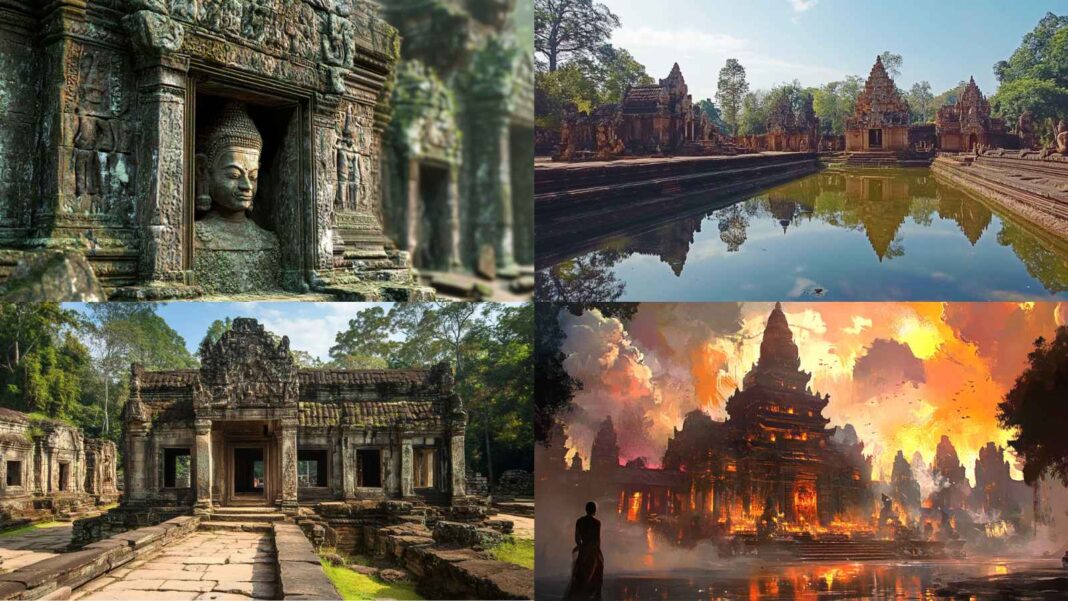

Top 10 Must-Visit Hindu Temples in Cambodia
Blog Introduction
Cambodia is a land of ancient civilizations and cultural treasures. Renowned for its remarkable history, this Southeast Asian nation has been heavily influenced by Hinduism, particularly during the Khmer Empire. While the majority of Cambodia now follows Buddhism, Hinduism’s legacy remains imprinted in the country’s architecture, culture, and rituals. Hindu temples in Cambodia serve as reminders of the faith’s historical significance in the region. These temples, with their intricate carvings and rich histories, are not only places of worship but also marvels of ancient engineering and artistry. In this article, we delve into the top 10 must-visit Hindu temples in Cambodia, each offering a unique blend of history, architecture, and cultural experience.
Read More About Hindu Temple
1. Angkor Wat

Location: Siem Reap
Historical Background
Angkor Wat, one of the largest religious monuments in the world, was built in the early 12th century by King Suryavarman II as a dedication to Lord Vishnu. Initially constructed as a Hindu temple, it later transitioned into a Buddhist temple but retains strong Hindu architectural and iconographic elements.
Architectural Highlights
Angkor Wat is an architectural masterpiece, built using sandstone blocks that were intricately carved. Its most striking feature is its five central towers, symbolizing Mount Meru, the mythical home of the gods. The temple is adorned with extensive bas-reliefs depicting scenes from Hindu epics like the Ramayana and Mahabharata, including the famous “Churning of the Ocean of Milk” panel.
Visitor Experience
Visiting Angkor Wat at sunrise is a magical experience, with the temple’s silhouette reflected in the surrounding moat. Visitors can explore the temple’s intricate corridors, climb to the central sanctuary, and admire the breathtaking carvings that narrate ancient Hindu tales.
2. Banteay Srei

Location: 25 km northeast of Angkor Wat, Siem Reap
Historical Background
Known as the “Citadel of Women,” Banteay Srei is a 10th-century temple dedicated to Lord Shiva. It was commissioned by a Brahmin counselor named Yajnavaraha and is famous for its smaller scale and exquisite detailing.
Architectural Highlights
Banteay Srei is renowned for its pink sandstone construction, which allows for incredibly detailed carvings. The temple is covered with intricate depictions of Hindu gods, celestial dancers (apsaras), and mythological scenes, particularly from the Ramayana and Mahabharata.
Visitor Experience
The temple’s intimate scale and intricate carvings make it a favorite among visitors. Guides often provide fascinating insights into the stories behind the carvings, enhancing the overall experience.
3. Preah Khan

Location: Angkor Archaeological Park, Siem Reap
Historical Background
Built in the 12th century by King Jayavarman VII, Preah Khan was initially dedicated to Lord Vishnu and later converted into a Buddhist temple. It also served as a temporary residence for the king during the construction of Angkor Thom.
Architectural Highlights
Preah Khan features a mix of Hindu and Buddhist elements, reflecting Cambodia’s religious transition. The temple is famous for its long corridors, intricately carved lintels, and the “Hall of Dancers,” adorned with apsara figures.
Visitor Experience
The temple’s serene atmosphere, combined with its semi-restored state, gives visitors the feeling of stepping back in time. Exploring the overgrown trees and vines that intertwine with the ancient structures is a unique experience.
4. Bakong Temple

Location: Roluos Group, Siem Reap
Historical Background
Built in the late 9th century, Bakong is one of the earliest examples of Khmer temple-mountain architecture. Dedicated to Lord Shiva, it was the state temple of King Indravarman I.
Architectural Highlights
Bakong features a stepped pyramid design symbolizing Mount Meru, surrounded by smaller shrines and a moat. The temple’s sandstone carvings depict various Hindu deities and mythological scenes.
Visitor Experience
The quiet and less crowded nature of Bakong makes it ideal for visitors seeking a peaceful exploration of Khmer architecture. The surrounding countryside adds to its charm, offering picturesque views.
5. Phnom Bakheng
Location: Angkor Archaeological Park, Siem Reap
Historical Background
Phnom Bakheng, a temple-mountain dedicated to Lord Shiva, was built during the reign of King Yasovarman I in the late 9th century. It served as the centerpiece of Yasodharapura, the first capital of the Khmer Empire.
Architectural Highlights
Situated atop a hill, Phnom Bakheng offers a pyramid-like structure with five tiers and 108 surrounding smaller shrines. The number 108 holds spiritual significance in Hinduism.
Visitor Experience
The panoramic view of Angkor Wat and the surrounding jungle from Phnom Bakheng, especially at sunset, is breathtaking. However, it’s advisable to visit early to avoid crowds.
6. Ta Prohm
Location: Angkor Archaeological Park, Siem Reap
Historical Background
Built in the late 12th century by King Jayavarman VII, Ta Prohm was originally dedicated to Lord Vishnu. Over time, it became a Buddhist monastery and university.
Architectural Highlights
Ta Prohm is famous for its overgrown trees and roots that intertwine with the temple’s structure, creating a unique and photogenic blend of architecture and nature. Carvings of Hindu deities and apsaras can still be seen amidst the ruins.
Visitor Experience
Walking through Ta Prohm feels like stepping into a lost world. The interplay of ancient stone and massive tree roots makes it one of the most iconic and atmospheric temples in Cambodia.
7. East Mebon
Location: Angkor Archaeological Park, Siem Reap
Historical Background
East Mebon was built in the 10th century by King Rajendravarman II and is dedicated to Lord Shiva. It originally stood on an artificial island in the now-dry East Baray reservoir.
Architectural Highlights
The temple is constructed from brick and sandstone, with carved elephant statues at each corner. Its carvings depict Hindu deities, guardians, and celestial figures.
Visitor Experience
Visitors can marvel at the temple’s unique island-like layout and intricate carvings. Its elevated location provides beautiful views of the surrounding countryside.
8. Prasat Kravan
Location: Angkor Archaeological Park, Siem Reap
Historical Background
Prasat Kravan, a small temple built in the 10th century, is dedicated to Lord Vishnu. It was constructed by noblemen rather than kings, making it unique among Khmer temples.
Architectural Highlights
The temple is known for its brick towers, which feature rare bas-reliefs of Lord Vishnu and Lakshmi. These carvings are exceptionally detailed and depict Vishnu in various forms, including as a boar (Varaha).
Visitor Experience
The intimate scale of Prasat Kravan makes it a quick but rewarding stop for visitors interested in Khmer brick art and Hindu iconography.
9. Baphuon Temple
Location: Angkor Thom, Siem Reap
Historical Background
Originally built as a Hindu temple dedicated to Lord Shiva in the 11th century, Baphuon was later converted into a Buddhist temple.
Architectural Highlights
The temple is a massive three-tiered structure with a steep central tower. Its most notable feature is a large reclining Buddha added during its conversion to Buddhism.
Visitor Experience
Climbing to the top of Baphuon offers visitors stunning views of Angkor Thom. The intricate carvings and the fusion of Hindu and Buddhist elements make it a fascinating site.
10. Pre Rup
Location: Angkor Archaeological Park, Siem Reap
Historical Background
Pre Rup, built in the 10th century, is dedicated to Lord Shiva and was likely used as a royal crematorium.
Architectural Highlights
The temple features a pyramid structure with three tiers and beautiful brick carvings. The warm tones of the bricks and laterite stones make it particularly striking during sunrise or sunset.
Visitor Experience
Visitors can enjoy panoramic views from the top of Pre Rup, making it a popular spot for photographers. Its peaceful setting offers a moment of tranquility amidst Cambodia’s historic treasures


