Aranyakas: Forest Texts and Their Mystical Significance in Hindu Philosophy
Hinduism, one of the world’s oldest and most diverse spiritual traditions, is rich with sacred texts that provide wisdom about the nature of existence, the cosmos, and the divine. Among the many texts that constitute the Vedic corpus, the Aranyakas stand out as a unique and mysterious group of scriptures. They hold a special place in Hindu philosophy and are integral to understanding the spiritual practices and philosophies that arose from the ancient forests of India.
Read More About sacred texts
The term Aranyaka is derived from the Sanskrit word “Aranya,” which means “forest.” These texts were traditionally composed by ascetics and hermits living in the forests, reflecting their contemplative lives and intense spiritual practices. The Aranyakas serve as the bridge between the Vedic hymns and the philosophical teachings found in the Upanishads, providing key insights into the mystical aspects of Hinduism.
In this article, we will explore the historical context, content, and philosophical significance of the Aranyakas, shedding light on their role in Hinduism’s spiritual and ritualistic traditions.
What Are the Aranyakas?
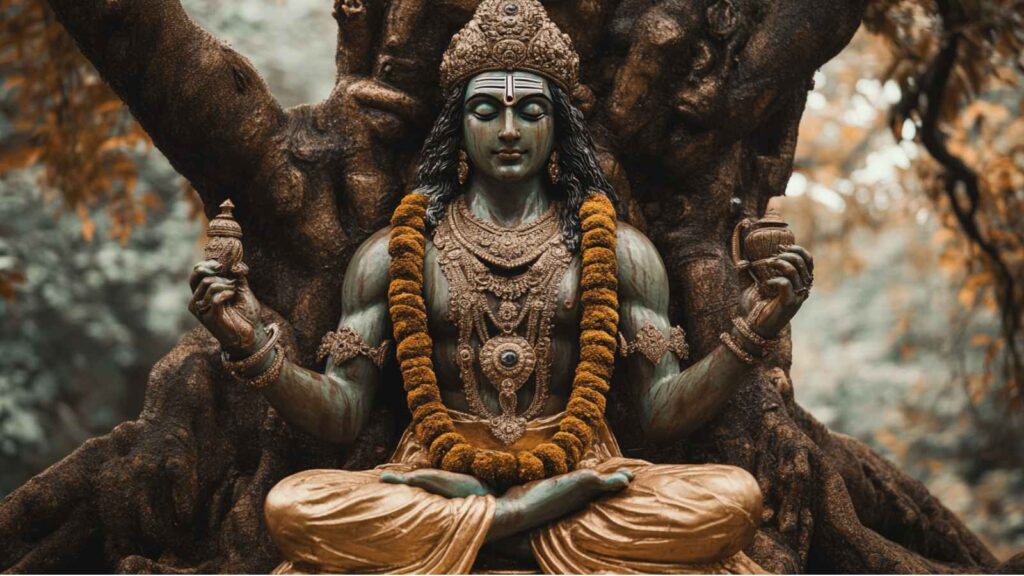
The Aranyakas are an integral part of the Vedic literature, primarily linked to the Yajurveda. They serve as the link between the more formal rituals described in the Brahmanas and the deeper philosophical reflections that would later be elaborated in the Upanishads. While the Brahmanas focus on ritual actions, the Aranyakas focus on the deeper mystical meanings and the meditative practices associated with those rituals. They are essentially ritualistic texts that guide those who wish to engage in spiritual practices in solitude, typically in the forests, away from societal distractions.
The Aranyakas are largely concerned with ritual sacrifice and its mystical aspects, as well as meditative techniques and spiritual philosophy. They were composed by sages who retreated into the forests to meditate, seeking spiritual enlightenment away from the worldly distractions of urban life. These texts reflect the ascetic lifestyle that was common among Vedic sages and emphasize solitude, contemplation, and a deeper connection with the divine.
Structure and Content of the Aranyakas

The Aranyakas do not follow a single uniform structure. Instead, they are composed of different types of texts, ranging from philosophical discourses to ritual instructions. They are often categorized as follows:
- Rituals and Sacrifices: Many sections of the Aranyakas discuss how to perform sacrifices in the forest, offering detailed instructions on preparing the altar, the types of offerings, and the prayers (mantras) to be recited during rituals. These rituals were designed not only to invoke divine blessings but also to purify the mind and soul.
- Meditation and Contemplation: The Aranyakas contain meditative instructions aimed at spiritual liberation (moksha). These texts emphasize the practice of deep concentration and contemplation on the nature of the self and the universe. This focus on meditation would later be expanded upon in the Upanishads.
- Philosophical Reflections: Some sections of the Aranyakas engage in profound philosophical reflections on the nature of the universe, the supreme reality (Brahman), and the nature of the soul (Atman). They often explore the idea that the physical world is an illusion (Maya) and that true liberation comes through the realization of the self’s oneness with the divine.
Mystical Significance of the Aranyakas
The Aranyakas carry a mystical and transcendental significance that distinguishes them from the more ritualistic portions of the Vedas. While the Vedic texts often focus on external rituals and sacrifices, the Aranyakas focus on the internal spiritual journey and the mystical dimensions of these practices.
- Sacred Wilderness: The forest (Aranya) symbolizes a place of seclusion and solitude, where a person can engage in deep contemplation and connect with the divine. The Aranyakas reflect this idea, encouraging asceticism and the renunciation of worldly pleasures in favor of spiritual growth.
- Connection with Nature: The Aranyakas emphasize the intimate connection between nature and the divine. The forest, with its untamed wilderness, represents a sacred space where one can experience a deeper communion with the cosmos and the ultimate reality (Brahman). This reflects Hinduism’s broader view that the divine is present in all aspects of nature.
- Spiritual Practice and Transformation: The mystical significance of the Aranyakas lies in their focus on transforming the self. Through meditation, prayer, and sacrifice, practitioners are encouraged to transcend the limitations of the physical body and reach a state of spiritual purity. This aligns with the Hindu pursuit of moksha, or liberation from the cycle of birth and rebirth (samsara).
The Role of Aranyakas in Hindu Philosophy
While the Vedic Samhitas provide hymns of praise for the gods, and the Brahmanas offer detailed instructions for ritual sacrifices, the Aranyakas take these practices to a deeper philosophical level. They help shape the framework for later Hindu philosophical thought, especially the teachings found in the Upanishads.
- Spiritual Growth through Solitude: The Aranyakas advocate for solitude as a means of achieving spiritual progress. In their forest dwellings, sages could free themselves from worldly distractions and turn inward to reflect on the ultimate truths of existence. This ascetic approach is a key element of Hindu philosophy and is seen in the practice of yoga and meditation.
- The Connection between Rituals and Liberation: The Aranyakas explain that rituals, while important, are not the ultimate goal. They serve as tools to purify the mind and body and prepare the practitioner for the ultimate realization of the self’s unity with the divine. This concept is central to the Upanishads, which teach that the realization of Atman (self) and Brahman (ultimate reality) is the path to liberation.
- The Importance of Knowledge (Jnana): The Aranyakas emphasize the role of knowledge and wisdom in spiritual transformation. Unlike the more ritualistic focus of the Brahmanas, the Aranyakas teach that true enlightenment comes from understanding the deeper truths of existence, not just performing rituals. This focus on knowledge would later be expanded upon in the Upanishads, which are considered the philosophical culmination of the Vedic texts.
Key Aranyakas and Their Teachings
The Aranyakas are associated with the Yajurveda and the Rigveda, and some of the most well-known texts include:
1. Aitareya Aranyaka
The Aitareya Aranyaka, associated with the Rigveda, is one of the most significant Aranyakas. It discusses the ritual of the Agnishtoma, a fire sacrifice, and offers profound insights into the nature of the soul (Atman) and the ultimate reality (Brahman). It also emphasizes the importance of meditation in spiritual practice.
2. Taittiriya Aranyaka
The Taittiriya Aranyaka, linked to the Yajurveda, focuses on rituals and sacrificial ceremonies but also delves deeply into philosophical reflections on the nature of the self and the cosmos. It includes teachings on the significance of the Brahman and Atman, the two essential concepts in Hindu philosophy.
3. Kausitaki Aranyaka
The Kausitaki Aranyaka, another important text from the Rigveda, focuses on rituals and sacrifices and emphasizes the importance of knowledge and spiritual practice in attaining liberation. It contains philosophical dialogues on the nature of existence and the process of self-realization.
Conclusion: The Aranyakas and Their Timeless Influence
The Aranyakas hold a unique and vital place in the vast tapestry of Hindu philosophy and spirituality. These texts, written in the tranquil forests of ancient India, reflect the pursuit of spiritual enlightenment through seclusion, meditation, and ritual. While they are deeply rooted in the Vedic tradition, their mystical and philosophical insights transcend ritualistic practices, laying the foundation for later developments in Hindu thought.
Today, the Aranyakas continue to inspire seekers of spiritual wisdom, guiding them on their path to self-realization and liberation. By engaging with these sacred texts, one can unlock profound truths about the nature of existence, the divine, and the journey toward inner peace.