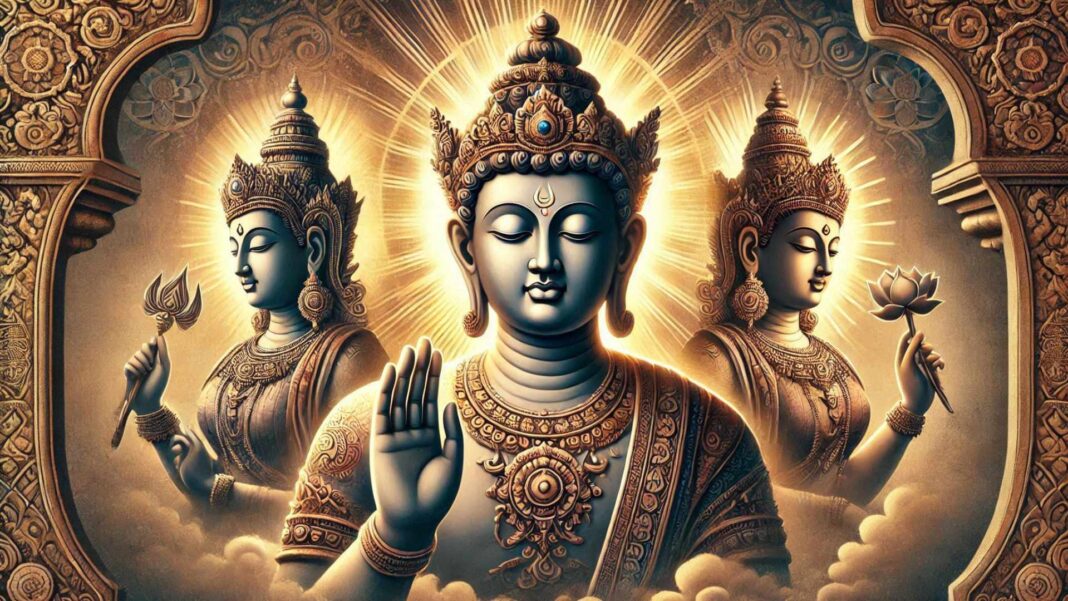

Budha: The Wise and Benevolent Planetary Deity in Hinduism
Introduction
A Brief Overview of Budha in Hinduism
In Hinduism, Budha represents the planet Mercury and is revered as a deity of wisdom, intellect, communication, and commerce. Budha is one of the nine planetary deities (Navagrahas) and plays a significant role in Vedic astrology. Known for his sharp intellect and wisdom, Budha is considered the benefactor of learning, eloquence, and analytical thinking.
Read More About Deities And Gods
Significance of Budha in Daily Hindu Life
Budha influences daily life by governing communication, decision-making, and intellect. People seek his blessings for clarity of thought, academic success, and effective communication. He is particularly important for students, scholars, and professionals in fields requiring logic and reasoning.
The Cosmic and Spiritual Importance of Budha
Cosmically, Budha represents the mind’s ability to discern and analyze. Spiritually, he symbolizes the higher intellect that helps individuals distinguish truth from illusion, making him essential for spiritual seekers aiming for enlightenment.
Names and Etymology

Meaning of Budha
The name “Budha” originates from the Sanskrit root “Budh”, meaning “to awaken” or “to understand.” Budha is thus associated with awakening intellect and gaining higher knowledge.
Other Names of Budha
Budha is known by various names reflecting his qualities:
- Saumya: Gentle and auspicious.
- Rohineya: Son of Tara (Rohini is another name for Tara).
- Vani-Sut: Associated with eloquence and speech.
- Jnaana-Karaka: Giver of wisdom and intelligence.
Each name emphasizes an aspect of his personality, such as gentleness, intelligence, and eloquence.
Symbolism and Iconography

Physical Description of Budha
Budha is often depicted as a youthful deity with a radiant, golden complexion. He is portrayed seated on a chariot drawn by lions, symbolizing courage and power. In his hands, he holds a sword, a shield, and a lotus, signifying protection, wisdom, and purity.
The Symbolism
- Sword and Shield: Represent protection against ignorance and confusion.
- Lotus: Symbolizes purity of thought and wisdom.
- Chariot Drawn by Lions: Reflects Budha’s intellectual strength and fearless communication.
The Flower Connection
Budha is often associated with green flowers, such as jasmine and tulsi (holy basil), symbolizing growth, harmony, and clarity.
Colors and Symbols Associated
- Colors: Green, symbolizing freshness, intellect, and prosperity.
- Symbols: Mercury (the planet), books, and writing instruments.
Mythology and Stories

Birth Story of Budha
Budha’s birth story is unique in Hindu mythology. He is the son of the Moon god (Chandra) and Tara, the wife of Brihaspati (Jupiter). This unconventional birth made Budha wise beyond his years, symbolizing intellect born out of complexity and contradiction.
The Story of Budha and Spouses
Budha married Ila, a character of dual gender in Hindu mythology. Their union symbolizes harmony between opposites and the transcendence of duality in achieving wisdom.
Connection with Other Gods and Goddesses
Budha maintains a cosmic relationship with the other Navagrahas, particularly Jupiter (Brihaspati), his stepfather, and Venus (Shukra), representing complementary aspects of intellect and aesthetics.
Role in Ramayana and Mahabharata
Budha does not directly appear in these epics but is invoked in rituals and prayers for guidance, wisdom, and success.
Famous Blessings and Boons
Budha blesses devotees with sharp intellect, effective communication, academic success, and prosperity in trade and commerce.
Spiritual Significance
A Visible Form of God
Budha is considered a tangible representation of intellectual clarity and effective communication, guiding individuals in their personal and professional lives.
Representation of Knowledge and Enlightenment
Budha symbolizes the light of knowledge that dispels ignorance, helping individuals discern truth from illusion.
Connection to Spiritual Awakening
Budha is associated with the activation of the higher mind, facilitating meditation and spiritual growth.
Role in Yoga and Meditation Practices
In Kundalini yoga, Budha’s energy corresponds to the Vishuddha Chakra (throat chakra), which governs communication and expression.
The Mantra Connection
Chanting Budha mantras, such as “Om Budhaya Namaha”, enhances intellectual abilities and strengthens communication skills.
Worship and Rituals
Benefits of Worship
Worshiping Budha brings clarity of thought, academic success, and improved communication. It also reduces malefic effects of Mercury in one’s horoscope.
Daily Worship Practices
- Offering green flowers and foods (like green gram) to Budha.
- Chanting Budha mantras or performing Navagraha prayers.
Best Times for Worship
Wednesdays, the day associated with Mercury, are ideal for Budha’s worship.
Important Festivals
- Budha Purnima: Celebrated in honor of wisdom and knowledge.
- Navagraha Puja: Dedicated to the planetary deities, including Budha.
List of Famous Temples
- Budha Temple, Kanchipuram
- Navagraha Temples, Tamil Nadu
Modern Relevance
Scientific Understanding of Budha
Budha’s qualities align with modern cognitive science, which emphasizes the importance of intellect, problem-solving, and effective communication.
Environmental Consciousness
The association of Budha with the color green highlights the importance of ecological balance and sustainable living.
Health Benefits
Worshiping Budha is believed to enhance mental clarity, reduce stress, and improve speech-related issues.
Energy Connection
Budha’s energy fosters balance and harmony in decision-making and interpersonal communication.
Sustainable Living Practices
His symbolism encourages mindful consumption and harmonious living, reflecting ecological awareness.
Cultural Impact
Influence on Indian Art and Architecture
Budha’s depiction as a youthful and radiant deity has inspired sculptures and paintings in temple art across India.
Presence in Literature and Poetry
Hymns and Vedic texts celebrate Budha’s intellect and eloquence, highlighting his role as the patron of wisdom and communication.
Impact on Daily Customs
Budha is invoked during rituals for academic and professional success, as well as in astrological remedies.
Regional Variations in Worship
While Budha is worshiped across India, his significance is particularly pronounced in Tamil Nadu and Karnataka, where Navagraha worship is common.
Practical Applications
Morning Prayers and Rituals
Reciting Budha’s mantras in the morning enhances clarity and positivity throughout the day.
Benefits of Salutation
Saluting Budha invokes blessings for intellectual growth and eloquence.
Dietary Recommendations
Green foods, such as green vegetables and moong dal, are considered beneficial during Budha-related rituals.
Astrological Significance
Budha governs communication, intellect, and trade in Vedic astrology. Remedies for a weak or afflicted Mercury include wearing green gemstones and chanting Budha mantras.
Gemstones and Metals Associated
- Gemstones: Emerald.
- Metals: Bronze and gold.
Conclusion
Summary of Budha’s Importance
Budha, the deity of intellect and communication, holds immense significance in Hinduism. His teachings inspire clarity of thought, effective communication, and spiritual wisdom.