
Chandra: The Moon God in Hinduism
Introduction
Brief Overview of Chandra in Hinduism
Chandra, the Moon God, holds a revered place in Hindu mythology, astrology, and spiritual practices. Known as one of the Navagrahas (nine celestial influencers), Chandra embodies tranquility, emotional depth, and the nurturing aspects of divinity. Often depicted as a youthful and radiant deity riding a chariot pulled by ten white horses, Chandra’s celestial presence governs the mind, emotions, and creativity.
Read More About Deities And Gods
Significance of Chandra in Daily Hindu Life
In Hindu daily life, Chandra symbolizes mental clarity, intuition, and emotional well-being. Lunar phases impact festivals, rituals, and daily prayers, underscoring the Moon’s importance in determining auspicious times. Chandra’s influence is also central in Vedic astrology, shaping one’s mental state and emotional intelligence.
Cosmic and Spiritual Importance
Chandra governs Monday (Somwar) and influences cycles of time, such as months and seasons, reflecting the ebb and flow of life. Spiritually, Chandra represents the mind’s reflective quality, fostering introspection, peace, and emotional balance. The Moon’s luminosity is often associated with enlightenment, symbolizing divine grace that illuminates the path of seekers.
Names and Etymology

Meaning of Chandra
The name “Chandra” is derived from the Sanskrit word “चन्द्र,” meaning “shining” or “moon.” It signifies beauty, brilliance, and the gentle radiance of the lunar orb.
Other Names of Chandra
- Soma: Denotes the deity’s connection with the sacred soma plant and its intoxicating, purifying essence.
- Rajanikara: Means “maker of the night,” symbolizing Chandra’s role in illuminating the dark skies.
- Nishapati: “Lord of the night,” reflecting Chandra’s dominion over nocturnal realms.
- Indu: Refers to Chandra’s cooling and soothing essence.
- Sudhakar: “Nectar-maker,” signifying the Moon’s connection with amrita (divine nectar).
Each name encapsulates an aspect of Chandra’s qualities, from his beauty to his celestial influence.
Symbolism and Iconography

Physical Description and Meaning
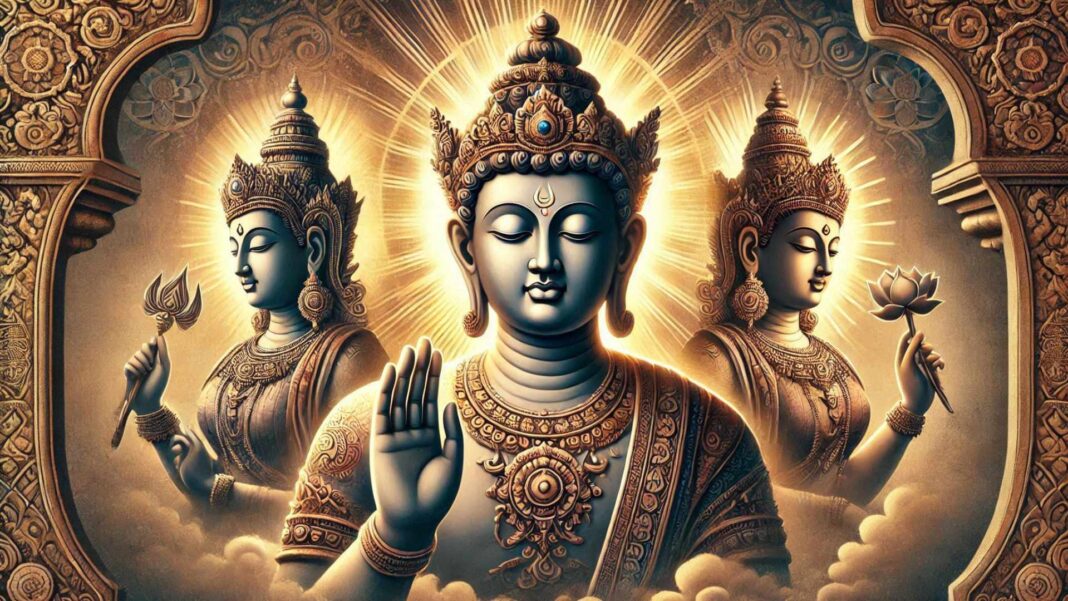
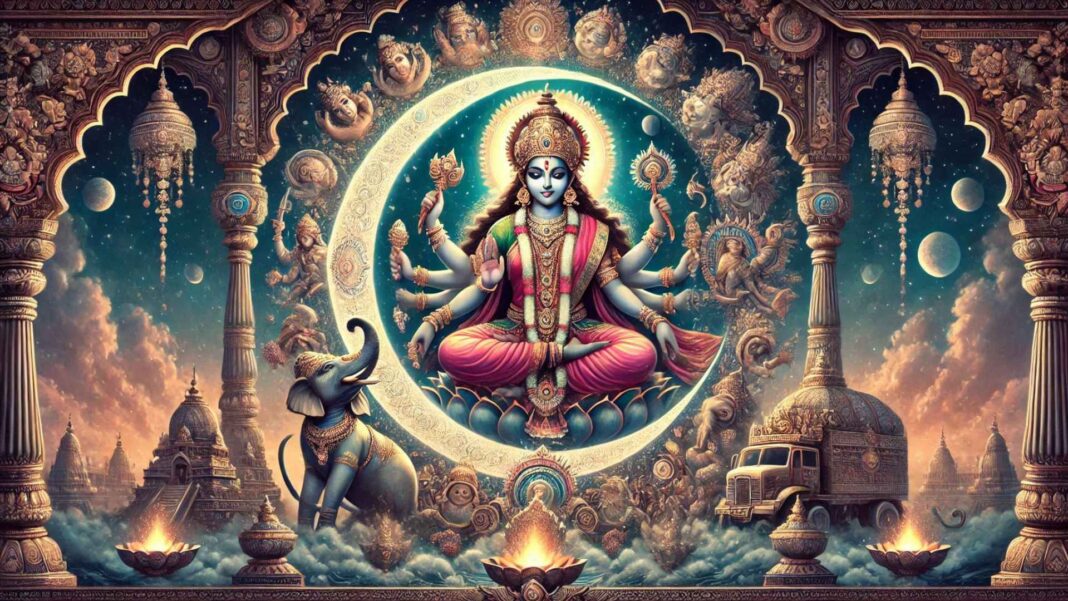
Chandra is depicted as a radiant figure with a calm demeanor, adorned with jewels and white garments. He often holds a lotus or a vessel of nectar, signifying purity and immortality.
Symbolism
- Chariot and Horses: Chandra rides a chariot drawn by ten white horses or antelopes, symbolizing speed, purity, and the waxing and waning lunar phases.
- Crescent Moon: Represents the cyclical nature of life and time.
- Lotus: Symbol of purity and spiritual awakening.
The Flower Connection
The lotus, often associated with Chandra, represents purity emerging from darkness. The Moon’s phases parallel the blossoming and closing of the lotus petals, reflecting life’s cyclical beauty.
Colors and Symbols
- Colors: White, silver, and soft hues symbolize serenity and illumination.
- Gemstone: Pearls and moonstones are associated with Chandra, enhancing emotional balance and intuition.
Mythology and Stories

Birth Story
According to mythology, Chandra emerged during the Samudra Manthan (churning of the ocean), along with the nectar of immortality and other divine treasures.
Stories and Spouses
Chandra married 27 Nakshatras (constellations), the daughters of Daksha. However, his partiality towards Rohini caused discord, leading to Daksha’s curse that reduced Chandra’s brilliance. This curse was mitigated by Lord Shiva, resulting in the Moon’s waxing and waning phases.
Connection with Other Deities
Chandra is closely associated with Lord Shiva, who bears the crescent Moon on his head as a symbol of time and cosmic balance. He also has connections with Soma, a sacred drink and deity in Vedic traditions.
Role in Ramayana and Mahabharata
In the Ramayana, Chandra is revered in rituals, influencing auspicious timings. In the Mahabharata, Chandra’s lineage includes Abhimanyu, Arjuna’s son, reflecting his role in the Pandavas’ destiny.
Famous Blessings and Boons
Chandra’s blessings include enhanced creativity, emotional stability, and mental clarity. He is also known to alleviate afflictions related to the Moon in astrological charts.
Spiritual Significance
A Visible Form of God
Chandra represents the divine within the natural world, embodying the mind’s reflective and nurturing qualities.
Representation of Knowledge and Enlightenment
The Moon’s soft light is symbolic of enlightenment and the guidance offered to seekers during dark times.
Connection to Spiritual Awakening
Chandra fosters introspection, aiding in the journey toward self-awareness and spiritual awakening.
Role in Yoga and Meditation Practices
Chandra is significant in practices like Chandra Namaskar (Moon Salutation) and meditation techniques focused on calming the mind and fostering inner peace.
The Mantra Connection
Chanting the mantra “Om Chandraya Namaha” invokes Chandra’s blessings, promoting mental clarity and emotional healing.
Worship and Rituals
Benefits
Worshiping Chandra enhances emotional well-being, intuition, and astrological harmony. It mitigates the malefic effects of planetary afflictions.
Daily Worship Practices
Offerings of white flowers, rice, and water are common during Chandra puja. Devotees often fast on Mondays to seek his blessings.
Best Times for Worship
Chandra is best worshiped on Purnima (full Moon day) or during the waxing phase of the Moon.
Important Festivals
- Karwa Chauth: Celebrates the Moon’s role in marital harmony.
- Sharad Purnima: Honoring Chandra’s full brilliance.
- Somvar Vrat: Dedicated to Lord Shiva and Chandra.
Famous Temples
- Chandramouleshwara Temple, Karnataka
- Chandra Dev Temple, Uttar Pradesh
- Somnath Temple, Gujarat
Modern Relevance
Scientific Understanding
Chandra’s role in regulating tides and influencing biological rhythms underscores his enduring relevance.
Environmental Consciousness
The Moon’s cycles inspire eco-conscious practices aligned with natural rhythms.
Health Benefits
Chandra’s influence supports mental health and emotional stability, often incorporated into Ayurvedic practices.
Energy Connection
The Moon’s cooling energy balances the fiery solar energy, fostering harmony.
Sustainable Living Practices
Chandra encourages living in sync with natural cycles, promoting sustainability and mindfulness.
Cultural Impact
Influence on Indian Art and Architecture
Chandra inspires intricate carvings in temples and traditional art forms, reflecting lunar symbolism.
Presence in Literature and Poetry
Chandra features prominently in Indian poetry, symbolizing love, beauty, and tranquility.
Impact on Daily Customs
From fasting on Mondays to aligning events with lunar phases, Chandra influences Hindu customs.
Regional Variations in Worship
Chandra’s worship varies, with unique rituals and festivals observed across India.
Practical Applications
Morning Prayers and Rituals
Reciting lunar mantras during dawn fosters emotional balance and focus.
Benefits of Salutation
Practices like Chandra Namaskar enhance mental clarity and physical flexibility.
Dietary Recommendations
Cooling foods like cucumber and rice are associated with Chandra’s soothing influence.
Astrological Significance
Chandra governs the mind and emotions in Vedic astrology, influencing horoscopes and remedies.
Gemstones and Metals Associated
Pearls and silver are recommended for strengthening Chandra’s positive influence.
Conclusion
Summary of Chandra’s Importance
Chandra symbolizes emotional depth, mental clarity, and spiritual insight, guiding devotees through life’s ebbs and flows.
Universal Message of Light and Wisdom
Chandra teaches the importance of balance, introspection, and harmony with nature.
Call to Action for Readers
Explore the lunar aspects of your life by integrating Chandra’s wisdom through meditation, rituals, and sustainable practices.