

Hinduism, one of the world’s oldest faiths, is deeply rooted in an intricate tapestry of sacred texts that serve as blueprints for spiritual insight, ritual practice, and ethical living. Among these revered scriptures, the Shiva Purana stands out for its unique portrayal of Lord Shiva—the enigmatic force known both as the destroyer and the creator of the universe.
Read More About sacred texts
The Shiva Purana is not simply a repository of mythological tales; it is a spiritual guide revered for its profound philosophical narratives, ritual prescriptions, and artistic expressions. Its verses delve into the mysticism of Lord Shiva, highlighting his cosmic dance (Tandava), his role in the cosmic cycles of creation and destruction, and his profound teachings on attaining self-realization. The text has profoundly influenced devotional practices and the establishment of sacred spaces dedicated to Shiva, including temples that dot the Indian subcontinent.
In this article, we embark on an in-depth exploration of the Shiva Purana—its mystical tales, spiritual wisdom, and cultural impact. We will analyze how this foundational scripture provides ritual and philosophical guidance for millions of devotees. Additionally, we present detailed profiles of sacred temples that celebrate Shiva’s divine legacy. These temple profiles include the name and exact location, historical background, architectural highlights, and visitor experiences. Finally, we offer an AI-driven image generation framework along with references and citations to help create compelling visuals that enhance the digital storytelling of your website, hinduvism.com.
The Spiritual and Philosophical Significance of the Shiva Purana
The Nature of the Shiva Purana
The Shiva Purana is one of the primary Puranic texts in Hinduism and holds an esteemed place among foundational scriptures. It encapsulates the multifaceted nature of Lord Shiva, exploring his roles both as a destructive force that clears the path for renewal and as a benevolent creator who nurtures spiritual insight. The text’s narratives are woven around themes of:
- Cosmic Cycles:
The Purana emphasizes the cyclical nature of time, where creation and destruction are interdependent. This cosmic rhythm is symbolized by Shiva’s Tandava—a dynamic dance that signifies the perpetual cycle of birth, death, and rebirth. - Meditative Wisdom:
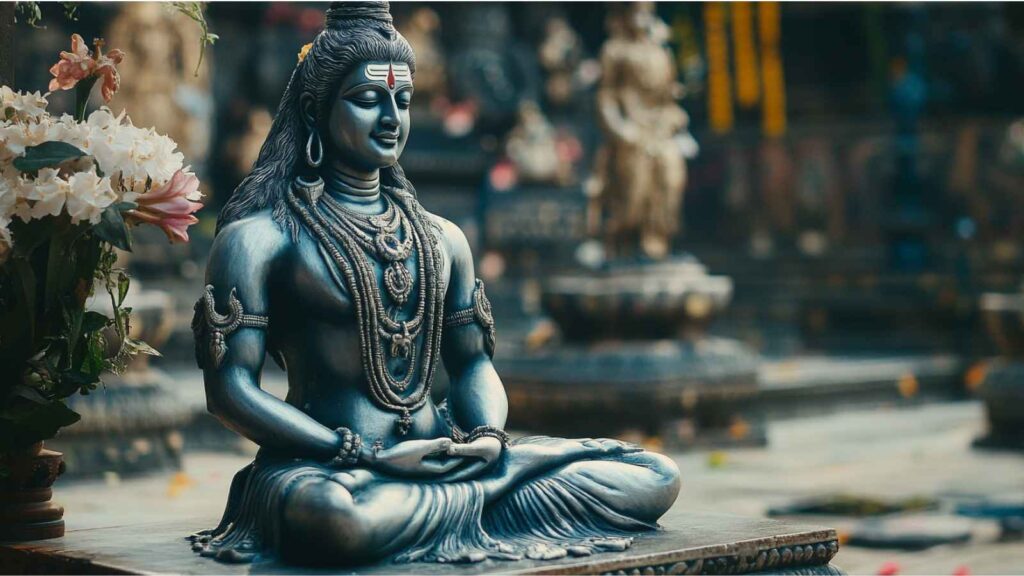
Shiva is often depicted in deep meditation, epitomizing the path toward spiritual enlightenment. His teachings encourage seekers to transcend worldly illusions (Maya) and realize their true nature (Atman). - Duality and Unity:
The scripture presents Shiva as both ascetic and householder, fierce and compassionate. This duality teaches that opposites are complementary and that ultimate truth resides in the balance between them.
Foundational Scriptures in Spiritual Guidance
As a foundational scripture, the Shiva Purana is revered not only for its mythological narratives but also for its practical guidance on living a life aligned with dharma (righteousness). Its verses are recited in daily rituals and special ceremonies, providing moral direction and inspiring deep devotion. The Purana also serves as an authoritative text in philosophical debate, influencing commentary by scholars and sages over centuries.
- Ritual Prescriptions:
Detailed accounts of worship practices and ceremonial rites found in the Shiva Purana continue to shape religious observances. These guidelines ensure that devotees can connect with the divine through structured rituals. - Philosophical Explorations:
The text addresses profound questions about the nature of existence, the relationship between the individual soul and the universal consciousness, and the role of divine intervention in everyday life. - Artistic Influence:
The vivid imagery and rich symbolism found within the Shiva Purana have inspired countless works of art—from classical dance forms and music to temple murals and sculptures. These artistic expressions serve to bridge the gap between the abstract spiritual concepts and tangible experiences of the divine.
Mystical Tales: The Divine Narratives of Lord Shiva

The Shiva Purana is renowned for its captivating stories that encapsulate the dual nature of Lord Shiva. These tales are steeped in symbolism and are meant to evoke not just awe and devotion but also introspection and philosophical inquiry.
The Cosmic Dance of Destruction and Creation
One of the most iconic representations of Shiva in the Purana is his cosmic dance, the Tandava. This dance is emblematic of the eternal cycle of creation and destruction:
- Destruction as Renewal:
In performing the Tandava, Shiva annihilates the old and worn-out structures of existence, clearing the path for new creation. This act is a metaphor for letting go of the past and embracing change. - Symbolic Movements:
Each gesture and movement in the dance has a specific spiritual and cosmic significance. The interplay of sound, rhythm, and movement reflects the dynamic nature of the universe and the continuous interplay between chaos and order. - Philosophical Implications:
The Tandava teaches that destruction is not an end but a precursor to rebirth. It challenges devotees to see beyond the surface level of endings and to recognize the potential for renewal inherent in every moment.
Mystical Legends and Divine Epiphanies
The Shiva Purana is replete with stories that reveal the deeper mysteries of existence through the lens of Lord Shiva’s life:
- The Legend of the Lingam:
The Shiva Purana explains the significance of the Shiva Lingam—a symbol that encapsulates the energy of creation, preservation, and destruction. The Lingam is not merely an icon but a representation of the divine force that permeates all of existence. - Shiva’s Meditative Solitude:
Numerous passages describe Lord Shiva’s retreat into solitary meditation in the Himalayas, where he embodies the ultimate seeker of truth. His quietude and unwavering focus serve as a model for spiritual aspirants striving to overcome the distractions of the material world. - Divine Interactions and Teachings:
The text also recounts episodes where Shiva engages with other deities, sages, and even demons. These interactions are layered with lessons about compassion, humility, and the importance of inner transformation.
The Role of the Purana in Daily Devotion
For millions of devotees, the Shiva Purana is a living text that offers both comfort and challenge. Its stories provide a roadmap for understanding the mysteries of life and the nature of the divine:
- Devotional Recitations:
Chanting verses from the Shiva Purana is a common practice in Shiva temples and homes. These recitations are believed to purify the mind and invoke the protective energy of Lord Shiva. - Festivals and Celebrations:
Festivals like Maha Shivaratri are deeply inspired by the narratives of the Shiva Purana, where devotees celebrate the union of opposites and the triumph of spiritual consciousness over ignorance. - Guiding Ethical Conduct:
The moral and ethical dilemmas presented in the Purana continue to serve as points of reflection for individuals seeking to align their actions with higher truths.
Sacred Temples Celebrating the Divine Legacy of Shiva
Across India, temples dedicated to Lord Shiva are living embodiments of the philosophies captured in the Shiva Purana. These sacred spaces not only honor the mystical tales of the destroyer and creator but also provide a space for pilgrims to experience the divine presence of Shiva.
Below, we present detailed profiles of three prominent Shiva temples—each with its unique historical background, architectural style, and vibrant visitor experiences.
Temple Profile 1: Kedarnath Temple
Name and Exact Location
Kedarnath Temple
Location: Kedarnath, Uttarakhand, India
Historical Background
Kedarnath Temple is one of the holiest shrines dedicated to Lord Shiva. Believed to have been established in ancient times, this temple occupies a revered position in Hindu mythology. According to legend, it is here that Shiva imparted his divine knowledge to the sage Adi Shankaracharya, who later revitalized the temple as a center of spiritual learning. Kedarnath has withstood the test of time, surviving natural calamities and the ravages of history, and continues to be a beacon of divine energy in the Himalayan region.
Architectural Highlights
- Himalayan Stone Architecture:
Constructed using locally sourced stone, the temple is an embodiment of austere yet profound beauty. Its structure is harmoniously integrated into the rugged terrain of the Himalayas. - Spiritual Symbolism:
The small yet intricately carved sanctum houses a Shivalinga, symbolizing the omnipresent energy of Lord Shiva. The temple’s design reflects traditional North Indian architectural styles with an emphasis on simplicity and natural integration. - Scenic Ambience:
Perched at a high altitude, the temple offers panoramic views of the surrounding snow-capped peaks and valleys, providing an unparalleled backdrop that enhances the spiritual atmosphere.
Visitor Experience
- Pilgrimage Journey:
The trek to Kedarnath is an adventure in itself, attracting pilgrims and adventure seekers alike. The journey through the Himalayan wilderness is both physically challenging and spiritually rewarding. - Rituals and Festivals:
Devotees witness daily ablutions, prayers, and the rhythmic chanting of hymns. Festivals like Maha Shivaratri bring a heightened sense of devotion, with vibrant processions and cultural programs. - Serene Reflections:
The temple’s serene environment offers ample opportunity for meditation and introspection, allowing visitors to connect deeply with the divine energy of Lord Shiva.
Temple Profile 2: Kashi Vishwanath Temple
Name and Exact Location
Kashi Vishwanath Temple
Location: Varanasi (Kashi), Uttar Pradesh, India
Historical Background
Kashi Vishwanath Temple is one of the most famous and ancient Shiva temples, located in the sacred city of Varanasi. Varanasi, often regarded as the spiritual capital of India, is closely linked to the myths and legends of Lord Shiva. The temple is believed to have been mentioned in ancient scriptures, and its origins are steeped in myth. Over millennia, it has been rebuilt and renovated by various dynasties, each leaving an indelible mark on its heritage.
Architectural Highlights
- Ganga-Flanked Grandeur:
Situated on the banks of the sacred River Ganga, the temple’s architecture reflects a confluence of spirituality and natural beauty. The intricate designs and sculptures evoke the eternal presence of Lord Shiva. - Majestic Spires:
The temple’s spires and domes exemplify classic North Indian temple architecture, with ornate carvings that depict various aspects of Shiva’s cosmic roles. - Sacred Ornamentation:
The sanctum sanctorum houses a revered Shivalinga, surrounded by exquisite decorations and religious iconography that narrate the timeless tales from the Shiva Purana.
Visitor Experience
- Spiritual Immersion:
Pilgrims from around the world visit Kashi Vishwanath to immerse themselves in its ancient rituals, witness elaborate aarti ceremonies, and participate in daily worship. - Cultural Richness:
The vibrant atmosphere of Varanasi—marked by its narrow alleys, ghats (riverfront steps), and bustling markets—enhances the overall spiritual experience, creating an environment where history and devotion seamlessly converge. - Learning and Reflection:
Guided tours and cultural programs provide visitors insights into the temple’s historical evolution and the cultural significance of Shiva in shaping the ethos of Varanasi.
Temple Profile 3: Somnath Temple
Name and Exact Location
Somnath Temple
Location: Prabhas Patan, Gujarat, India
Historical Background
Somnath Temple is one of the most revered and ancient Shiva shrines in India. With a history that spans over several millennia, the temple is renowned for its resilience and continual reconstruction despite repeated destruction. According to legends, the temple was established to honor Lord Shiva as the supreme protector, whose energy manifests in the form of cosmic light (Som). The temple has been a focal point of pilgrimage and has inspired a sense of awe and reverence among devotees for centuries.
Architectural Highlights
- Revived Grandeur:
The current structure of the Somnath Temple is a modern reconstruction that respects traditional architectural styles. It features intricate stone carvings, towering spires, and a majestic façade that reflects the temple’s storied past. - Seaside Elegance:
Located along the Arabian Sea, the temple’s architecture is uniquely influenced by coastal elements. The interplay between the temple structure and the sea horizon creates a mesmerizing visual display, particularly during sunrise and sunset. - Cultural Symbology:
Rich in detail, the temple’s sculptures depict mythological scenes from the Shiva Purana, narrating tales of divine intervention, cosmic creation, and ultimate transcendence.
Visitor Experience
- Pilgrimage and Festivals:
The Somnath Temple is a major pilgrimage destination, drawing countless devotees during festivals such as Maha Shivaratri. Visitors partake in traditional rituals and experience the grandeur of communal celebrations. - Scenic Tranquility:
The temple’s proximity to the sea offers a peaceful retreat where visitors can meditate, reflect, and enjoy the calming influence of the natural surroundings. - Cultural Exploration:
In addition to worship, tourists often explore the adjacent museum, which houses artifacts and historical displays that chronicle the temple’s illustrious past.
The Impact of the Shiva Purana on Devotional Culture
The Shiva Purana is more than a historical and mythological document; it serves as a profound source of guidance for both individual spiritual growth and communal religious practice. Its teachings have shaped rituals, ethical conduct, and even the architectural design of temples dedicated to Lord Shiva. Through its mystical narratives, the Purana inspires:
- Devotional Worship:
Reciting its verses during daily prayers and festivals, devotees invoke Lord Shiva’s blessings, seeking spiritual purification and protection. - Artistic Expressions:
Classical dance, music, and visual arts continue to celebrate the cosmic narratives of Shiva’s life, ensuring that his divine stories remain ever-present in cultural traditions. - Philosophical Inquiry:
By exploring themes such as the nature of existence, the interplay between creation and destruction, and the journey toward self-realization, the Shiva Purana invites deep meditation and scholarly debate. It inspires one to seek balance, understanding, and the truth that lies beyond superficial appearances. - Ritualistic Practices:
Rituals based on the Shiva Purana form the backbone of many religious ceremonies—from elaborate temple festivals to daily homas (sacred fire rituals). These practices reinforce a structured way of life grounded in spiritual values.