

Krishna: The Divine Charmer of Hinduism
Introduction
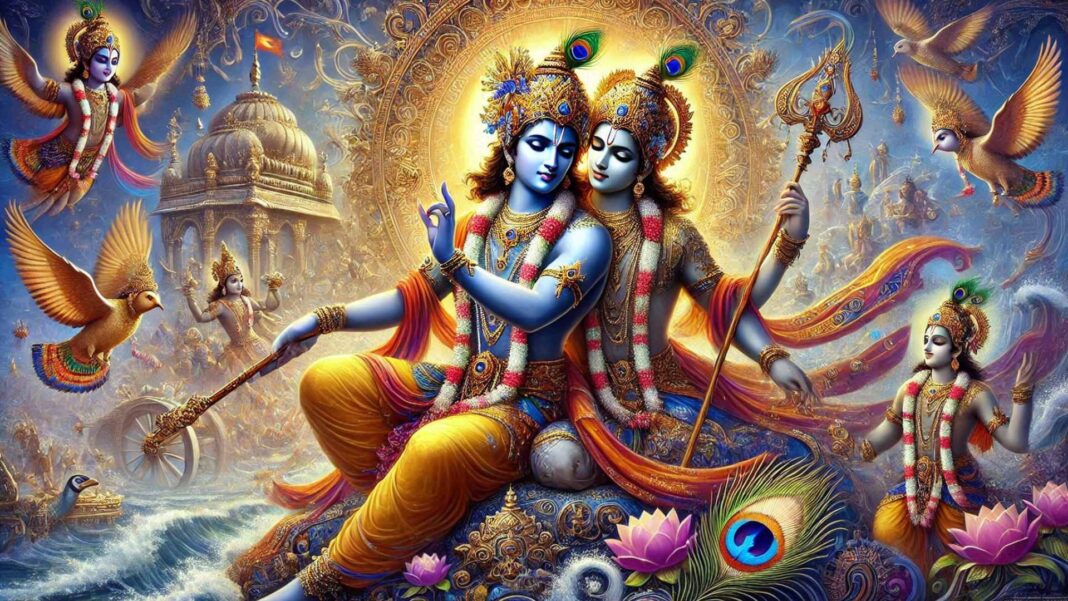
Krishna, one of the most beloved and revered deities in Hinduism, is the eighth avatar of Lord Vishnu and a central figure in Indian mythology and philosophy. Known for his multifaceted personality—playful child, divine lover, wise statesman, and supreme teacher—Krishna embodies the complete spectrum of divine qualities.
Read More About Deities And Gods
He is the protagonist of the Mahabharata, particularly in the Bhagavad Gita, where he serves as a guide to Arjuna. Krishna’s teachings transcend time, offering wisdom for spiritual awakening, moral dilemmas, and the path of devotion.
Significance of Krishna in Daily Hindu Life
Krishna plays a pivotal role in shaping the spiritual and cultural fabric of Hinduism. For millions, he represents:
- Divine Love: Through his leelas (divine play) with the gopis and Radha.
- Guidance: As a spiritual teacher in the Bhagavad Gita.
- Protector: Shielding devotees from evil and adversities.
- Inspiration: Embodying a balance of worldly and spiritual life.
Krishna’s presence is celebrated in homes through festivals like Janmashtami and daily prayers, fostering a personal connection with the divine.
The Cosmic and Spiritual Importance of Krishna
Cosmically, Krishna is regarded as Purushottama (the Supreme Being), signifying the union of the material and spiritual worlds. Spiritually, Krishna embodies the concept of bhakti (devotion), encouraging unconditional love and surrender to the divine. His teachings emphasize the importance of dharma (righteousness) and the transcendence of the ego for spiritual liberation.
Names and Etymology
Meaning of Krishna
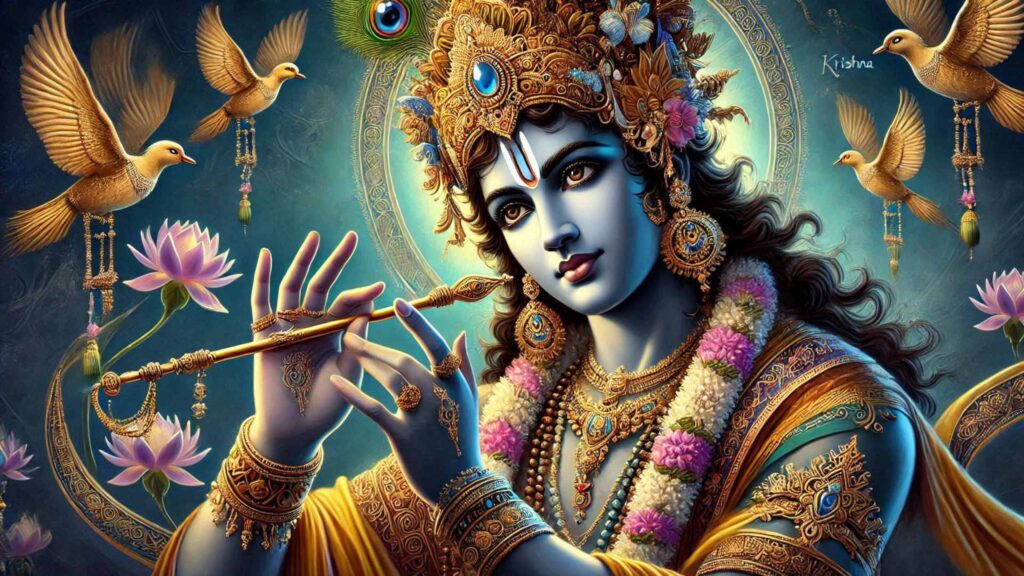
The name Krishna originates from the Sanskrit root “Krish,” meaning “attraction” or “pull.” Krishna is the one who attracts all with his divine qualities, charm, and love.
Other Names and Their Significance
- Govinda: Protector of cows, symbolizing his nurturing nature.
- Madhava: Sweetness personified, denoting his connection to bliss and love.
- Gopala: The cowherd, representing his childhood among the gopis.
- Hari: The remover of sins and suffering.
- Keshava: The one with beautiful hair, symbolizing his enchanting physical form.
- Parthasarathi: The charioteer of Arjuna, signifying his role as a guide and mentor.
Each name highlights a unique aspect of Krishna’s divinity, making him relatable to diverse devotees.
Symbolism and Iconography
Physical Description
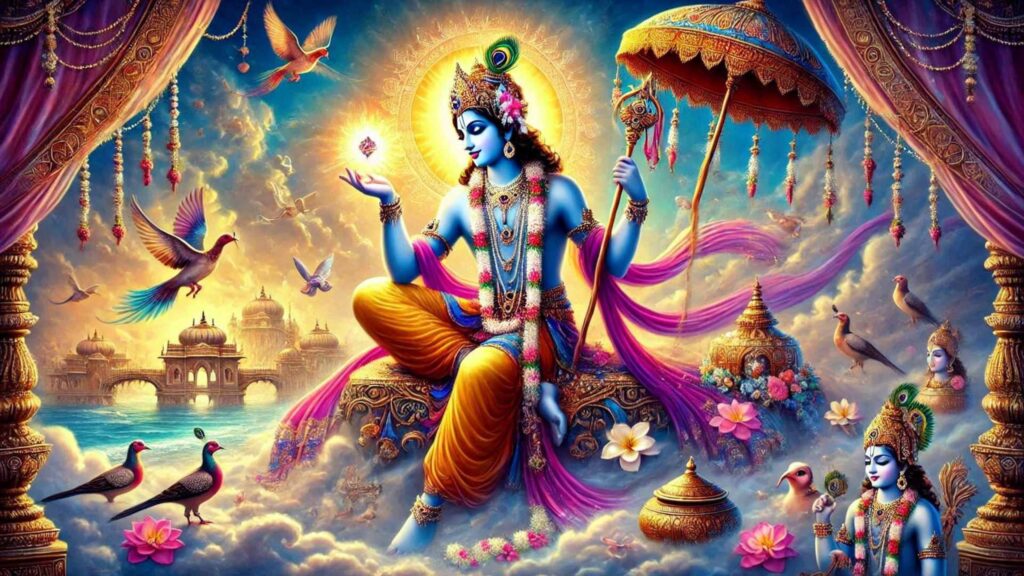
Krishna is typically depicted as a handsome young man with blue skin, symbolizing his infinite and cosmic nature. He is adorned with a peacock feather crown, playing the flute, which signifies divine music that enchants all beings.
Symbolism
- Flute: Represents divine music, the sound of creation, and the call of the soul.
- Blue Skin: Symbolizes infinity, vastness, and divine transcendence.
- Peacock Feather: Signifies beauty, grace, and connection with nature.
- Yellow Dhoti: Represents earth and sustenance.
The Flower Connection
Krishna is deeply associated with Tulsi (holy basil) and lotus flowers, both symbolizing purity and divine love.
Colors and Symbols
- Yellow: Denotes joy, spirituality, and the nurturing aspects of life.
- Blue: Reflects Krishna’s infinite and universal nature.
Mythology and Stories
Birth Story
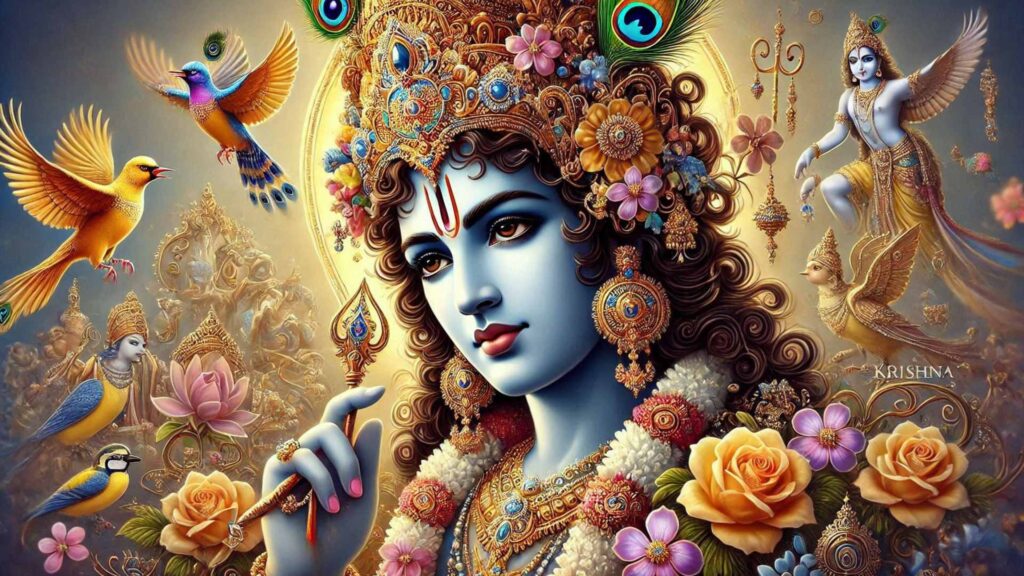
Krishna’s birth is a tale of divine intervention. Born to Devaki and Vasudeva in the prison of Mathura, Krishna was smuggled to Gokul to escape the wrath of his uncle Kansa, who sought to kill him. His birth symbolizes the triumph of good over evil.
The Stories of Krishna
- Childhood Leelas: His playful acts, such as stealing butter and lifting the Govardhan Hill, reflect his divine powers and charm.
- Radha-Krishna Love: His eternal love for Radha represents the soul’s longing for union with the divine.
- Bhagavad Gita: Krishna’s teachings to Arjuna on the battlefield of Kurukshetra provide profound spiritual wisdom and guidance.
Connection with Other Gods
- Vishnu: Krishna is an avatar of Vishnu, embodying the sustainer of the universe.
- Balarama: His elder brother and constant companion.
- Radha: His eternal consort, symbolizing pure devotion and divine love.
Role in Ramayana and Mahabharata
Krishna is a central figure in the Mahabharata, offering wisdom and divine intervention. His role in the Ramayana is more symbolic, as an aspect of Vishnu guiding Rama.
Famous Blessings and Boons
Krishna blesses devotees with:
- Unwavering faith and devotion.
- Protection from adversities.
- Wisdom and clarity in life’s dilemmas.
- Liberation from the cycle of birth and death.
Spiritual Significance
A Visible Form of God
Krishna represents the tangible, approachable form of God, allowing devotees to connect with divinity through love and devotion.
Representation of Knowledge and Enlightenment
Krishna’s teachings, especially in the Bhagavad Gita, provide a roadmap to self-realization, dharma, and moksha.
Connection to Spiritual Awakening
Krishna’s life inspires seekers to transcend material desires and focus on higher consciousness and divine union.
Role in Yoga and Meditation Practices
Krishna is associated with Bhakti Yoga (path of devotion) and Karma Yoga (path of action), guiding practitioners toward selfless service and divine love.
The Mantra Connection
Chanting Krishna’s names, such as “Hare Krishna Hare Rama”, is believed to purify the soul and connect devotees to the divine.
Worship and Rituals
Benefits
Worshiping Krishna fosters:
- Inner peace and emotional balance.
- Spiritual growth and self-discipline.
- Harmonious relationships and prosperity.
Daily Worship Practices
Devotees offer Tulsi leaves, butter, and fruits to Krishna, accompanied by devotional singing and chanting.
Best Times for Worship
- Janmashtami (Krishna’s Birth): Celebrated with fasting, prayers, and singing.
- Ekadashi Days: Considered auspicious for Krishna worship.
Significant Festivals
- Krishna Janmashtami: Marks Krishna’s birth with grand celebrations.
- Holi: Celebrates Krishna’s playful and loving nature.
- Rath Yatra: Honors Krishna’s journey, observed in Puri.
List of Famous Temples
- Dwarkadhish Temple (Gujarat): The primary temple dedicated to Krishna.
- Jagannath Temple (Puri): Worships Krishna in his Jagannath form.
- Vrindavan Temples (Uttar Pradesh): The land of Krishna’s childhood leelas.
- ISKCON Temples: Found globally, promoting Krishna’s teachings.
Modern Relevance
Scientific Understanding
Krishna’s teachings in the Bhagavad Gita resonate with modern psychology and ethical dilemmas, offering timeless solutions for mental well-being.
Environmental Consciousness
Krishna’s connection with nature, symbolized by cows, forests, and rivers, underscores the importance of ecological harmony.
Health Benefits
Meditating on Krishna and chanting his names promote mental clarity, stress reduction, and emotional well-being.
Energy Connection
Krishna’s energy inspires positivity, love, and spiritual transformation in devotees.
Sustainable Living Practices
Krishna’s life emphasizes simplicity, balance, and respect for all living beings.
Cultural Impact
Influence on Indian Art and Architecture
Krishna’s stories are immortalized in paintings, sculptures, and temple architecture, particularly in regions like Mathura and Vrindavan.
Presence in Literature and Poetry
Works like the Bhagavad Gita, Bhagavata Purana, and Gita Govinda celebrate Krishna’s divine life and teachings.
Impact on Daily Customs
Krishna’s presence influences daily rituals, festivals, and cultural traditions, fostering a spirit of joy and devotion.
Regional Variations in Worship
Krishna is worshipped differently across India:
- Dwarka (Gujarat): As a king and statesman.
- Vrindavan (UP): As the playful child and divine lover.
- Puri (Odisha): As Jagannath, the lord of the universe.
Practical Applications
Morning Prayers and Rituals
Starting the day with Krishna’s mantras instills positivity and focus.
Benefits of Salutation
Offering salutations to Krishna fosters humility and devotion.
Dietary Recommendations
A sattvic diet (pure vegetarian) is often followed, reflecting Krishna’s teachings of purity and harmony.
Astrological Significance
Krishna is associated with Mercury, influencing intellect, communication, and creativity.
Conclusion
Krishna, the divine charmer and supreme guide, embodies love, wisdom, and transcendence. His teachings and life stories inspire millions to embrace dharma, devotion, and spiritual growth. By connecting with Krishna, one discovers the eternal joy of divine union and the courage to navigate life’s challenges.

